Hispanic Heritage Month convocation explores language, belonging, mentorship and everyday leadership
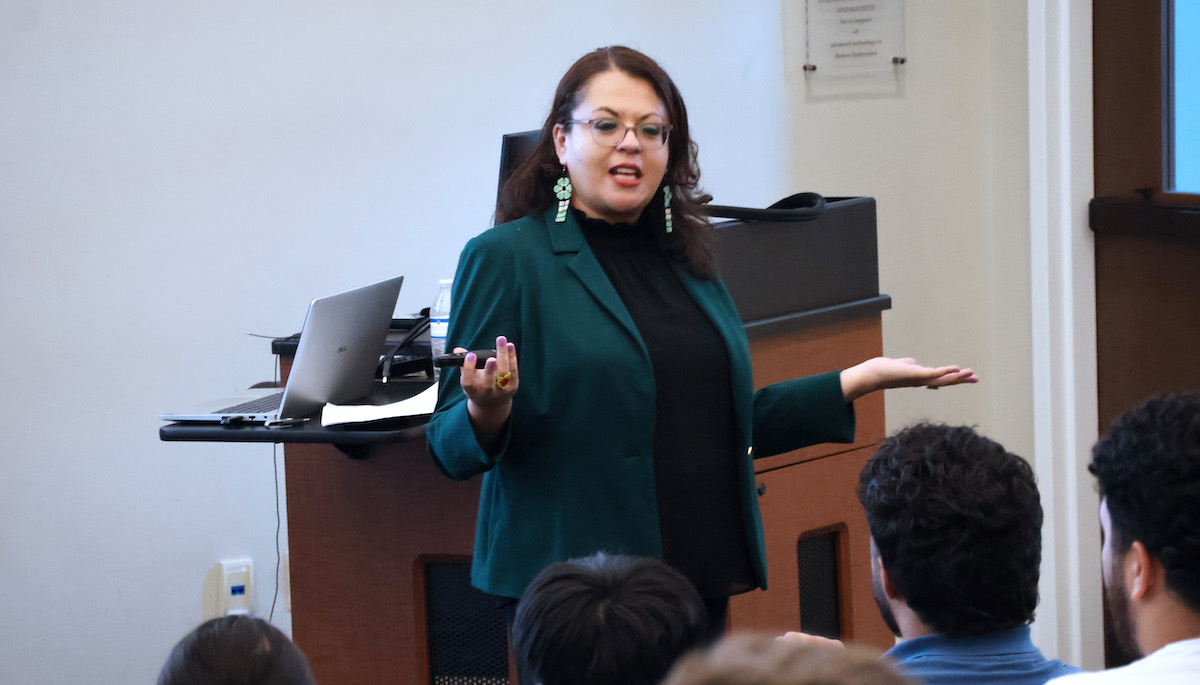
Presbyterian College students were challenged to see leadership not as something reserved for the future, but as a daily practice of courage, service, and community building during the college’s Hispanic Heritage Month convocation Sept. 29 in Kuhne Auditorium.
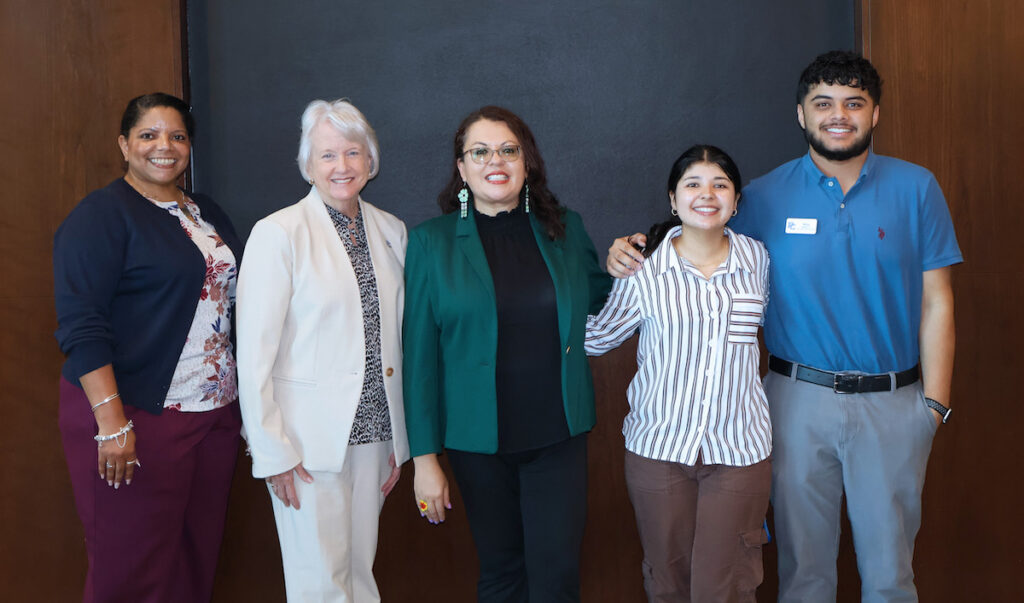
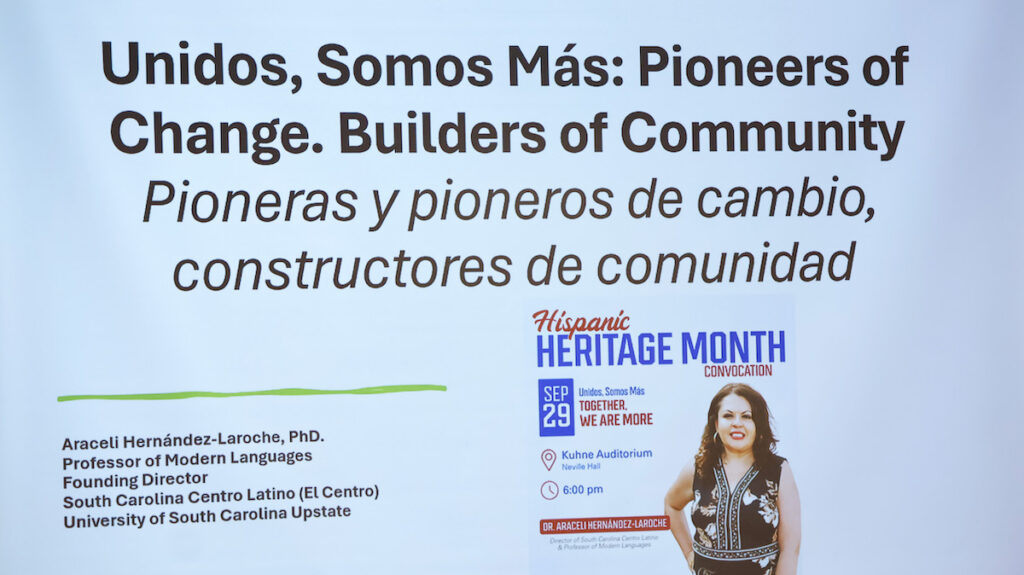
Sponsored by PC’s Hispanic Appreciation Organization, the convocation featured Dr. Araceli Hernández-Laroche, founding director of the South Carolina Centro Latino and professor of modern languages at the University of South Carolina Upstate.
Hernández-Laroche framed her interactive address around the Hispanic Heritage Month theme, “Pioneers of Change,” inviting students to think about the people who had opened doors for them — and the ways they, in turn, could open doors for others.
“Pioneers of change are not extraordinary because they hold titles,” she told the audience. “They are extraordinary because they choose to make a difference where they are.”
Pioneers of change are not born. We become pioneers through everyday actions.”
Dr. Araceli Hernández-Laroche, Director, South Carolina Centro Latino
Community Through Connection
From the opening moments of the convocation, Hernández-Laroche emphasized the importance of language and connection.
She greeted the audience in French, Spanish, and English before inviting students to offer greetings in other languages. The moment set the tone for an address that depended as much on participation from the audience as on her prepared remarks.
Members of the Hispanic Appreciation Organization described the group as a place where students can engage with Hispanic culture while also creating a welcoming community for the wider campus.
Hernández-Laroche connected that mission to a broader sense of belonging, particularly for first-generation college students.
“We doubt whether we belong here,” she said. “So that’s why we need a community of staff, of presidents, of faculty, of other students who remind us, yes, the road is tough, but we need to power on.”
A first-generation college student herself, Hernández-Laroche spoke about growing up in a Mexican American family and the influence of her father, who immigrated to the United States and, she said, instilled in his children a strong work ethic, faith, and hope.
She credited that example with helping propel her through college, international, study and eventually a doctorate from the University of California, Berkeley.
The Power of Language
Language became one of the evening’s strongest themes.
Hernández-Laroche, who speaks four languages, told students that language is more than an academic discipline. It can create trust, improve access, and help people navigate some of life’s most difficult moments.
Students and guests in the audience shared stories of interpreting for family members and using Spanish to help others feel more comfortable in professional and health care settings. One participant described how interpreting for family members while growing up eventually inspired an interest in occupational therapy and the importance of communicating directly with patients in their preferred language.
Hernández-Laroche also recalled an emergency in France when her mother suffered a serious fall. Because medical personnel did not speak English or Spanish, Hernández-Laroche’s ability to speak French became critical in helping her family communicate during the crisis.
“Any language you learn, you’re helping out in a big way,” she said.
Later, she asked students to consider what language represents beyond communication.
Audience members offered words such as culture, respect and comfort.
“Language allows us to hear stories that might otherwise remain unheard,” Hernández-Laroche said.
Leadership Practiced Today
Hernández-Laroche’s message also reflected a central liberal arts principle: that learning across languages, cultures, disciplines and experiences prepares students not simply for careers, but for engaged lives of leadership and service.
She encouraged students to seek experiences beyond what feels familiar — to volunteer, mentor younger students, travel, learn from other cultures and accept opportunities even when they feel intimidating.
“Step outside of your comfort zone,” she said. “Why? Because small acts of courage often become lifelong leadership habits.”
She also rejected the idea that students must wait until they feel completely prepared before taking responsibility.
“Leadership is not preparation for the future,” she said. “It’s something that we practice today.”
That message resonated with students and guests who shared examples of starting organizations, mentoring others and creating opportunities for people to learn from different cultures and perspectives.
‘We become pioneers’
As the convocation drew to a close, Hernández-Laroche offered students a simple challenge: complete at least one meaningful act of community building during the semester.
She suggested mentoring someone, learning a new language, volunteering, asking another person to share their story, or becoming more involved in the campus or surrounding community.
The challenge reinforced the central message of her address — that meaningful change rarely begins with a title or position. It begins with people choosing to act.
“It’s not about being the first one,” Hernández-Laroche said. “It’s about arriving. And arriving with others.”
She concluded by reminding students that the talents they already possess — whether speaking another language, offering friendship, listening to someone’s story or serving others — can help strengthen the communities around them.
“Pioneers of change are not born,” she said. “We become pioneers through everyday actions.”