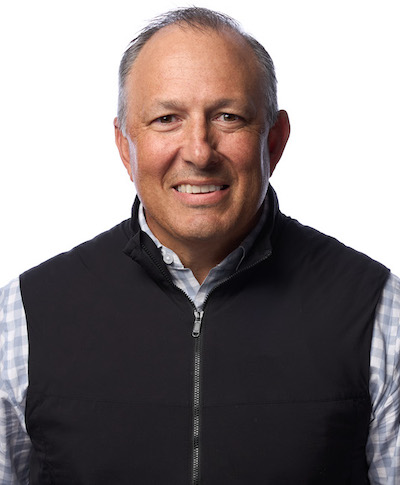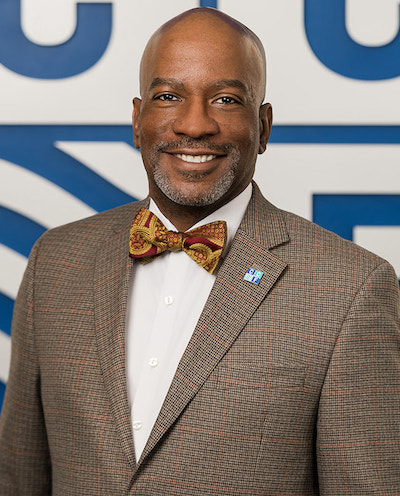
Darrin Goss Sr. challenges Presbyterian College community to embrace equity-centered leadership during Edmunds Hall event
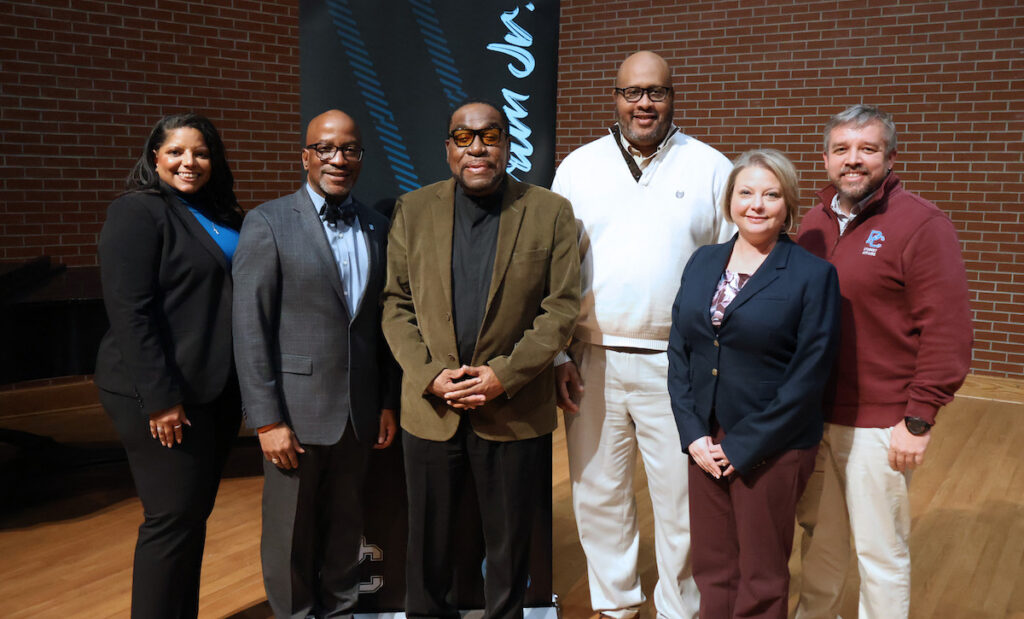
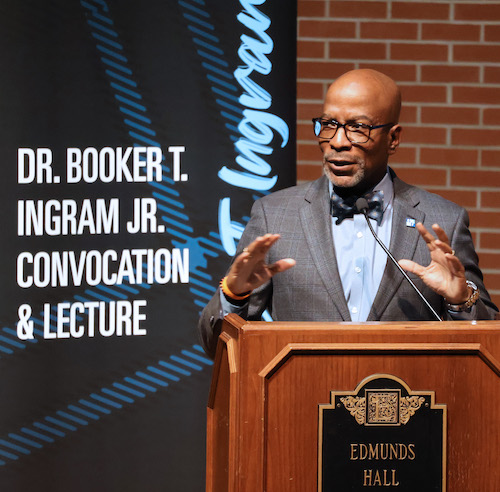
Presbyterian College officially launched its Black History Month observance with the annual Dr. Booker T. Ingram Jr. Black History Month Convocation and Lecture, an evening that centered legacy, leadership and the ongoing responsibility to advance equity within institutions and communities.
Honoring a living legacy
The event in Edmunds Hall opened with remarks from Dr. Selena Blair, PC’s Rogers-Ingram Vice President for Justice and Community Wellbeing, who framed the lecture as both an act of remembrance and a recognition of leadership that continues to shape the college. Speaking before an audience that included Booker T. Ingram Jr. himself, Blair reflected on the enduring influence of a man whose work transformed Presbyterian College and helped lay the groundwork for many of its current commitments to justice and inclusion.
Ingram joined the Presbyterian College faculty in 1987 as the institution’s first African American faculty member and served the college for more than 30 years as a scholar, mentor and trusted advisor. Named Professor of the Year in 2000, he was widely respected not only for his academic excellence but also for his generosity of spirit and his ability to make students feel seen and valued.
Blair noted that the position she now holds exists because of the vision, perseverance and faithfulness of Ingram and others who worked to expand opportunity at the college. She described the honor and responsibility of introducing herself in front of the person for whom her role is named, emphasizing that Black History Month is not only about remembering the past but recognizing leadership that continues to shape the present.
“I stand here because he stood here first,” Blair said.
A call to equity-centered leadership
The keynote address was delivered by Darrin Goss Sr., president and CEO of the Coastal Community Foundation of South Carolina, who challenged the audience to understand Black history as a living force sustained by leadership, service and moral courage.
Rather than offering a traditional historical overview, Goss focused his remarks on what he calls equity-centered leadership and the essential role philanthropy plays in advancing social, educational and economic progress. He described philanthropy as one of the most enduring values in American civic life.
“If you think about it,” Goss said, “every social movement, every economic advancement, every scientific breakthrough exists because someone decided to give — whether that was their time, their talent, their resources or their influence.”
Goss emphasized that philanthropy is fundamentally rooted in human connection. “It’s this willingness for one human being to see and feel the needs of another human being and step up and try to meet those needs,” he said. “That’s the power of philanthropy.”
He argued that philanthropy reaches its full potential only when equity is placed at its center. Goss defined equity as a standard of fairness that applies resources based on specific needs while accounting for historic and systemic imbalances.
“When equity is at the center,” he said, “it has the power to transform what we do, how we do it, and how we show up for one another.”
From personal calling to public responsibility
Goss traced a pivotal moment in his leadership journey to the 2015 mass shooting at Mother Emanuel AME Church in Charleston, which he described as both a personal and professional turning point. At the time, he was working outside South Carolina but felt a deep calling to return home.
“I whispered a prayer to myself,” Goss said. “I said, ‘If there’s anything I can do to get back to South Carolina, God, make a way.’”
That call ultimately led him to the Coastal Community Foundation, which had never previously been led by a Black executive. Goss spoke candidly about the self-doubt he carried into the role, including fears of being hired as a symbol rather than as a leader chosen on merit.
“All I could be was who I am,” he said. “My culture, my race, my people — fairness is important to me. Equity is important to me. And if that wasn’t what the foundation was about, I didn’t want any part of it.”
Since assuming leadership of the foundation in 2016, Goss has overseen significant growth in both assets and grantmaking while reshaping the organization’s mission to emphasize community engagement and equity. He highlighted the Reverend Clementa Pinckney Scholarship Program, created in the aftermath of the Mother Emanuel tragedy, as one of the initiatives he is most proud of. The program has supported hundreds of students from the Lowcountry, including a current Presbyterian College student recognized during the lecture.
You’re not being taught what to think. You’re being taught how to think — how to challenge ideas, wrestle with complexity and engage one another on hard issues. That’s powerful.”
Darrin Goss Sr., President and CEO of Coastal Community Foundation
Redefining philanthropy
Throughout his address, Goss emphasized that philanthropy extends far beyond financial giving. He outlined five forms of philanthropic capital — social, moral, intellectual, reputational and financial — and encouraged students to recognize that meaningful change often begins long before money is involved.
“You don’t have to be ultra-wealthy to be a philanthropist,” Goss said. “I see in this room more than enough social capital, moral capital, and intellectual capital to change communities.”
He urged students to use their voices, relationships and education to challenge injustice and advance opportunity. Liberal arts institutions like Presbyterian College, Goss said, are uniquely positioned to prepare students not just for careers, but for ethical leadership.
“You’re not being taught what to think,” he said. “You’re being taught how to think — how to challenge ideas, wrestle with complexity and engage one another on hard issues. That’s powerful.”
Goss closed his keynote by urging the audience to “read reality truthfully and take action responsibly,” calling the coming year a time for what he described as “relentless hope.”
“Hope isn’t passive,” he said. “Faith is the fuel, but hope is what structures our action.”
Continuing the conversation
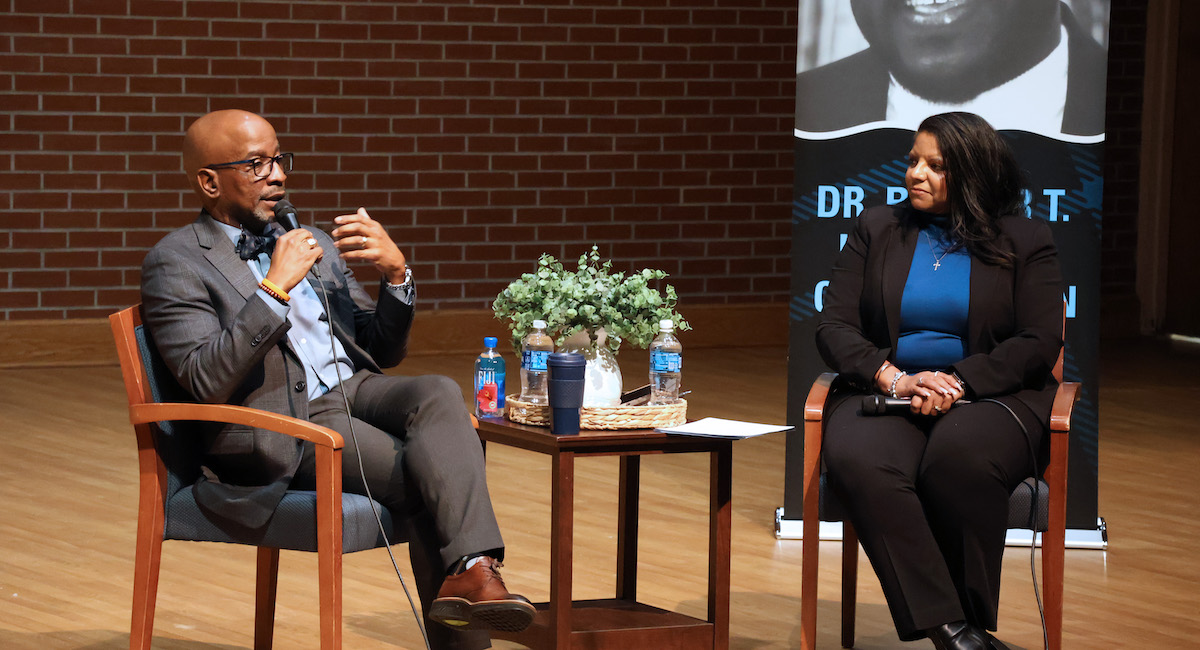
Following the keynote, Goss was joined by Blair for a fireside conversation that expanded on themes raised during the lecture. Their discussion touched on vocational calling, leadership and self-doubt, the challenges of institutional change and the importance of listening to communities before pursuing reform.
Goss spoke openly about moments of failure in his career, including times when well-intentioned initiatives moved faster than community trust, while Blair reflected on vulnerability, resilience and the importance of asking for help. Audience questions prompted discussion of mentorship, imposter syndrome and the responsibility leaders carry to prepare the next generation.
As the evening concluded, the focus returned to Black history as an ongoing commitment rather than a single month of observance. Goss reflected on his own family history and the ancestors whose sacrifices continue to shape his work, reminding the audience that honoring the past also requires acting faithfully in the present.