Presbyterian College alumnus Dr. Clay Wright ‘19 returns as professor in physics, joins statewide research development academy
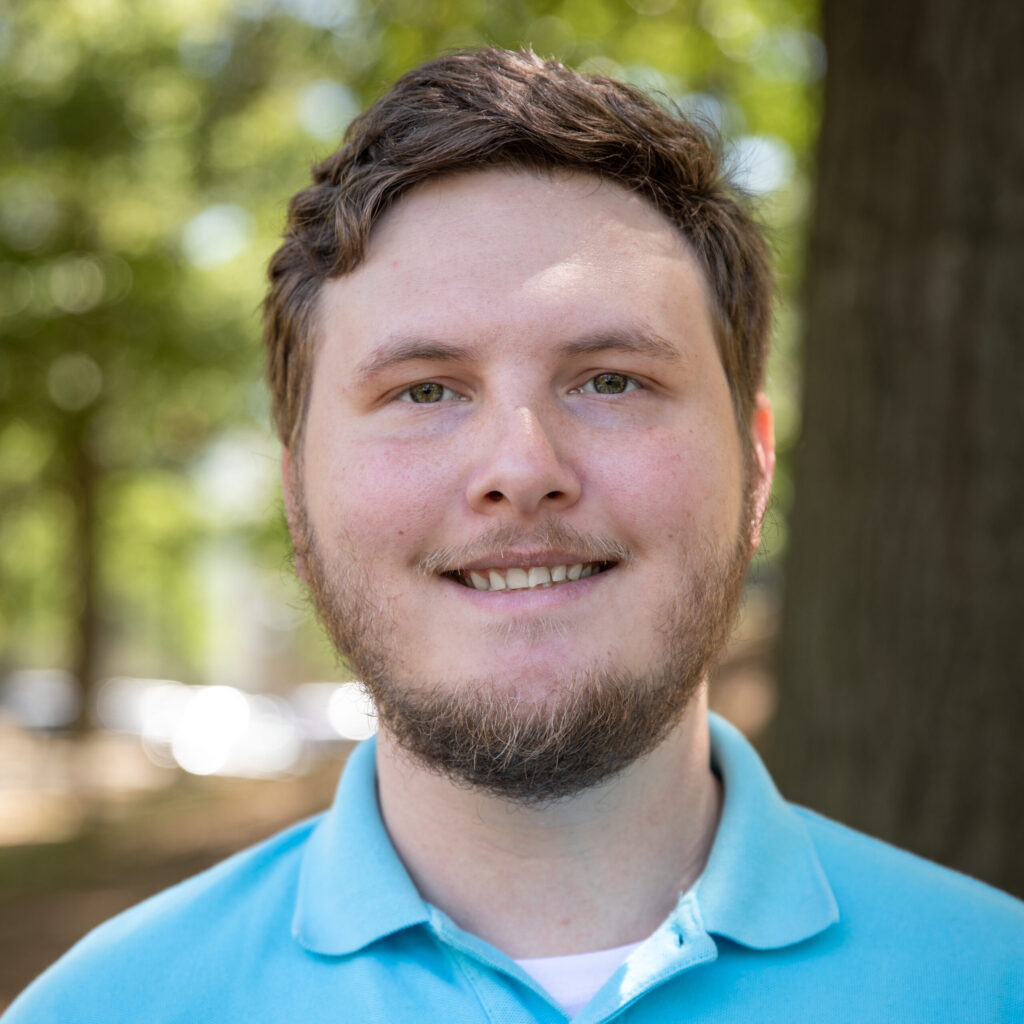
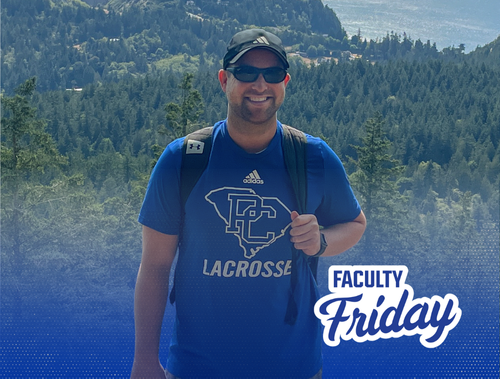
When Dr. Clay Wright graduated from Presbyterian College in 2019 with a degree in physics, he never imagined he’d one day return as a faculty member. But just six years later, the Clinton native is back—this time as an assistant professor of physics—and has been selected for the prestigious 2025 South Carolina EPSCoR Faculty Research Development Academy.
Wright, who joined the PC faculty in January, is one of a small group of early-career faculty from across the state chosen to participate in the competitive statewide program designed to prepare researchers at primarily undergraduate institutions to apply for major federal grants, including those from the National Science Foundation.
An Academy for Rising Researchers
EPSCoR—short for Established Program to Stimulate Competitive Research—is a national initiative that seeks to increase research capacity and competitiveness in states that have historically received less federal research funding. South Carolina’s EPSCoR Faculty Research Development Academy focuses specifically on supporting faculty at small colleges and universities.
“This program is really about helping faculty at teaching-focused institutions learn how to navigate the world of large-scale research funding,” Wright said. “At a school like PC, we don’t always have access to the same grant-writing infrastructure as major research universities, so this kind of professional development is incredibly valuable.”
Wright said he learned about the opportunity through PC biology professor and director of the Center for Inquiry, Research, and Scholarship, Dr. Austin Shull, who forwarded him the application. After being accepted, Wright joined a cohort of about a dozen faculty from institutions such as the College of Charleston, Winthrop University, Benedict College, Coker University, and The Citadel.
Building Competitive Proposals
Participants in the academy meet weekly through a mix of virtual and in-person sessions. They hear from NSF program officers, grant administrators, and experienced faculty grant recipients. The goal: to demystify the grant-writing process and help participants develop competitive research proposals.
“It’s kind of like summer camp for grant writing,” Wright joked. “Each week, we’re working on different parts of a proposal, getting feedback, and learning how to tell the story of our research in a way that resonates with funding agencies.”
He said one highlight of the program was presenting his research to a panel of seasoned grant reviewers—an experience that helped him sharpen how he communicates the significance and impact of his work.
“Honestly, there’s so much I didn’t know about the process,” Wright said. “At a place like Clemson, you have entire offices dedicated to this. At smaller schools, it’s on us to figure it out—and programs like this help level the playing field.”
The Science of Structure—and Potential
Wright’s research lies at the intersection of electrochemistry and materials science, with a focus on how metals grow and behave at the atomic level. His work has real-world applications in the development of more efficient and safer batteries.
“In materials like batteries, you’re constantly growing and removing material with every charge and discharge cycle,” Wright explained. “If that growth isn’t controlled properly, it can lead to short circuits or failures. My research is about controlling how those metals grow—basically, how atoms arrange themselves—to make next-generation technologies possible.”
He laughed when asked about the broader implications of his work and its potential. “In electrochemistry, we literally use the word ‘potential’ to describe a lot of things – electrode potential, electrochemical potential, and so on. So, yeah, there is definitely potential to be explored.”
There’s an entire world out there that students at small schools don’t always realize is available to them. I want to be someone who helps open those doors—because that’s exactly what my professors did for me.”
Dr. Clay Wright ’19
Full Circle: From Student to Mentor
Wright said his desire to return to a small liberal arts college environment was deeply personal. As a PC student, he was mentored by faculty members like Dr. Eli Owens, now his colleague, who introduced him to research and helped spark his interest in graduate school.
“I got into research through Dr. Owens, and that changed everything,” he said. “It’s why I stayed at PC instead of transferring to a dual-degree program. And it’s why I went on to earn my Ph.D.”
Wright said that experience convinced him he wanted to pursue a career not at a large research university, but at a place where he could mentor students the same way he had been mentored.
“I knew the R1 research track wasn’t for me,” he said. “I want to help students see that research is not just something you read about online or in journals—you can actually do it, and it can be a path to graduate school or a career in science.”
Wright believes small colleges like PC are uniquely positioned to offer meaningful research experiences, even without the massive labs and resources of larger universities.
“I was totally prepared for graduate-level research because of what I did here,” he said. “I wasn’t at any disadvantage at all, and in some ways, I had more experience planning and conducting my own experiments.”
A Return to Roots
Growing up in Clinton, Wright never expected to end up back in his hometown—let alone as a professor at PC. But after five years in Atlanta for graduate school, he found himself missing the close-knit community he once took for granted.
“In high school, I thought, ‘I’ve got to get out of Clinton,’” he said. “But once I left, I realized how much I missed it. When I saw the job posting at PC, it just felt perfect.”
Wright applied in October and was offered the job months later, officially joining the faculty in January 2025.
“It’s hard to find faculty positions anywhere, so I’m incredibly grateful,” he said. “This role is exactly what I hoped for—a chance to teach, to do research, and to mentor students at a place that means so much to me.”
Looking Ahead
As he wraps up his first year on faculty and continues his participation in the EPSCoR academy, Wright is focused on the future—developing his research program, building relationships with students, and pursuing grant funding that could open new opportunities for PC.
“There’s an entire world out there that students at small schools don’t always realize is available to them,” he said. “I want to be someone who helps open those doors—because that’s exactly what my professors did for me.”