On the Clinch River in Tennessee, Presbyterian College students stepped outside the traditional classroom to study an ecosystem firsthand — and discovered new confidence, deeper understanding and new ways to put their education to work.
For two weeks last summer, the classroom had no walls.
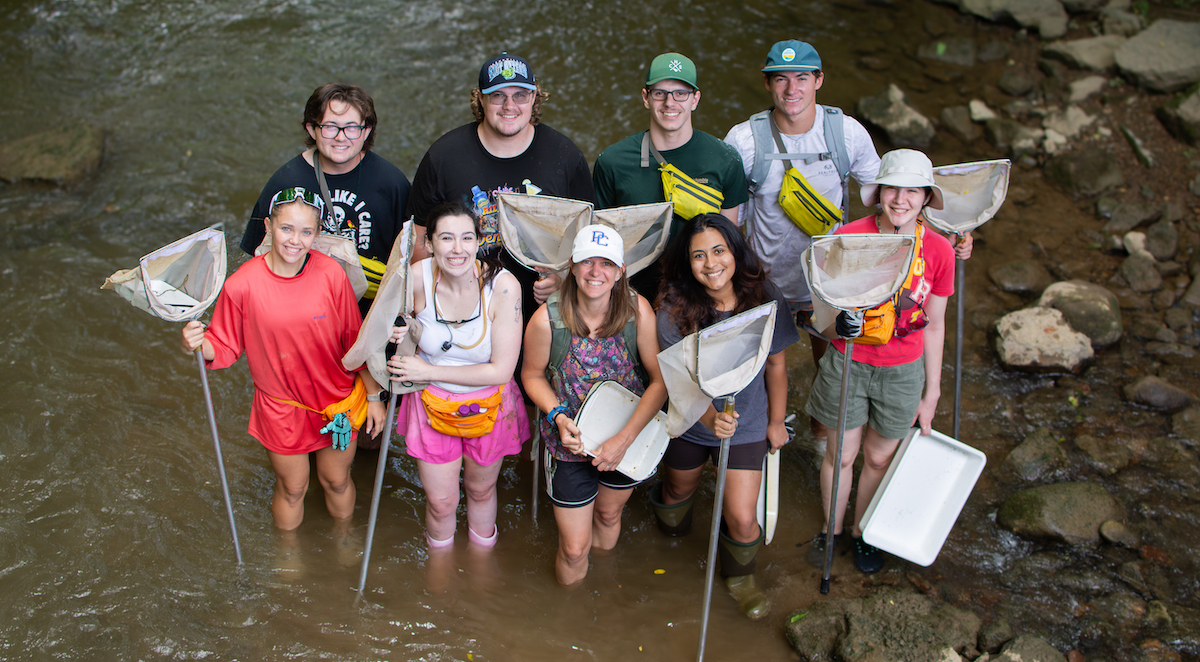
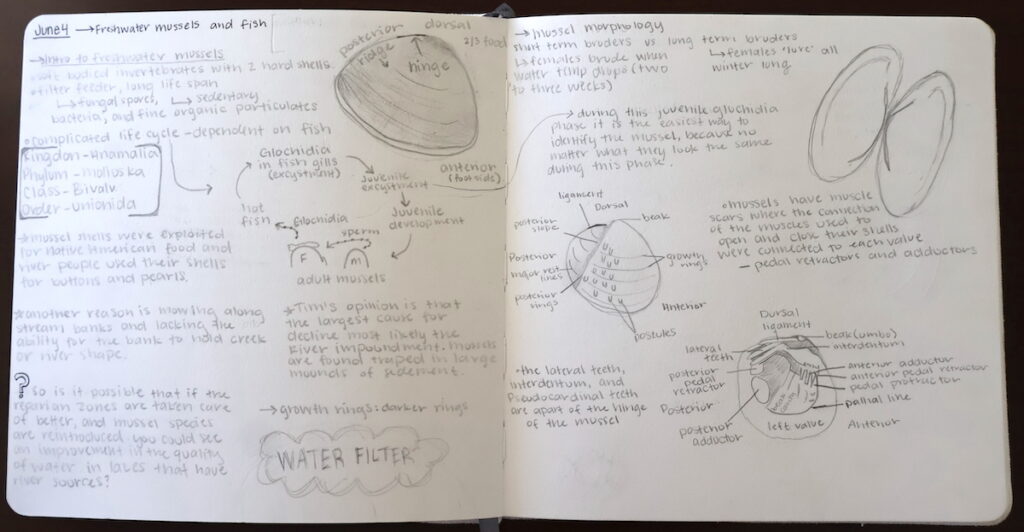
Sometimes it was knee-deep in the Clinch River, where Presbyterian College students searched the riverbed for freshwater mussels. Sometimes it followed a cold, spring-fed creek into the woods. Other days, it climbed a ridge overlooking the valleys of northeast Tennessee or took shape inside a barn converted into a temporary laboratory.
For eight students enrolled in a field biology course taught by assistant professor of biology Dr. Sabrina Moore, learning meant entering the ecosystem they were studying — wading through it, touching it, measuring it and beginning to understand how its pieces fit together.
For Ezra Marks, a biology major from Aiken, South Carolina, that immersion was essential.
“Ecology really must be seen to really understand it,” Marks said. “Ecosystems are so complex with so many factors that impact their health and wellbeing, and being in it helps you understand it better.”
He said students remembered more because they had “seen, felt, smelled and heard” the ecosystem they were studying.
That idea was at the heart of a course developed by Moore thanks to a collaboration with PC alumnus and trustee Jim Samples, whose property along the Clinch River provided the setting for an unusually immersive example of liberal arts education.
An Idea Takes Root
Samples and his wife, Margaret, had purchased a farm in northeast Tennessee, a largely undeveloped stretch of land along a pristine section of the Clinch River. As he got more involved with his alma mater, he began wondering what educational purpose the property might serve.
“I’m not a farmer,” Samples said. “So, I now have this beautiful piece of land on a pristine river in northeast Tennessee. And I’m enjoying being there and trying to think about, well, what can I do with this place?”
During a campus visit, Samples was introduced to Moore in the biology department. He asked whether she might consider bringing students to the farm.
Moore already knew the Clinch River by reputation, particularly for its exceptional freshwater biodiversity and mussel populations. The conversation quickly grew from the possibility of a visit into an idea for a full experiential course.
The farm offered an unusual variety of habitats. The Clinch bends around the property, while Richardson Creek and smaller spring-fed waterways run through it. Forested slopes rise toward the ridge above.
For Moore, it was almost a ready-made field laboratory.
“Field biology basically is like being outside, learning about the organisms in their habitat and collecting them there,” she said. “And that’s exactly what we did.”
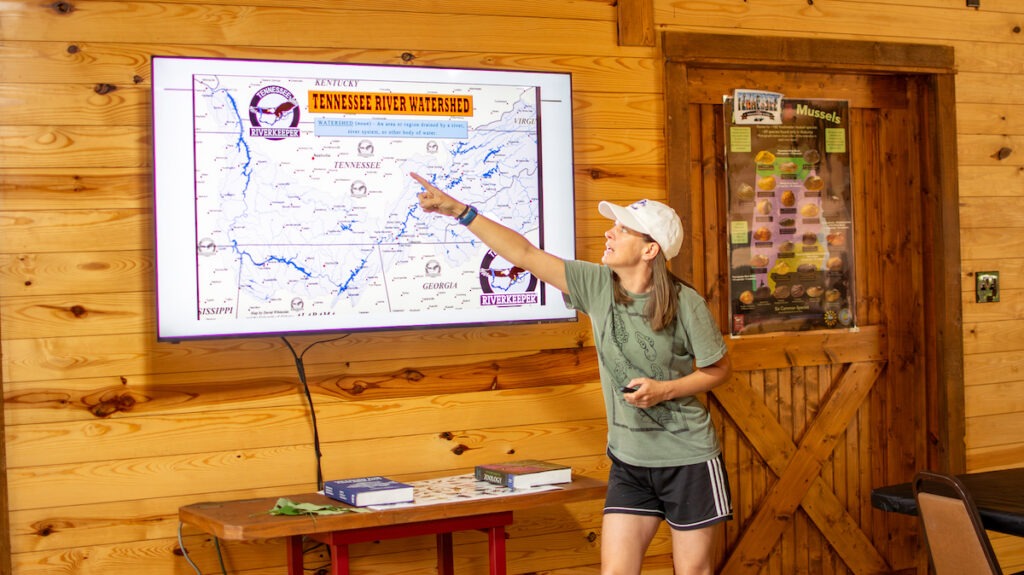
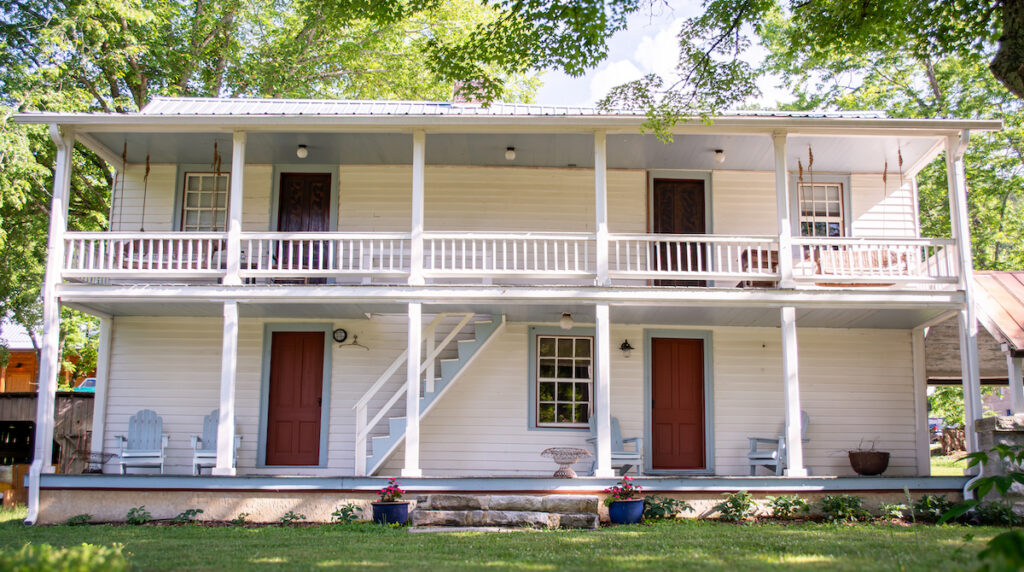
Planning took about a year. Old farmhouses were prepared to house students, and a large barn was adapted as a classroom and laboratory.
Learning Through Experience
Each day generally began in the barn.
Stephen Brooks, a biology major from Waynesville, N.C., said students first received a briefing on the day’s work before heading into the field. Depending on the assignment, they might study insects, plants, fish, salamanders or freshwater mussels.
They moved among river, creek and forest habitats, then returned to the barn for laboratory work and analysis.
For Carlisle Stanley of Daniel Island, S.C., nearly every scientific technique was new.
Stanley, a business administration major with an accounting focus, was the only nonscience major in the course. His background as an Eagle Scout made him comfortable outdoors, but not with field research.
“Because I am not a biology major, all the techniques and skills that I learned were new to me,” Stanley said.
That difference made his experience especially valuable.
Instead of encountering organisms through photographs or diagrams, Stanley could see them where they actually lived.
“I gained firsthand experience learning about the various plants and animals in the environment,” he said. “I could touch most of them and didn’t have to only rely on photos.”
Seeing habitats in person also helped him understand human impacts and the many factors that determine an ecosystem’s health.
“It made the things that I have heard and learned through my years of science classes in school more relatable,” Stanley said.
From Hesitation to Confidence
Moore watched the students grow more capable as the two weeks progressed.
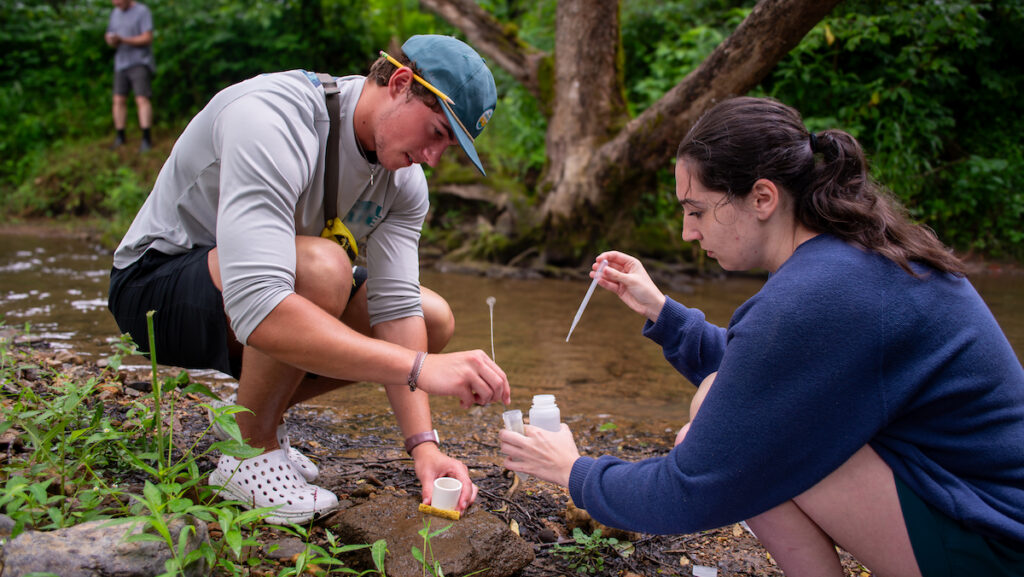
Many liked being outdoors, but several were experiencing serious fieldwork for the first time. She introduced them gradually to walking in the river, handling organisms and snorkeling.
Within several days, students were swimming in the Clinch and collecting mussels under the supervision of professional scientists.
Early in the course, Moore asked students to reflect on what they hoped to learn about themselves. Some wondered whether they could handle the physical and academic demands.
By the end, she said, those doubts had given way to confidence. Students who had been uncertain were catching salamanders and insects, working in the river and becoming comfortable with field techniques.
Brooks remembers one day in particular.
Students searched beneath wooden boards placed as salamander refuges. They found two salamanders, marked them with small colored identifiers so they could potentially be recognized if captured again, released them and later used photographs and a field manual to determine their species.
Brooks said the entire process was one he expects to remember long after graduation.
The course also strengthened his interest in biology as a career.
Brooks, a member of PC’s football team, said he hopes to work after graduation for the North Carolina Forest Service or in the national parks.
“It really reinforced my love for biology,” he said.
Getting to see students snorkel for the first time or hold a crayfish for the first time is a contagious feeling you don’t get to experience in many other places. We watched faces quickly turn from uncertainty into wonder and excitement as they took another breath, another step, another seine haul.”
Brittany Bajo-Walker, Tennessee Wildlife Resources Agency
Working Alongside Scientists
Students were not simply observing professional field biology. They were participating in it.
Moore arranged for scientists from the Tennessee Wildlife Resources Agency to work with the class, including specialists in freshwater mussels and fish.
Brittany Bajo-Walker, the statewide mollusk conservation coordinator for the TWRA, said PC students reminded her and her team of their own roots as scientists and conservationists.
“The PC group brought so much energy and curiosity that truly originates from the founders of the program, Sabrina and Jim,” she said. “Their own hard work and passion has not only jump started a beautiful learning tool for students but has created a long lasting program that is helping students become junior biologists, stewards for the environment, and well-rounded citizens.”
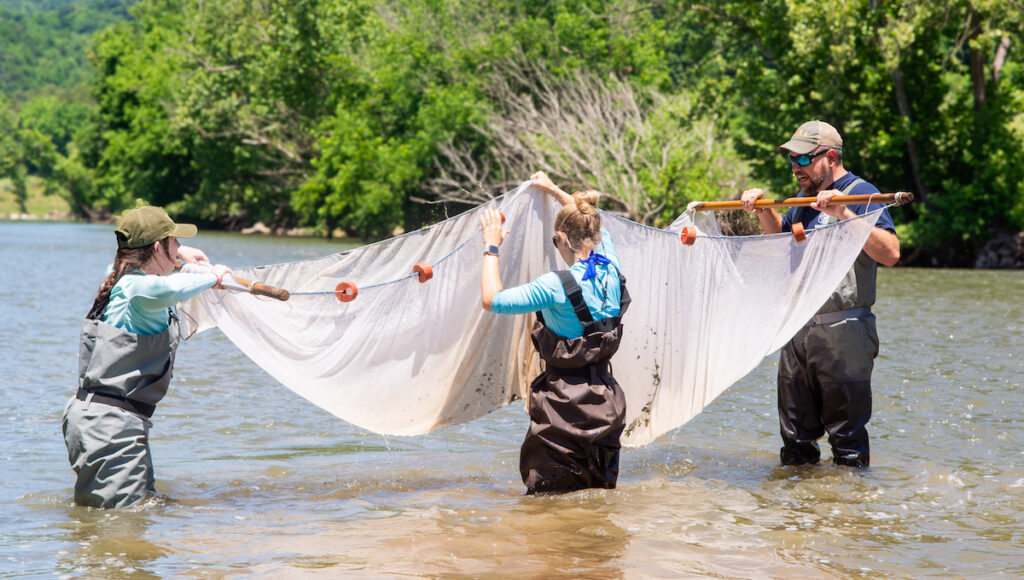
Students learned how professionals quantify fish communities and survey mussel populations. They studied identification techniques, entered the river to collect data, measured specimens and returned to the laboratory to analyze what they found.
“Getting to see students snorkel for the first time or hold a crayfish for the first time is a contagious feeling you don’t get to experience in many other places,” Bajo-Walker said. “We watched faces quickly turn from uncertainty into wonder and excitement as they took another breath, another step, another seine haul.”
The mussel work was highly regulated. Moore obtained the necessary permits, and endangered species had to be carefully handled and returned to where they were found. Scientists closely supervised the students in the river.
The experience also opened students’ eyes to career possibilities.
Moore said students realized the scientists working beside them represented jobs they might someday pursue. They could ask questions, hear how professionals found their way into the field and begin imagining themselves on similar paths.
TWRA scientists were sufficiently impressed with PC students that Moore said they expressed interest in future collaboration, including additional research and possible internship pathways.
From Learning to Stewardship
For Marks, the experience already has continued beyond the course.
One of his favorite discoveries was a patch of pink trillium, a plant he had long hoped to see. The flowers appeared in an abandoned garden area where old peonies still grew, and Marks was fascinated by what they suggested about the health and history of the habitat.
After returning from the two-week course, Marks conducted research on Richardson Creek. Having already studied the site helped shape the research question, and discussions with TWRA helped identify portions of the riparian zone in need of restoration.
That work led to a restoration plan that Marks hopes eventually to help implement.
Stanley came away with a different but related understanding of stewardship.
His family has agricultural and forestry connections, and he said he wants to preserve family acreage rather than see it developed while using environmentally responsible practices.
“I love nature and want to be a good environmental steward,” Stanley said.
For a business major, that may be one of the clearest examples of what a liberal arts education can do: connect an unfamiliar academic discipline to values and responsibilities that extend far beyond the course itself.
More Than Biology
Samples believes those connections are what make the course especially suited to a liberal arts education.
Students were expected not only to collect information but also to interpret it, write about it and present what they had learned.
“It’s not just about the facts,” Samples said. “It’s about your ability to incorporate those into other parts of life. And to get up and comfortably speak about it. To write about it.”
The students also learned from one another.
Stanley said he likely would not have met many of his classmates through his normal business coursework. His biology-major classmates helped him learn field techniques — and even tried to persuade him to change majors.
Marks, whose interests lean heavily toward plants, said listening to classmates talk about fish, mussels and insects helped him better understand the complex food webs connecting the natural world.
For two weeks, the students were not simply attending a class.
They were living alongside the subject they had come to study.
The river was their laboratory. The woods were their classroom. And by the time they left Tennessee, they understood more than the organisms of the Clinch River.
They understood more about what they could do with what they had learned.