Physics major combines hands-on research, faculty mentorship and a passion for aerospace engineering to prepare for the future
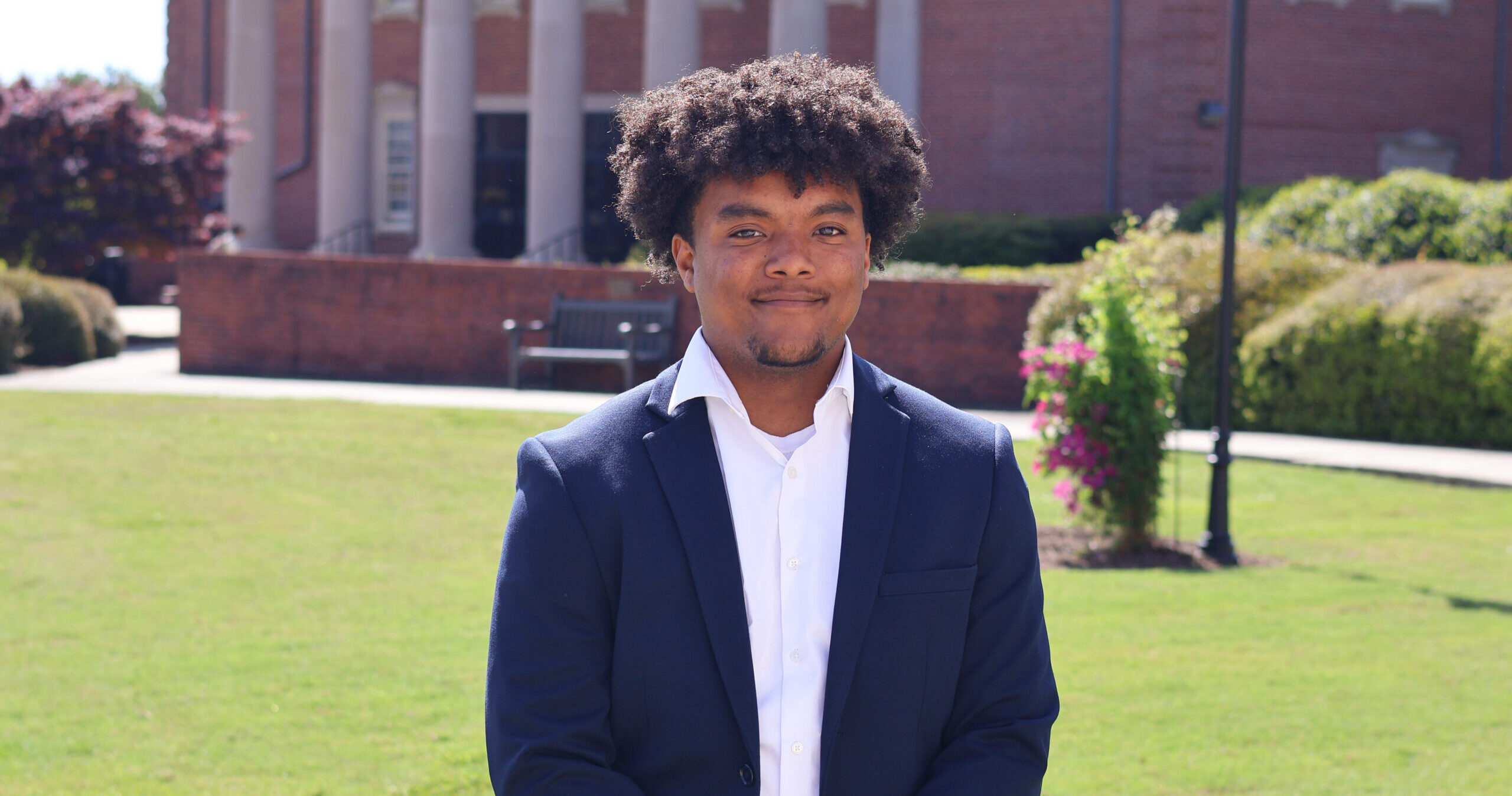
When Jaden Holder arrived at Presbyterian College from Tampa, Florida, he knew he was interested in aviation, engineering, and power systems. What he didn’t know was that a conversation with a professor would introduce him to a field that would help shape his future.
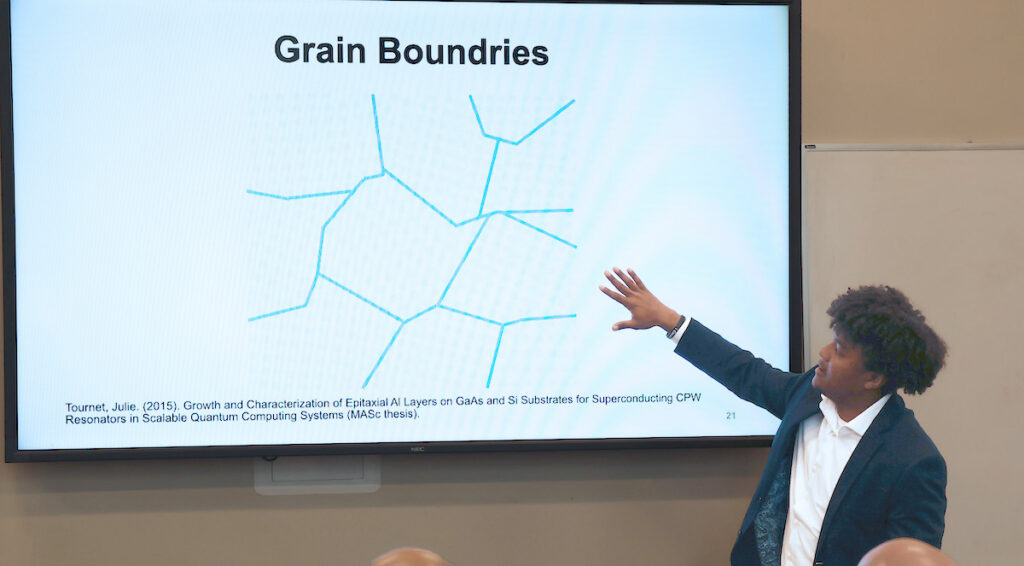
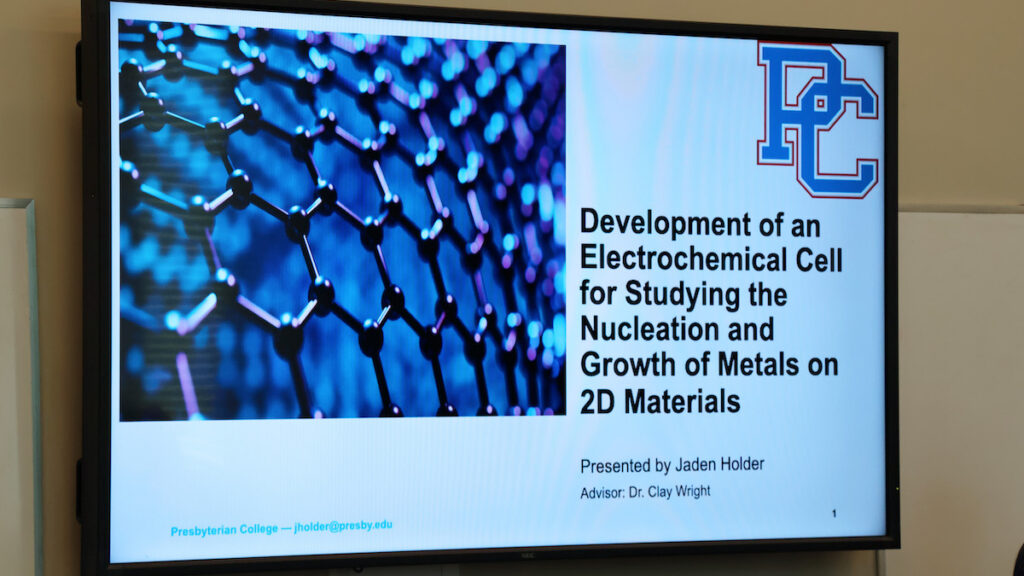
Today, the rising senior physics major spends part of his time studying how metals grow on materials only atoms thick, conducting research that could have implications for everything from advanced batteries to manufacturing technologies. More importantly, the experience has helped him discover how his interests in physics, engineering, and aerospace fit together.
“It’s been one of the most impactful parts of my college experience,” Holder said. “It has allowed me to apply concepts from my physics and engineering coursework to real-world problems, which has strengthened both my technical understanding and problem-solving skills.”
For Holder, undergraduate research has become more than an academic exercise. It has become a pathway toward a career in mechanical engineering and the aerospace industry.
I’ve had opportunities to get involved in research, leadership and extracurricular activities that might be harder to access at a larger university. If you are looking for a supportive environment where you can build strong connections with faculty and get hands-on experience in your field, PC is a great place to be.”
Jaden Holder ’27, Physics Major
Discovering a New Direction
Holder’s research journey began with a simple conversation.
After speaking with assistant professor of physics Dr. Clay Wright, whose expertise includes materials science, Holder was introduced to a field he had not previously explored in depth. As he learned more about the discipline and began conducting his own research, he discovered connections between materials science and some of the technologies that had long fascinated him.
“My primary interests are in aviation and power systems,” Holder said. “After doing some independent research, I discovered that materials science plays a critical role in the fabrication and performance of turbine blades in jet engines.”
That realization changed the way he viewed both his studies and his future.
“Seeing that direct connection between materials science and aerospace engineering inspired me to pursue this research,” he said.
The experience reflects one of the advantages of studying at a small liberal arts college, where students often work closely with faculty mentors and have opportunities to participate in meaningful research early in their academic careers.
For Holder, those opportunities helped transform curiosity into a career goal.
Making Complex Science Accessible
Although Holder’s research focuses on highly technical concepts, the central idea is surprisingly easy to understand.
Scientists and engineers often need to control how materials form and grow. If that growth becomes uneven, it can affect performance and reliability in everything from batteries to industrial equipment.
Holder’s research examines how extremely thin materials can influence that process.
One of those materials is graphene, a carbon-based substance that is only a single atomic layer thick. Despite its microscopic size, Holder discovered that it can have a significant impact on how metals form and grow on its surface.
“The biggest surprise during my research was how much the underlying substrate can influence metal growth, even when it is only a single atomic layer thick, like graphene,” he said.
In simple terms, something almost unimaginably thin can help determine the structure and behavior of materials built on top of it.
That understanding could help scientists develop better methods for producing materials with specific properties and fewer defects.
“My biggest takeaway is how important it is to understand processes at the microscopic and nanoscale levels in order to control material properties at the macroscopic level,” Holder said. “Small changes in conditions can significantly impact the final structure and performance of a material.”
While the science itself can be complex, the lesson is straightforward: tiny details can have enormous consequences.
Learning Beyond the Classroom
Holder believes the research experience has provided benefits that extend far beyond the laboratory.
In addition to deepening his understanding of physics and engineering concepts, the project has helped him develop practical skills that employers and graduate programs value.
Through his work, he has gained experience in experimental design, data analysis and scientific communication. He has also learned how research projects evolve as new questions emerge and unexpected challenges arise.
One example came when Holder identified limitations in an experimental setup being used to observe metal growth. Rather than simply accepting the problem, he designed a new electrochemical cell that improved the process and produced more consistent results.
The experience reinforced the importance of creativity and problem-solving in scientific research.
Working closely with faculty mentors also provided a firsthand look at how scientific discovery happens.
“Working closely with a faculty mentor has given me insight into the research process and has helped me grow both academically and professionally,” Holder said.
Those relationships have been a defining part of his experience at Presbyterian College.
“The small class sizes and close relationships with professors have made a big difference in my academic growth,” he said.
Looking Toward the Future
As Holder enters his senior year, he has a clear vision for where he hopes his education will lead.
His goal is to pursue a career in mechanical engineering, focusing on thermodynamics, power systems and aerospace applications.
He is particularly interested in jet propulsion and energy efficiency—fields that combine many of the interests that first drew him to physics and engineering.
“In the long term, I hope to contribute to the development of more advanced and efficient energy and propulsion systems,” Holder said, “combining my interests in physics, engineering and materials science.”
Looking back, Holder believes Presbyterian College helped provide opportunities that might have been more difficult to find elsewhere.
“I’ve had opportunities to get involved in research, leadership and extracurricular activities that might be harder to access at a larger university,” he said.
For prospective students considering PC, his advice is simple.
“If you are looking for a supportive environment where you can build strong connections with faculty and get hands-on experience in your field, PC is a great place to be.”
For Holder, those opportunities have done more than enhance his college experience. They have helped him discover a passion, develop valuable skills and chart a course toward a future in aerospace engineering—one atom-thin layer at a time.