Summer Research Symposium highlights student scholarship while keynote speaker Tomeika Bennett challenges researchers to ask not what they want to become—but what problems they want to solve
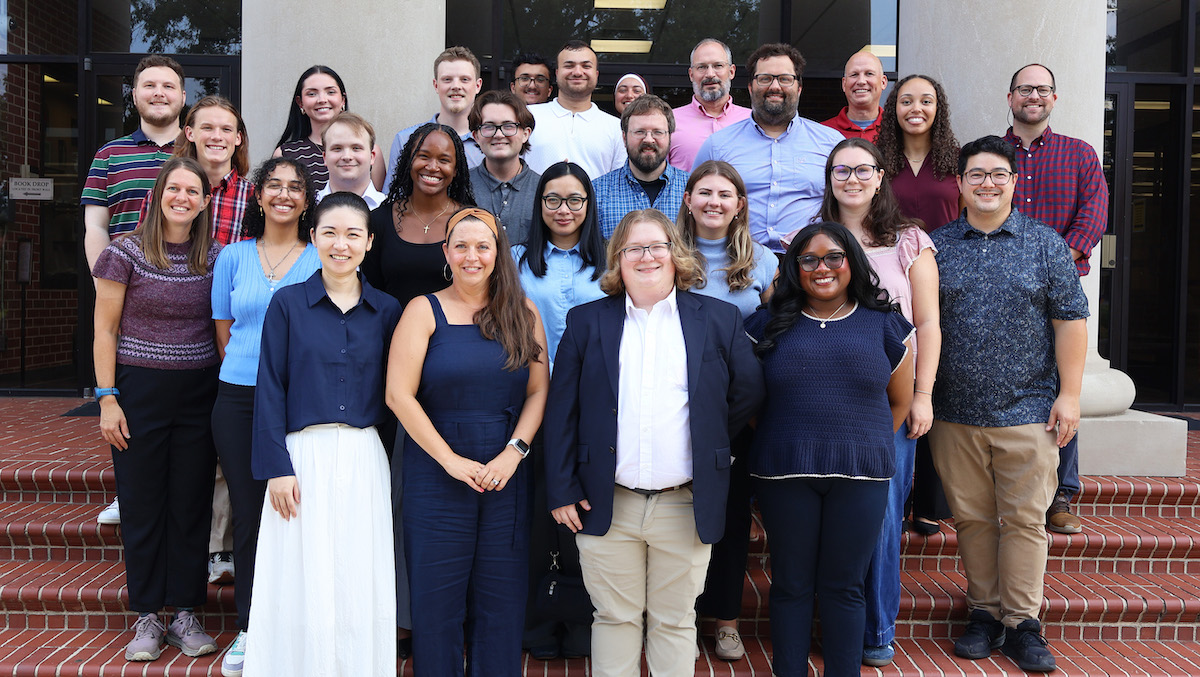
The most important question posed during Presbyterian College’s 2026 Undergraduate Summer Research Symposium wasn’t about chemistry, biology, history or engineering.
It was far simpler.
“What problem do I want to solve?”
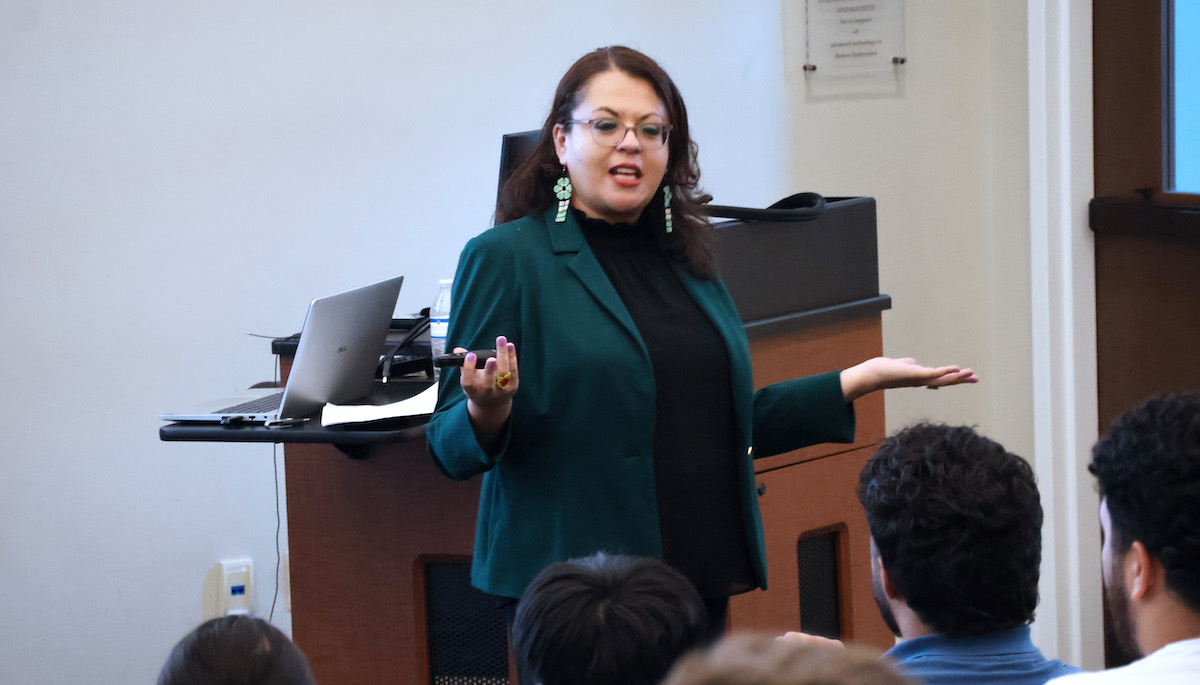
That challenge, posed by Tomeika Bennett, director of Presby First+, the college’s program for first generation college students, became the thread connecting a summer’s worth of undergraduate research as students presented projects ranging from cancer biology and environmental science to linguistics, robotics, chemistry and historical scholarship.
Addressing students during the symposium’s keynote luncheon, Bennett encouraged the young researchers to think beyond grades, presentations and résumés. Their work, she said, represents something much larger: the beginning of lives devoted to discovery, service and meaningful change.
“I say future, but I really think about the solid efforts that y’all have put in this summer,” Bennett told the students. “You are already stepping into those roles.”
The symposium showcased research completed through Presbyterian College Summer Fellows, South Carolina IDeA Networks of Biomedical Research Excellence (SC INBRE), the South Carolina Independent Colleges & Universities undergraduate research program and the South Carolina NASA Space Grant Consortium. Throughout the day, students shared original research with classmates, faculty mentors and guests, demonstrating the breadth of scholarship taking place across the college.
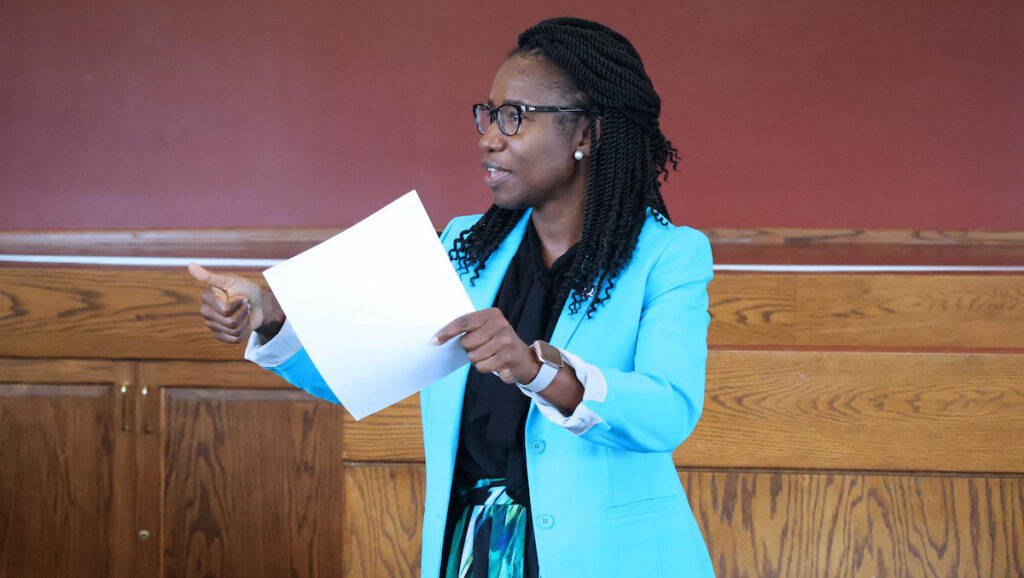
The work that you all are doing can lead to cures, to advocacy for expanding medical access, for environmental protection, for policy changes, and improvement in the quality of life for all people around the world.”
Tomeika Bennett, Director, Presby First+
More Than a Research Project
Before addressing the students, Bennett revisited a research project of her own.
She pulled out the undergraduate history thesis she had written 22 years earlier.
Reading it again reminded her not only of the countless hours spent researching and writing, but of the deeply personal reasons that often inspire academic inquiry.
Some research begins with a loved one’s illness. Some grows from a childhood experience. Some emerges from a fascination with a question that simply refuses to go away.
For Bennett, the project centered on the South Carolina community where she grew up and the churches that shaped her family and identity.
She encouraged students to recognize that many of their own projects carry similarly personal motivations.
“This is the culmination of weeks of intensive work and immersion that y’all have done,” she said. “I truly hope that you’re able to take this experience and go into this academic year with renewed energy.”
Rather than viewing research as another academic requirement, Bennett described it as an opportunity for students to discover their own academic voices while taking ownership of their learning.
Finding the Courage to Ask Bigger Questions
Throughout her remarks, Bennett returned repeatedly to one idea: curiosity.
She praised the students not simply for conducting research but for becoming people willing to challenge assumptions, wrestle with difficult questions, and pursue answers that matter.
“I recognize that you all are individuals that are not afraid to ask big questions,” she said. “Not afraid to push for systemic change, not afraid to stand flat-footed on what you know is true.”
Then came the question she hopes students continue asking long after graduation.
“The question isn’t anymore, ‘What is it that I want to be when I grow up?’” Bennett said. “It now probably has become, ‘What problem do I want to solve? What story do I want to tell?’”
Research, she said, becomes the vehicle through which those questions are explored.
It uncovers truth.
It challenges false narratives.
It transforms curiosity into discovery.
‘Do not shrink’
Speaking candidly about her own experiences as a first-generation college student, Bennett acknowledged the self-doubt many high-achieving students experience when entering new academic or professional spaces.
Too often, she said, students wonder whether they truly belong.
Her answer was immediate.
“You have earned your spot.”
She urged students not to diminish themselves or compare their journeys with those of others who may have enjoyed different opportunities or backgrounds.
Instead, she encouraged them to embrace the confidence that comes from having already done difficult things.
“Do not shrink,” she said.
The advice resonated naturally with a room filled with students who had spent the summer designing experiments, analyzing data, reviewing literature, solving problems and presenting original scholarship.
Learning From Mentors–and Becoming One
Bennett also encouraged students to deepen relationships with the faculty mentors who guided their research.
Office hours, she said, should be viewed not simply as time to ask questions about assignments but as opportunities to learn from professors whose experience extends far beyond the classroom.
“Be a sponge,” she urged.
Just as importantly, she challenged students to mentor those who come behind them.
Drawing on the African principle of Sankofa—symbolized by a bird looking backward while moving forward—Bennett reminded students that progress carries responsibility.
“As you go forward,” she said, “always reach back to bring others with you.”
Whether through mentorship, service or simply encouraging another student, she said the greatest accomplishments are those that create opportunities for future generations.
Discovery Demands Perseverance
Research, Bennett reminded students, rarely follows a straight line.Using the story behind Formula 409 cleaner—which reportedly required 409 attempts before the formula was perfected—she illustrated that meaningful discovery often comes only after repeated failures.
“Mistakes and failures are only lessons packaged differently,” she said.
Scientific breakthroughs, medical advances and transformative discoveries all require persistence.
The willingness to try again, she said, may be one of the most valuable lessons undergraduate researchers can learn.
That persistence, she noted, is what eventually leads to breakthroughs capable of improving lives.
“The work that you all are doing can lead to cures, to advocacy for expanding medical access, for environmental protection, for policy changes, and improvement in the quality of life for all people around the world.”
A Summer of Discovery
The projects presented during the symposium reflected that spirit of inquiry.
Students investigated environmental restoration, historical memory, language evolution, medicinal chemistry, cancer biology, robotics, materials science, nanotechnology and computational biochemistry.
Together, they represented not only the diversity of undergraduate scholarship at Presbyterian College but also the shared curiosity that drives meaningful research across disciplines.
As the symposium concluded, Bennett left students with one final reminder.
“Remember,” she said, “you are your own measuring stick.”
Rather than comparing themselves to others, she encouraged them to continue asking questions, embracing challenges and enjoying the journey of discovery.
For the students who spent their summer searching for answers, the symposium marked not the end of a project, but the beginning of careers built on curiosity.
Student Research Presentations
Oral Presentations
- Ezra Marks (PC Summer Fellows) — Restoration of Richardson Creek: Linking Tree Communities and Creek Bank Conditions
- Garrett Oliver (PC Summer Fellows) — Beyond Words: Celtic Contact and English Grammatical Shift
- Aisha Edmond (SC INBRE) — Carbon Monoxide Generation From Ascorbic Acid Degradation Under Fenton Conditions
- Reagan Myers (PC Summer Fellows) — Separation of Strontium Using Redox Active Ligands
- Ayanna Hawthorne (PC Summer Fellows) — Unfit for the Record: Black Women and the Archival Silences of Virginia Eugenics
- Carlie Edwards (SC INBRE) — Global Histone Modification Profiling Reveals Enrichment of H3K14 Acetylation Following p53/PTEN Loss
Poster Presentations
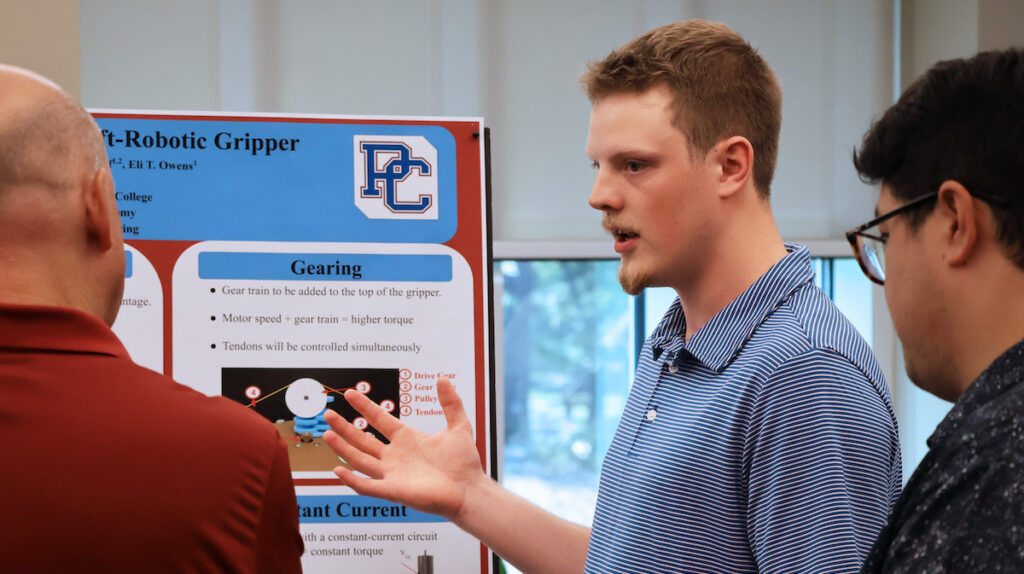
- Walton Bost (SC INBRE) — The Mobilization of a Granular-Based, Soft-Robotic Gripper
- Dalton Carroll (SC INBRE) — Evaluating the Effectiveness of Electrodeposited Copper/Graphene as an Electrochemical Sensor for Dopamine in the Presence of Ascorbic Acid
- Aisha Edmond (SC INBRE) — Carbon Monoxide Generation From Ascorbic Acid Degradation Under Fenton Conditions
- Carlie Edwards (SC INBRE) — Global Histone Modification Profiling Reveals Enrichment of H3K14 Acetylation Following p53/PTEN Loss
- Sam Gearheart (PC Summer Fellows) — Aqueous Electrodeposition of Metals on Insulating and Conducting 2D Materials
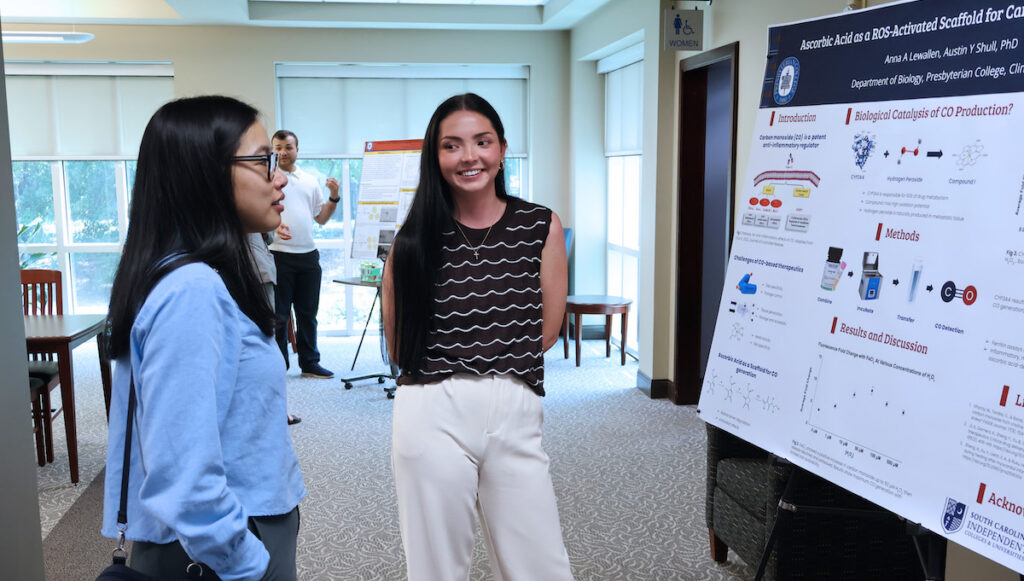
- Anna Lewallen (SCICU) — Ascorbic Acid as a ROS-Activated Scaffold for Carbon Monoxide Release
- Mohammad Rasasi (SC INBRE) — Ascorbic Acid-Coated Gold Nanoparticles as Potential Antimicrobial Agents against E. coli
- Courtney Williams (SC INBRE) — Computational Study of the HDAC10 E274K Mutation Effects on Structure and Enzymatic Activities
- Veby Youssef (SC NASA Space Grant Consortium) — Magnetic Manipulation of the Granular Jamming Transition