
Write your story. Craft your voice. Shape your future.
Find your voice—then learn how to use it. The English Major with a concentration in Creative Writing treats writing as both art and craft, giving you space to create in the genres that inspire you while building the communication skills today’s employers demand. Through hands-on classes and workshops, you’ll sharpen your ability to present ideas, collaborate with peers, and refine your work through feedback. Whether you’re headed to graduate school or careers in copywriting, marketing, content creation, or teaching, you’ll leave with a portfolio and the confidence to back it up.
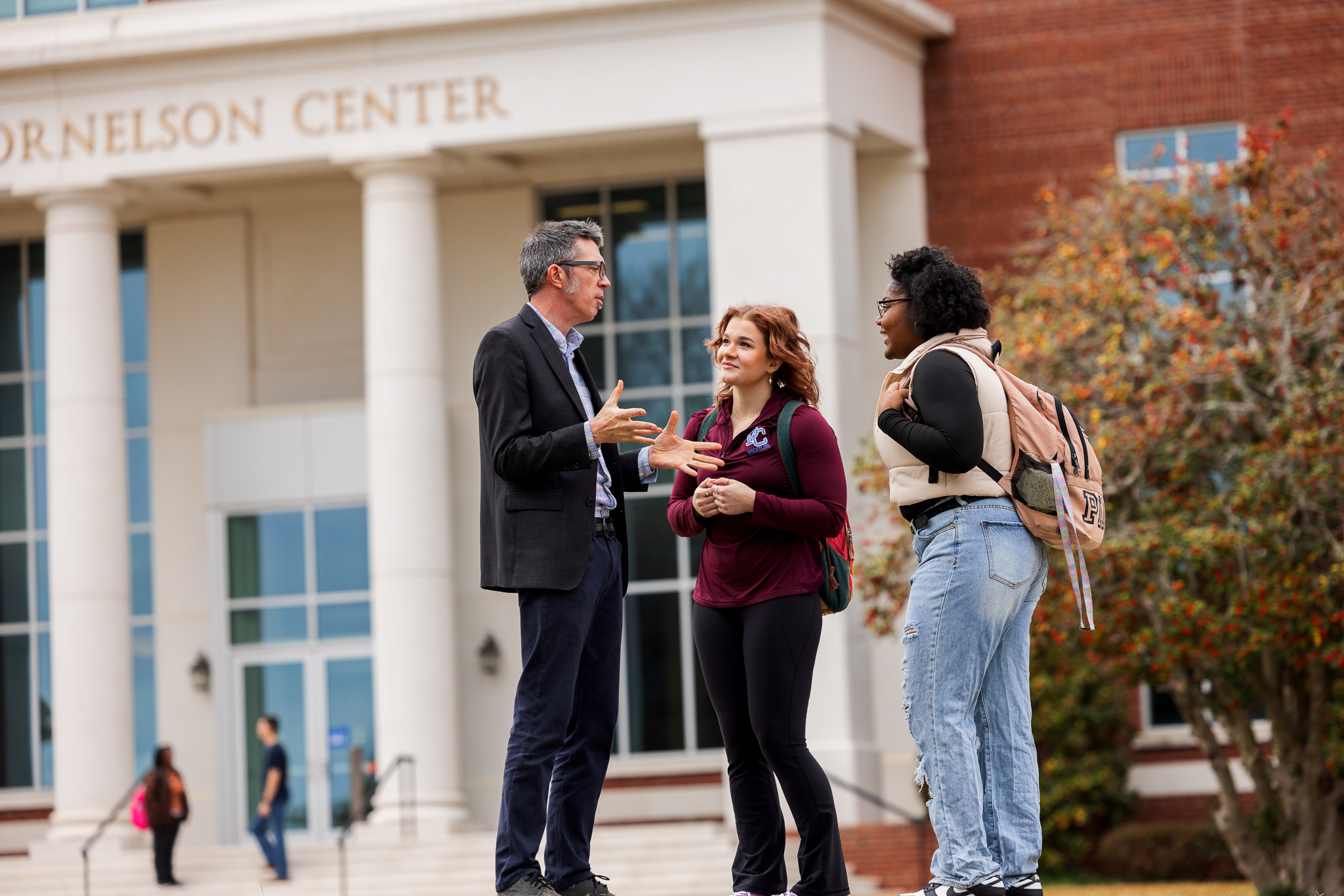
Small classes mean your professors know you—and your writing. This isn’t about workshopping in a crowd; you’re growing alongside a tight-knit community of writers who challenge and support each other. Beyond campus, opportunities like study abroad and community engagement bring new perspectives to your work and new stories to tell.
The Power of Your Degree
- Expand your perspective.
Explore how stories shape culture, identity, and human experience across time and place. - Broaden your knowledge.
Study literary traditions from Shakespeare to contemporary voices while developing expertise in poetry, fiction, and creative nonfiction. - Solidify your skill set.
Gain practical experience through workshops, revision processes, public readings, and portfolio development. - Become a critical thinker.
Analyze how language creates meaning, moves audiences, and transforms abstract ideas into compelling narratives.
Earn Your Degree in 3 years
PC Flex gives eligible students the opportunity to complete select degrees in just three years—saving time and reducing overall college costs while still experiencing everything PC has to offer. Stay on track, stay supported, and get a head start on your future.

33 Hours
Required for Creative Writing concentration coursework
Senior Portfolio
Professional-level portfolio of substantially revised work
12:1 Student-To-Faculty Ratio
In discussion-based classroom settings
While taking the Creative Writing courses, I was able to grow more confident in public speaking and convey the emotions in my work to others. You not only learn from the professor, but the students in the program as well. I got to learn new approaches to how you can focus, whether that be listening to a certain genre of music, just writing things down until you reach that flow state, or doing research on a certain topic to fuel the creative energy.
Audrey Pace ’27
What You’ll Study
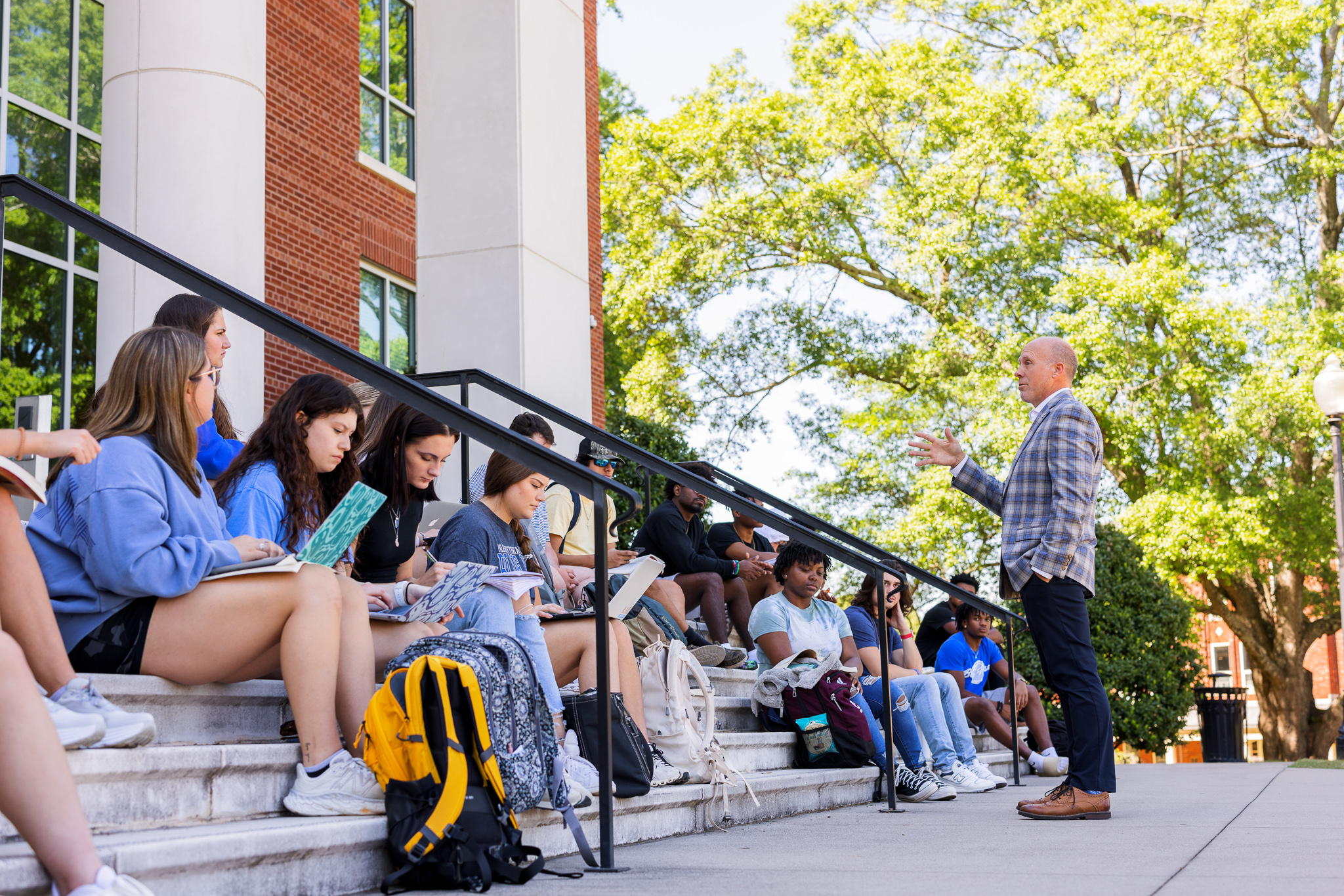
Your experience as a creative writing student centers on class workshops. Here your writing is shaped and refined through class readings and critiques. Your classmates offer constructive criticism as a whole class and sometimes in small groups. If this process sounds intimidating to you, remember that class sizes are small—they are capped at 10. These workshops are safe spaces for sharing your work, where feedback is honest but always respectful. And here you’re free to explore topics and develop your work in a safe, non-judgmental environment.
The creative writing concentration requires 33 hours of coursework, including 18 hours from the English major curriculum. Concentration courses begin with foundational workshops in Poetry, Short Fiction, or Creative Nonfiction. You may also explore other Topics in Creative Writing, like children’s literature, fantasy, worldbuilding, and fairy tales. While these courses focus on reading and responding to original student work, representative pieces from contemporary writers are also studied. Each 2000-level course culminates in a portfolio. During your final two years you’ll create a large-scale project in an Advanced Creative Writing Workshop or Honors Research course. In your Senior Portfolio, you’ll be asked to take pieces from different courses to revise substantially for a professional-level portfolio of writing.
Get Involved
At Presbyterian College, you can actively pursue your passion for creative writing through programs and opportunities that take your discipline out of the classroom and into the real world—all while expanding your experience, perspective, and skillsets.
Careers in Creative Writing
If you’ve heard that humanities degrees are impractical and not valued in the job market, you can put those rumors to rest. Your English degree, with its emphasis on creativity and written communication, prepares you for employment in a variety of sectors. While English majors make great writers and professors, many also follow career paths into advertising, business, and law.
Graduates from PC’s creative writing program have pursued advanced degrees in creative writing, law, medicine, and theology. They teach at primary and secondary schools in the US, and internationally in places like Thailand and Hong Kong. And alumni have gone on to careers in public relations and financial services. No matter your major, PC’s liberal arts education prepares you with problem-solving, communication, and other soft skills employers look for.
Career Professions
Arts Administrator
Author/Freelance Writer
Communications Director
Content Marketing Manager
Copywriter
Creative Director
Editor or Copy Editor
English Teacher (Secondary)
Grant Writer
Higher Education Professor (MFA/PhD)
Journalist or Reporter
Librarian or Archivist
Literary Agent
Literary Magazine Editor
Podcaster/Audio Producer
Publishing Assistant
Screenwriter
Social Media Content Manager
Technical Writer
Writing Center Director
Acquired Skills
Audience awareness and adaptation
Character, plot, and theme development
Creative and analytical writing
Creative nonfiction techniques
Critical thinking and close reading
Cultural and historical context analysis
Genre conventions and experimentation
Giving and receiving constructive feedback
Literary analysis and interpretation
Metaphor and figurative language
Narrative structure and storytelling
Poetry craft (form, meter, imagery)
Problem-solving and adaptability
Project management and deadline discipline
Public reading and presentation
Revision and editing processes
Self-directed learning and motivation
Verbal communication skills
Voice and style development
Workshop collaboration
Quick Stats
$69,000
Average Mid-Career Salary
A bachelor’s degree in Creative Writing can earn you a mid-career salary of $69,000 or more. Many English majors find high-paying positions with titles like Content Marketing Manager and Communications Director.
7% Growth
Projected Employment Rate
According to the Bureau of Labor Statistics, marketing managers made an average of $159,660 a year in 2024. The expected job outlook is expected to grow 7% from 2024 to 2034, which is faster than average.
High Versatility
Career Diversity Index
A Creative Writing degree offers exceptional versatility. Graduates enter fields as diverse as book publishing, advertising, public relations, education, nonprofit work, digital media, law, medicine, and theology. The ability to write clearly and creatively is universally valued, making creative writing majors adaptable across industries.
Source(s): U.S. Bureau of Labor Statistics; PayScale College Salary Report
Where can an English Degree take you?
Our department newsletter highlights student achievements, alumni career milestones, and faculty accomplishments. These stories demonstrate the diverse opportunities and lasting impact of studying English at PC.