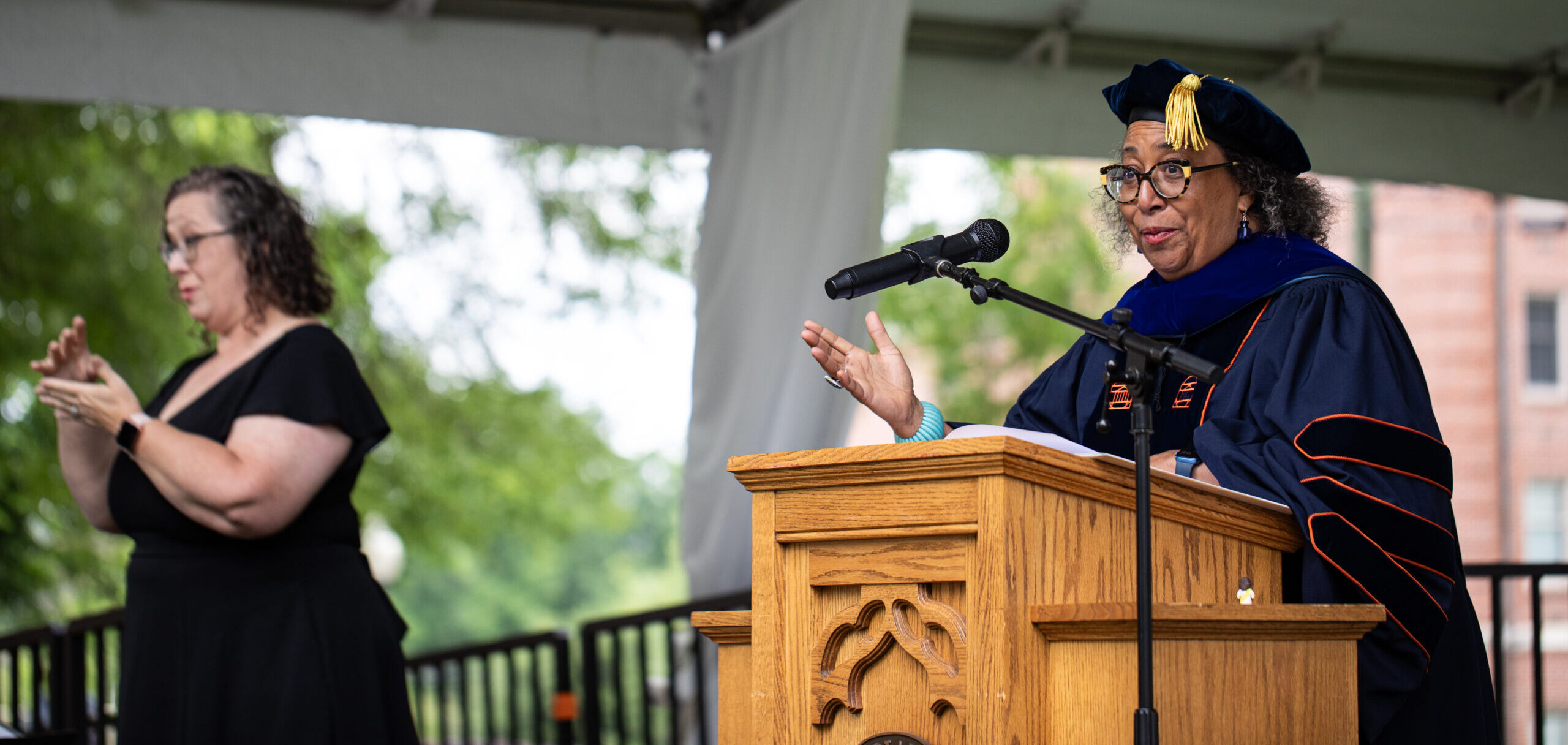

Help students find their voices — and discover the power of language.
As an English Secondary Education major at Presbyterian College, you’ll combine your passion for literature, language and writing with the practical preparation needed to become an effective high school English teacher. You’ll explore works from different periods, cultures and perspectives while developing your own skills as a reader, writer and critical thinker.
At the same time, you’ll learn how adolescents develop as readers and writers, how to design meaningful lessons and assessments, and how to create classrooms where students feel challenged, supported and encouraged to express their ideas. Through coursework, field experiences and student teaching, you’ll graduate prepared to help the next generation read deeply, write confidently and think critically.
The Power of Your Degree

- Expand your perspective.
Explore literature from different cultures, traditions and time periods while learning how language and storytelling shape the ways people understand themselves and the world. - Broaden your knowledge.
Build a strong foundation in literature, linguistics, composition, adolescent development, literacy instruction, curriculum design and assessment. - Solidify your skill set.
Develop your teaching practice through school-based field experiences, practica and student teaching while strengthening your own abilities in writing, research, communication and literary analysis. - Become a critical thinker.
Learn to interpret complex texts, evaluate ideas, respond to the needs of diverse learners and design engaging lessons that encourage students to think independently.
73 Hours
Required for the English Secondary Education major
12:1 Student-To-Faculty Ratio
In discussion-based classroom settings
What You’ll Study
The English Secondary Education curriculum combines in-depth study of English with professional preparation for the secondary classroom.
Your English coursework develops a broad understanding of literature, language and composition. You’ll study linguistics and literary research or criticism, explore British, American, African American and world literature, and take courses representing both earlier and contemporary literary traditions. Required courses such as Adolescent Literature and The Teaching of Composition connect your study of English directly to the work you’ll do as a teacher. You’ll also study Shakespeare and complete a senior capstone in English.
Your education coursework focuses on adolescent development, literacy, culturally and linguistically diverse learners, special education, instructional methods, assessment and the principles of effective teaching. Through a sequence of practica, you’ll gain increasing experience in school settings before completing an immersive directed-teaching experience in a secondary classroom.
By graduation, you’ll understand English not simply as a body of literature to teach, but as a way to help students become stronger readers, clearer writers, confident communicators and more thoughtful participants in the world around them.
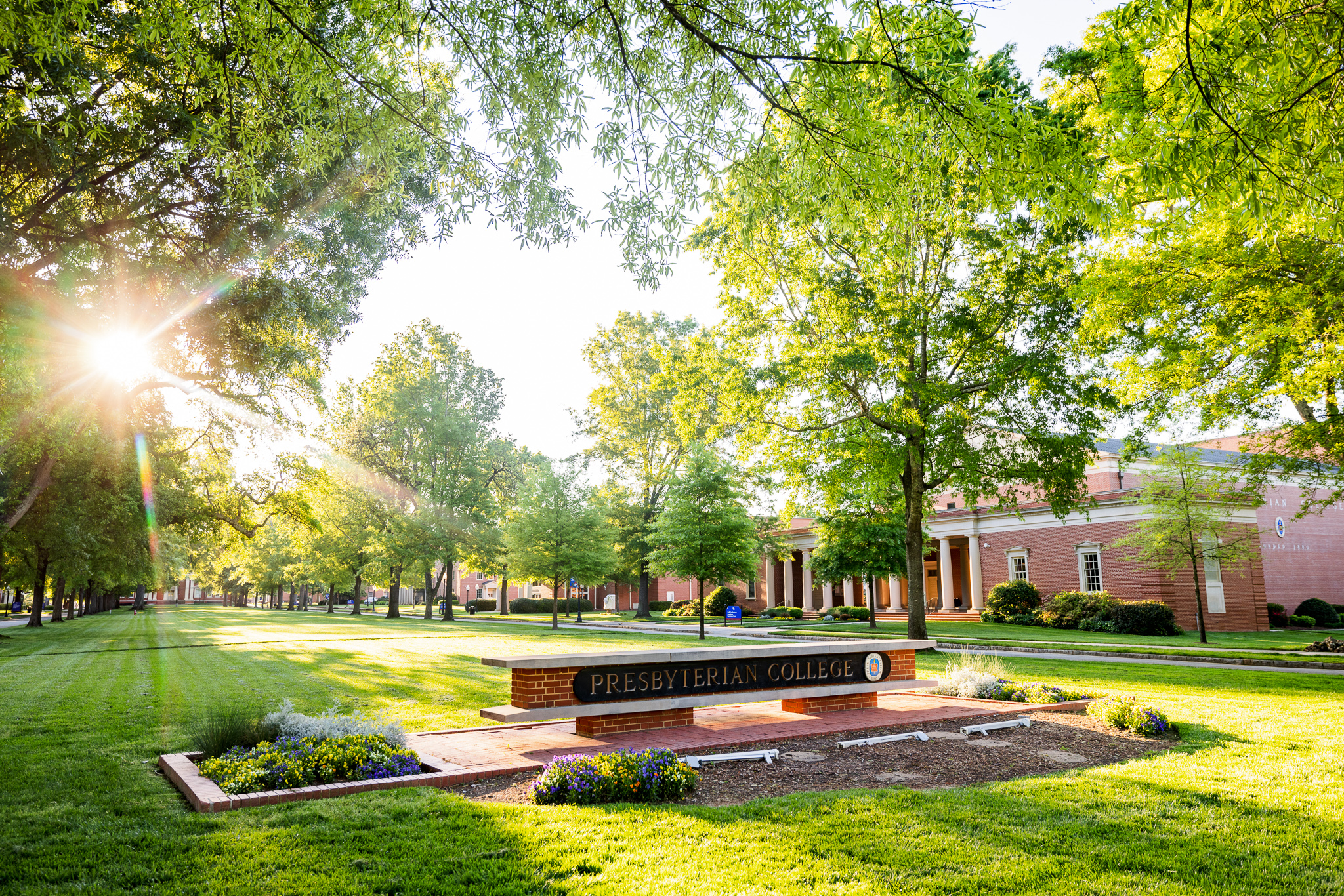
Get Involved
At Presbyterian College, you can actively pursue your passion through programs and opportunities that take your discipline out of the classroom and into the real world—all while expanding your experience, perspective, and skillsets.
- Tutor:
Serve as a peer writing mentor or tutor, helping other students become more confident writers while sharpening your own ability to explain, coach and provide constructive feedback.
- Write:
Contribute as a writer, editor or designer to The Bluestocking, PC’s student newspaper, or Figs & Thistles, the College’s literary magazine.
- Research:
Explore questions in literature, language, literacy or education through faculty-mentored research and other scholarly opportunities.
- Teach:
Gain hands-on experience through practica and field placements that put you in real classrooms and help you develop your teaching identity before student teaching.
Careers in English Secondary Education
English Secondary Education prepares students for the meaningful work of helping adolescents become strong readers, writers, speakers and thinkers.
Graduates are prepared to pursue certification and licensure to teach English language arts at the secondary level. In the classroom, English teachers do more than introduce students to important works of literature. They help young people learn to analyze information, develop persuasive arguments, communicate ideas clearly, appreciate perspectives different from their own and find confidence in their individual voices.
PC graduates may teach in public or private schools, pursue advanced study in education or English, or move into related areas such as curriculum development, educational publishing, instructional coaching, administration and educational technology.
The combination of disciplinary expertise and professional preparation also develops communication, leadership and analytical skills that translate into careers beyond the traditional classroom.
Career Possibilities
High School English Teacher
English Language Arts Teacher
English Department Chair
Literacy or Reading Specialist
Instructional Coach
Curriculum Developer
Curriculum Coordinator
Educational Consultant
School Administrator
Educational Program Coordinator
College or University Instructor with an Advanced Degree
Writing Center Director
Academic Advisor
Educational Researcher
Educational Publisher
Textbook Writer or Editor
Assessment or Test Development Specialist
Online English Instructor
Educational Content Developer
Instructional Designer
Professional Tutor
Acquired Skills
Literary analysis and close reading
Written communication
Composition instruction
Grammar and language instruction
Research and information literacy
Curriculum design and lesson planning
Classroom management
Student engagement
Culturally responsive teaching
Literacy instruction
Assessment and evaluation
Lesson differentiation and adaptation
Public speaking and oral communication
Editing and proofreading
Critical thinking and problem-solving
Argument construction and evaluation
Educational technology integration
Student motivation and rapport building
Reflective practice and self-evaluation
Peer mentoring and collaboration
Organization and time management
Creative and analytical thinking
Leadership
Teamwork and interdisciplinary collaboration
Quick Stats
$72,040
Median Annual Salary
The median annual wage for high school teachers was $72,040 in May 2025. Salaries vary according to factors including geographic location, years of experience, school system and level of education.
63,500 Openings
Annual Job Opportunities
About 63,500 openings for high school teachers are projected each year, on average, from 2025 to 2035. Many of these opportunities will result from the need to replace teachers who change occupations or leave the workforce.
High Versatility
Career Diversity Index
An English Secondary Education degree develops expertise that extends beyond the traditional classroom. Graduates build strong skills in communication, writing, analysis, research, leadership and instruction that can lead to opportunities in education, curriculum development, publishing, tutoring, educational technology, administration and other communication-driven fields.
Source(s): U.S. Bureau of Labor Statistics
Professional Licensure Disclosures
The curriculum for all certification areas both state and national meet the licensing requirements by the federal guidelines and South Carolina State Department of Education. The current licensure areas offered at Presbyterian College (Early Childhood (NAEYC), Elementary (ACEI), Middle Level (AMLE), Secondary English (NCTE), Secondary Math (NCTM), Secondary Social Studies (NCSS), Special Education (CEC) and PK-12 English Language Learners (TESOL) follow the federal and state degree and certification standards for preparing teaching professionals. For further information please follow this link:
https://www.presby.edu/about/accreditation/caep-annual-reporting-measures/
Related Programs
Take Digital Media Design even further by combining your concentration or minor with another field that complements your creative and professional interests.