Understand the universe. Apply the laws. Innovate the future.
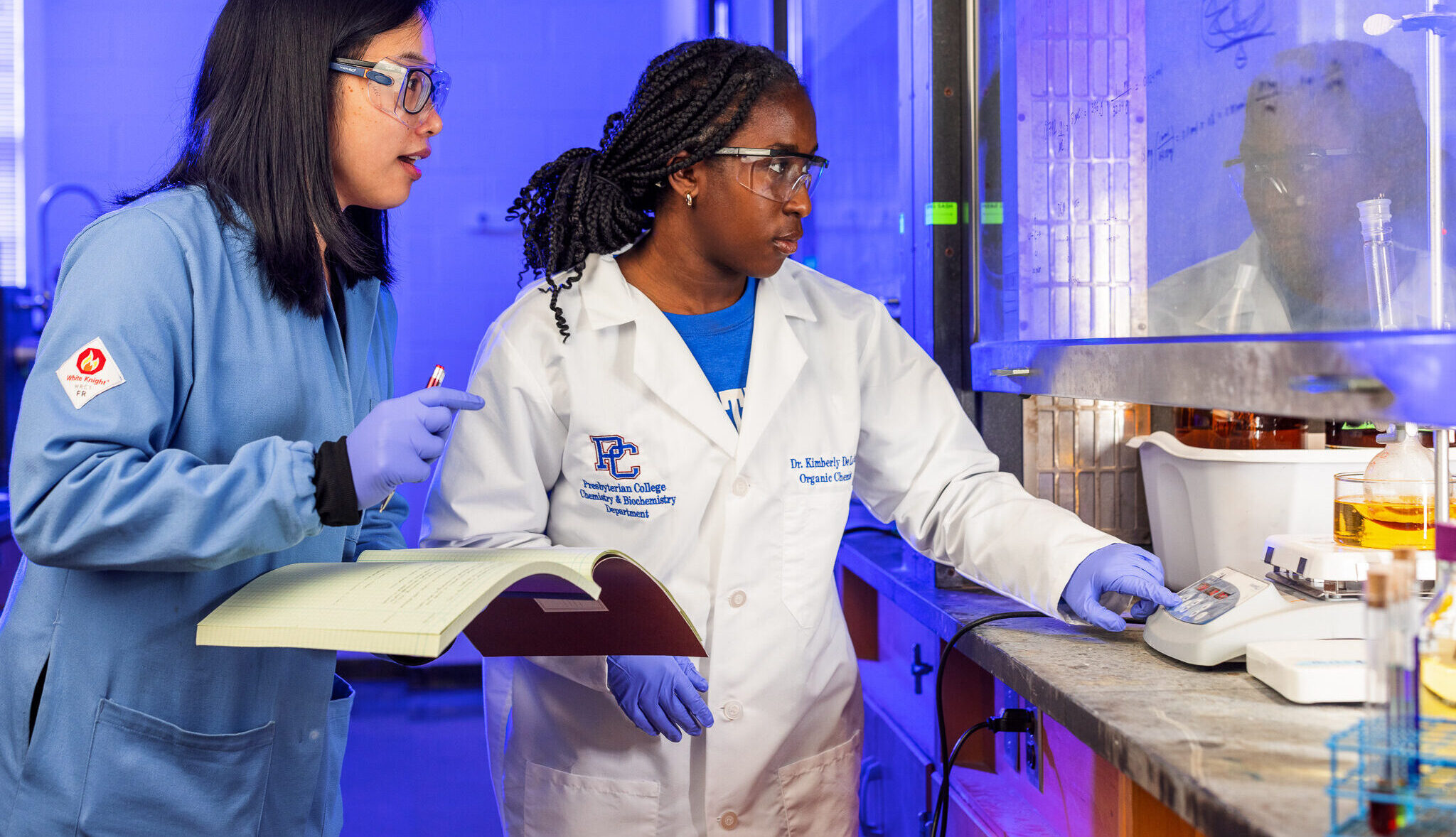
Physics explores the fundamental principles that govern everything—from atoms to galaxies. At Presbyterian College, physics majors gain a deep understanding of the natural world through hands-on experiments, theoretical analysis, and problem-solving. Whether you’re interested in engineering, astronomy, medicine, or technology, a physics degree from PC prepares you for discovery, innovation, and success in a range of scientific careers.
The Power of Your Degree
- Expand your perspective.
Study matter, energy, and motion at every scale—from the quantum world to the cosmos. - Broaden your knowledge.
Integrate physics with mathematics, chemistry, biology, or engineering studies. - Solidify your skill set.
Learn to design experiments, analyze data, and build computational models. - Become a critical thinker.
Sharpen your ability to solve real-world problems using scientific principles.
34-36 Hours
Required for Physics major coursework
Senior Capstone
Demonstrate your knowledge through independent research or an applied project
12:1 Student-To-Faculty Ratio
In discussion-based classroom settings
The Student Experience

Mackenzie
Partsch '25
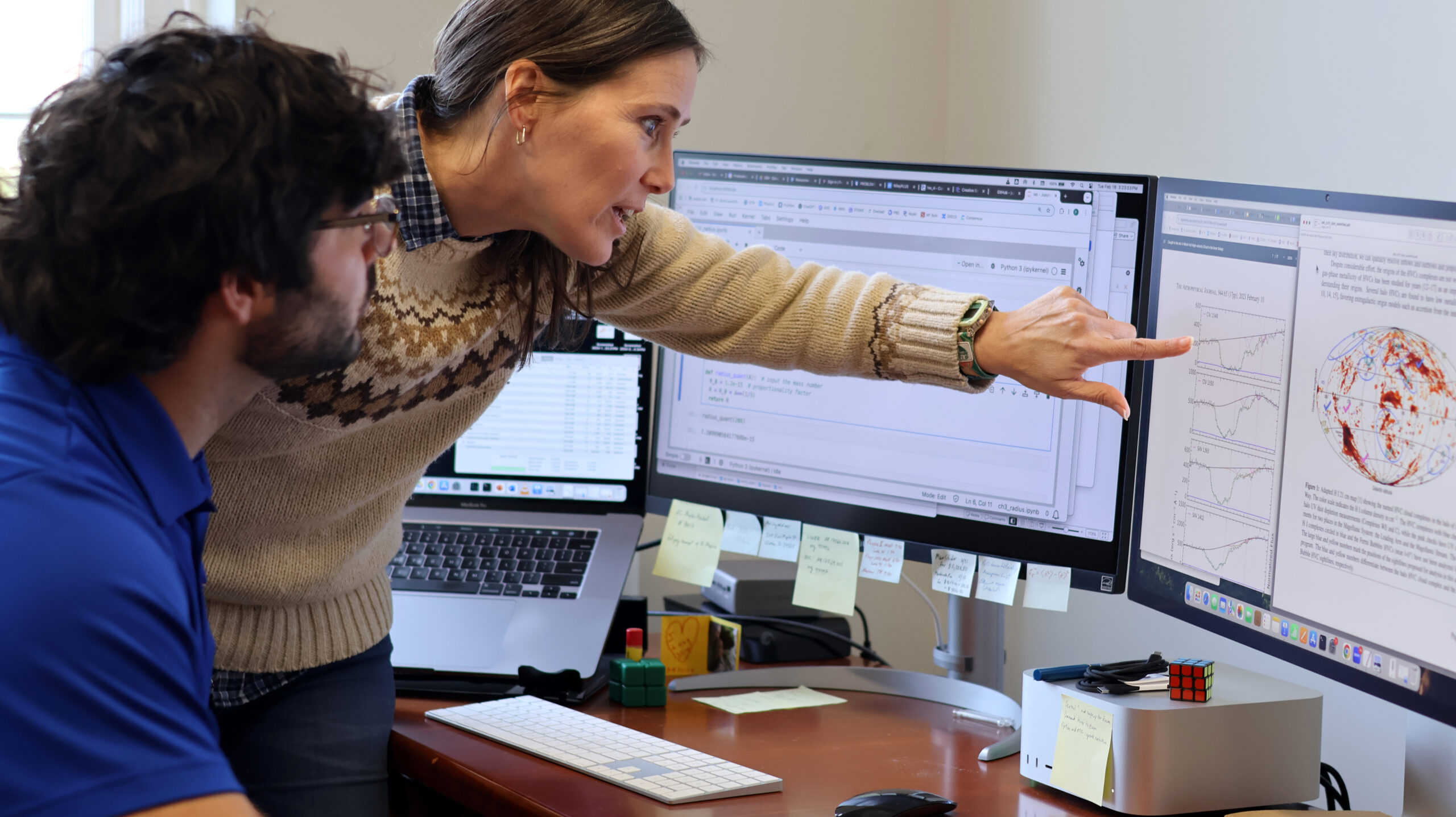
“If I could give advice to incoming students, it would be to keep an open mind. I never would have guessed I’d be doing biomedical physics research as an undergrad.”
Read My Story
Jacob
Clerc '25
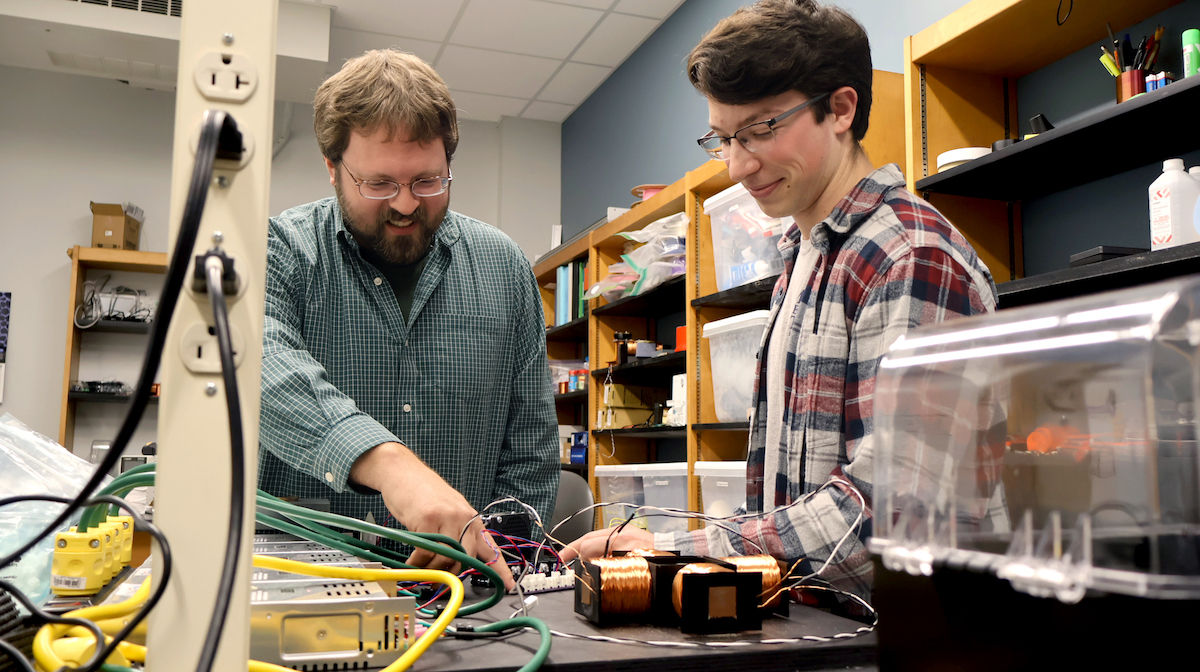
“Working closely with Dr. Owens has allowed me to see what research looks like beyond the classroom. Hearing about his own experiences in graduate school and in the field has helped me shape my own career path. This work has exposed me to areas of physics I hadn’t previously considered, from bas…
Read My Story
What You’ll Study
You’ll begin with foundational courses in general physics and calculus, followed by specialized study in areas such as classical mechanics, electricity and magnetism, quantum mechanics, thermodynamics, and optics.
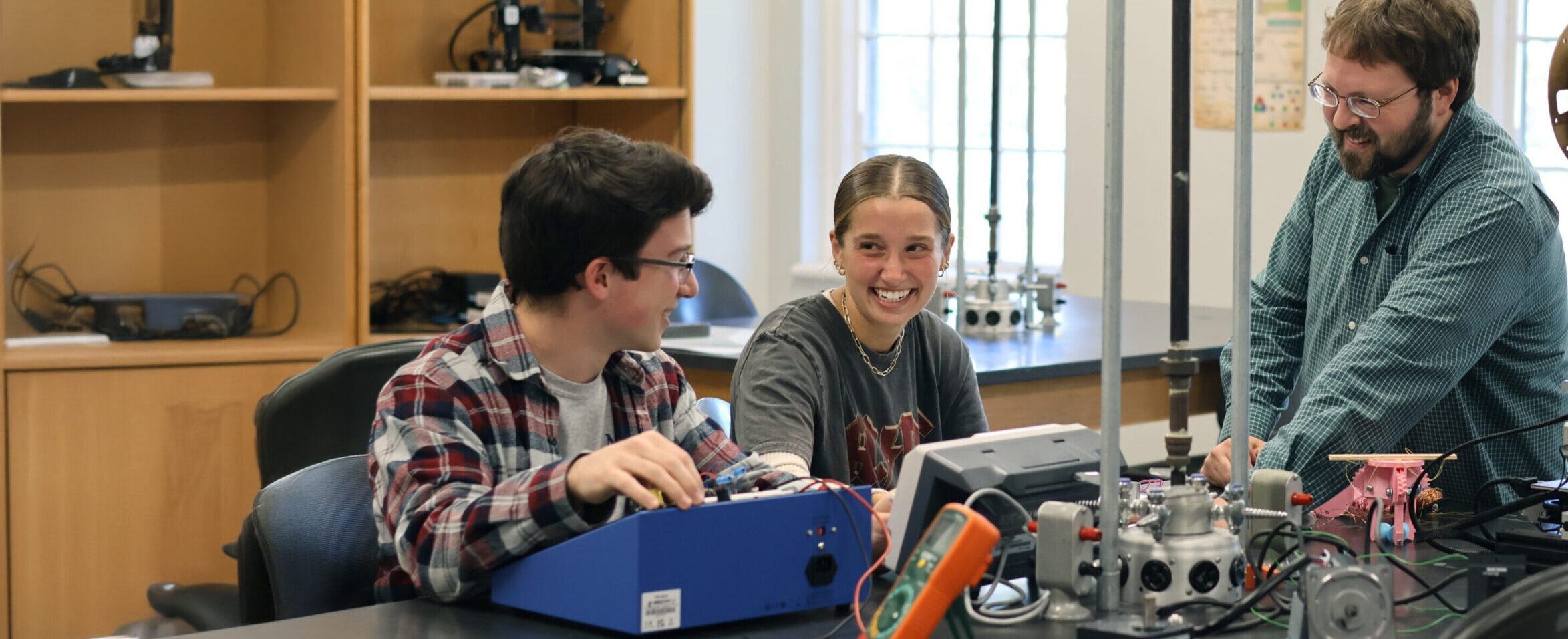
The physics program emphasizes laboratory work and hands-on learning, giving you direct experience with experimental design, data acquisition, and instrumentation.
A required capstone project allows students to explore a topic of personal interest, often aligned with goals in graduate study, engineering, or applied research.
Get Involved
At Presbyterian College, you can actively pursue your passion for physics through programs and opportunities that take your discipline out of the classroom and into the real world—all while expanding your experience, perspective, and skillsets.
Careers in Physics
A degree in physics opens doors to careers in engineering, research, energy, aerospace, healthcare, education, and technology. Many PC physics graduates pursue advanced degrees in physics, astronomy, engineering, or medicine. Physics majors are highly sought after for their problem-solving abilities and strong analytical backgrounds. Whether you want to explore black holes or design the next generation of smart technology, physics prepares you to make an impact.
Career Professions
Research Physicist
Data Scientist
Aerospace Engineer
Medical Physicist
Software Developer
Quantitative Analyst (Quant)
Nuclear Physicist
Optical Engineer
Mechanical Engineer
Science Educator / Physics Teacher
Astrophysicist
Lab Technician / Research Assistant
Materials Scientist
Robotics Engineer
Computational Physicist
Patent Examiner (Physics or Engineering focus)
Geophysicist
Renewable Energy Specialist
Acoustics Consultant
Technical Consultant
Acquired Skills
Analytical and critical thinking
Mathematical modeling and problem-solving
Programming (e.g., Python, C++, MATLAB)
Experimental design and laboratory techniques
Data collection and statistical analysis
Proficiency in using scientific instruments and tools
Computational physics and simulations
Research methodology and scientific inquiry
Complex systems analysis
Technical writing and scientific reporting
Application of physics to real-world problems and innovation
Team collaboration on scientific projects
Communication of complex ideas clearly
Use of physics-specific software
Project management in research environments
Understanding of thermodynamics, electromagnetism, quantum mechanics, etc.
Adaptability in interdisciplinary settings
High attention to detail and accuracy
Time management and self-directed learning
Knowledge of engineering principles
Quick Stat
$62,150
Average Median Salary
Graduates with a physics degree can expect a median annual salary of around $62,150. The top 10% earn over $118,000 annually, while the bottom 10% earn under $32,000. Salaries vary based on role and experience; for instance, physicists employed by the federal government earn a median salary of $135,300 per year, while those in scientific research and development services earn $176,960 annually.
7% Growth
Projected Employment Rate
Employment for physicists and astronomers is projected to grow by 7 percent over the next decade, faster than the average for all occupations. This growth is driven by the increasing demand for professionals in research and development, as well as applications in medical imaging, computing, and other areas. An estimated 1,600 openings for physicists and astronomers are projected each year, on average, due to both employment growth and the need to replace workers who transfer to different occupations or exit the labor force.
High Versatility
Career Diversity Index
A physics degree offers a wide range of career opportunities across various sectors. Graduates can pursue roles in research and development, education, healthcare, engineering, and technology. The versatility of the degree allows professionals to work in diverse fields such as aerospace, energy, telecommunications, and finance.
Source(s): U.S. Bureau of Labor Statistics