Religion and philosophy major Riley Taylor answering call to ministry
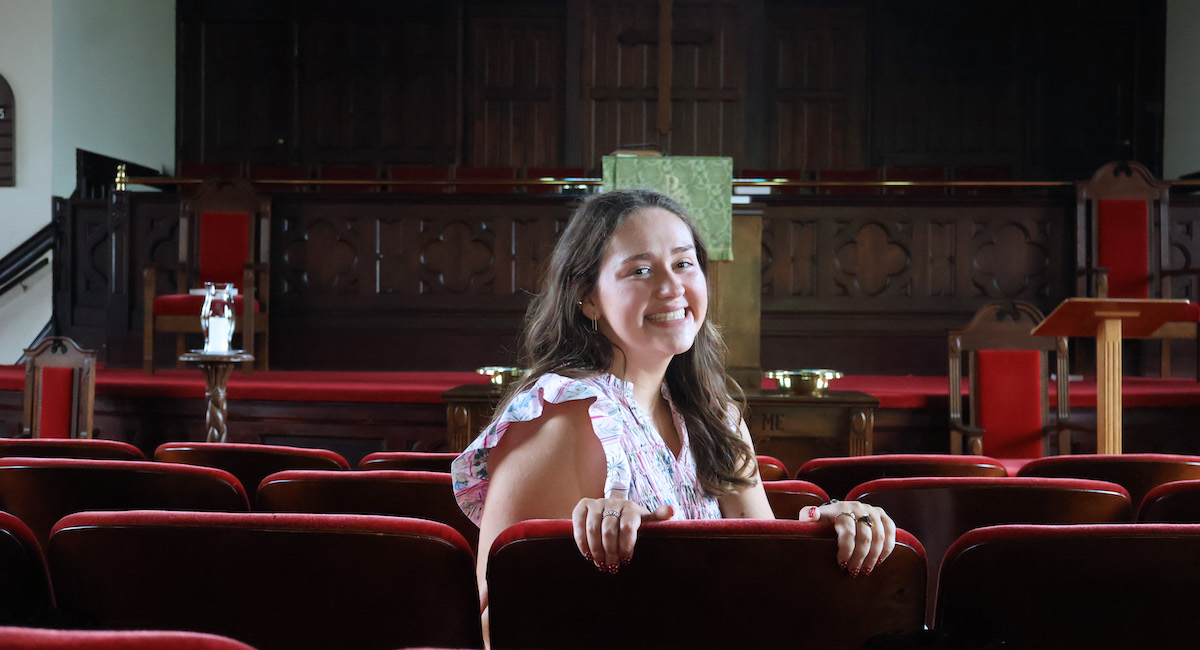
Riley Taylor, a senior at Presbyterian College, is concerned about the lack of discussion surrounding mental health within the church.
Taylor wasn’t always certain that her future lay in the church. Originally a biology major, Taylor made the switch to a psychology major and a religion minor after realizing how much she loved working with her youth group back home in Gainesville, Ga. She found that she enjoyed the courses she took for her minor, and eventually declared a religion and philosophy major in her junior year.
“I realized that religion and philosophy is really where my heart is, and that that’s my calling,” Taylor said.
An internship at First Presbyterian Church of Laurens only further confirmed for her that she was on the right path.
“It gave me a sense of confidence, because I struggled with not knowing if I was in the right field, or doing what I was supposed to be doing,“ she said. “But after working there, I just felt a sense of peace, knowing this is exactly what I’m supposed to be doing.”
The question of the church’s role in mental health aid was first brought to Taylor’s attention during a Study of Religion course, in which students learned about the phenomenon of pastors attributing the mental health struggles of their congregation to not praying enough, or to being a “bad Christian.”
“That idea is so mind-boggling to me,” she said. “I just remember that sticking with me and being like, ‘why?’”
Naturally, when the time came to choose a research topic for her capstone project, Taylor began to look into ways in which the church can implement mental health resources so church members feel seen and heard.
“If the church is to be a community that nurtures the whole person, we must include mental health in our care,” she said.
The church has the opportunity and responsibility to embody the love and presence of Christ for those who are hurting. Let us not be silent, and let us be the community that shows up, listens deeply, and stands in hope.”
Riley Taylor ’26
To Taylor, the best way to implement this is through Stephen Ministry, which is a group of people within the church who are specifically trained to provide counsel to those who may need it.
“These leaders are trained to focus on Christ, that’s the main thing when they’re helping these people,” she said. “So just showing his love or telling them that it’s okay, He’s here and he’s going to get you through this.”
For Taylor, the lack of recognition of mental health in the church and the decline of church attendance in younger generations go hand-in-hand – for a generation so open about mental health and its impact, it can be jarring for some to see it go unmentioned.
“Young people are especially vulnerable when it comes to mental health,” she said. “Anxiety, depression, social isolation – all of these are on the rise. Churches need to be safe spaces where the youth feel seen, heard, and supported.”
She feels that it’s more important now than ever before to rebuild that connection and to rebuild the church, beginning with open discussions about mental health during worship.
“I feel like if pastors were to implement this into everyday worship styles, and they were to speak about it more from the pulpit, then people wouldn’t feel like Christians are hypocrites,” she said. “And maybe they wouldn’t feel like they’re being pushed out.”
As she begins her senior year at PC, Taylor is also dually enrolled in Masters of Divinity courses at Union Presbyterian Seminary. She is the first student to participate in this unique partnership between UPSem and PC, which was recently launched as an initiative of the college’s strategic plan.
She’s certain that being a pastor is in her future, feeling especially called to youth ministry, which she attributes to her time spent at First Presbyterian Church of Laurens.
Beyond that, her goal is simple: “I’d love to continue to spread the word of His gospel,” she said. “And hopefully, start to get mental health being talked about more in the pulpit.”
“The church has the opportunity and responsibility to embody the love and presence of Christ for those who are hurting,” Taylor said. “Let us not be silent, and let us be the community that shows up, listens deeply, and stands in hope.”