

A Degree That Prepares You for Career Success
A Business Administration major with a concentration in Accounting degree provides a strong foundation in financial analysis, auditing, taxation, and business ethics—skills that are essential in virtually every industry. Students gain practical knowledge and analytical tools that prepare them for careers in Public Accounting, Corporate Finance, Government, or Nonprofit Organizations. With opportunities to earn professional certifications like the CPA, an Accounting Degree opens doors to a wide range of stable and rewarding career paths.
The Power of Your Accounting Degree
- Expand your perspective.
Dive deeper into critical issues involving social justice, economic changes, cultural developments, and more. - Broaden your knowledge.
Pair your studies with other disciplines like political science, economics, sociology, pre-law, and others. - Solidify your skill set.
Don’t just study Accounting, learn more about the world of finance through vigorous research. - Become a critical thinker.
Learn how to accurately evaluate data, develop your findings, and present them clearly.
55 Hours
Required for Business Administration with a concentration in Accounting major coursework
Senior Capstone
To demonstrate your skills in research, writing, and presentation
12:1 Student-To-Faculty Ratio
In discussion-based classroom settings


GABE Butler ’25
“Professors at PC genuinely care and take time to know you beyond the classroom. They’re always there to help, and the experience teaches you how to manage responsibilities, work with different people, and balance academics, sports, and life.”
What You’ll Study
Students pursuing a degree in Business Administration with a concentration in Accounting begin with a solid foundation in general education and introductory business courses. Early coursework typically includes principles of Accounting, Economics, Management, Marketing, and Computer Applications. These courses build the essential skills needed for more advanced study.
As students progress, they complete core business requirements and move into upper-level Accounting coursework. Topics often include intermediate Accounting, Federal Taxation, Auditing, and Accounting information systems. Emphasis is placed on real-world application, with opportunities to develop proficiency in tools like Microsoft Excel and to explore data-driven decision-making.
Many students choose to complement their Accounting studies with additional concentrations or coursework in areas like data analytics or management, broadening their skill sets and career prospects.
Another key component of the Accounting program is experiential learning. In select courses, students may engage in team-based projects that involve partnering with local organizations or nonprofits to solve financial or operational challenges. These opportunities allow students to apply classroom knowledge in meaningful, service-oriented ways that prepare them for professional success.

Get Involved
At Presbyterian College, you can actively pursue your passion for Accounting through programs and opportunities that take Accounting out of the classroom and into the real world—all while expanding your experience, perspective, and skillsets.
Careers in Accounting
A concentration in Accounting opens the door to a wide range of career opportunities. Many graduates pursue licensure as Certified Public Accountants (CPAs), which requires passing a national exam and completing 150 hours of education, often through a Master of Accounting program.
Presbyterian College Accounting majors have gone on to graduate programs at universities including Clemson, NYU, and Wake Forest. Others have launched successful careers at top firms like Ernst & Young, KPMG, PWC, FORVIS, and Elliott Davis, as well as in industries ranging from healthcare to technology. Whether you pursue advanced study or enter the workforce directly, an Accounting concentration prepares you for a successful and versatile career.
Careers for Accounting Majors
Risk Analyst
Cost Accountant
External Consultant
Treasury Manager
International Accounting
Compliance Officer
Teacher
Record Keeper
Tax Planning
IT Auditor
Government Accountant
Financial Analyst
Chief Financial Officer
Investment Banker
Forensic Accountant
Controller
State and Local Govt. Accountant
Budget Analyst
Accountant
Auditor
Acquired Skills
Debt Management
Financial Analysis
Conceptual thinking
Cash Flow Management
Logical reasoning
Critical Thinking
Cost Accounting
Project Management
Expense Allocation
Research Ability
Problem-solving
Analytical Thinking
Decision-Making
Tax Preparation
Ratio Analysis
Data Analysis
Bookkeeping
Budgeting
Auditing
Negotiation
Quick Stats
$79,880
Average Median Salary
Accountants and auditors earn a median salary of $79,880, reflecting the strong financial value of an Accounting Degree. Salaries can climb higher in specialized fields such as financial analysis, tax consultancy, or forensic Accounting, where professionals often earn $90,000 to $120,000 or more annually.
6% Growth
Projected Employment Rate
The Accounting field is expected to grow at a steady 6% over the next decade, with around 130,800 job openings annually. This demand is driven by ongoing regulatory changes, business growth, and a retiring workforce, making Accounting one of the more stable career choices.
High Versatility
Career Diversity Index
Accounting is a highly versatile major, with graduates working in sectors like finance, healthcare, tech, government, and nonprofits. From roles in auditing and tax to corporate strategy and forensic analysis, the degree provides a broad foundation for long-term career mobility.
Source(s): U.S. Bureau of Labor Statistics
Meet your Faculty

James Allen, Ph.D.
Professor of Economics and Business Administration
[email protected]864-833-8273


Rachel Childers, Ph.D.
Associate Professor of Economics and Business Administration
[email protected]864-833-8374

Kurt Gleichauf, Ph.D.
Associate Professor of Economics and Business Administration
[email protected]864-833-7195
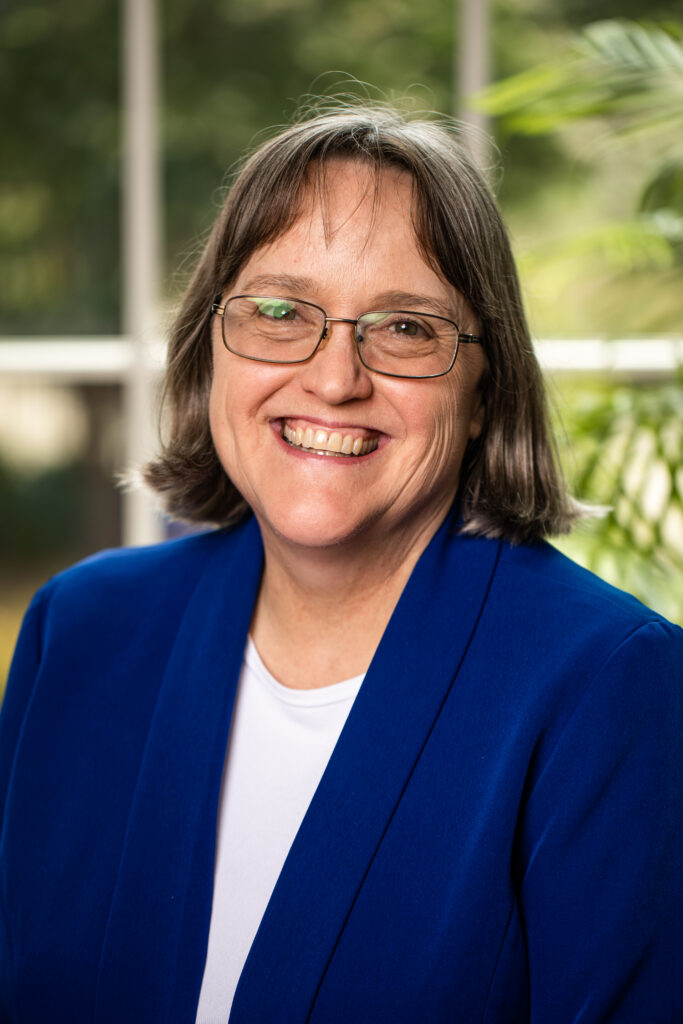
Karen Mattison, MAcc, CPA
Associate Professor of Economics and Business Administration
[email protected]864-833-8370