Student-led BridgePC builds on college’s Civil Conversations Initiative to foster respectful dialogue, bridge political differences and strengthen civic engagement
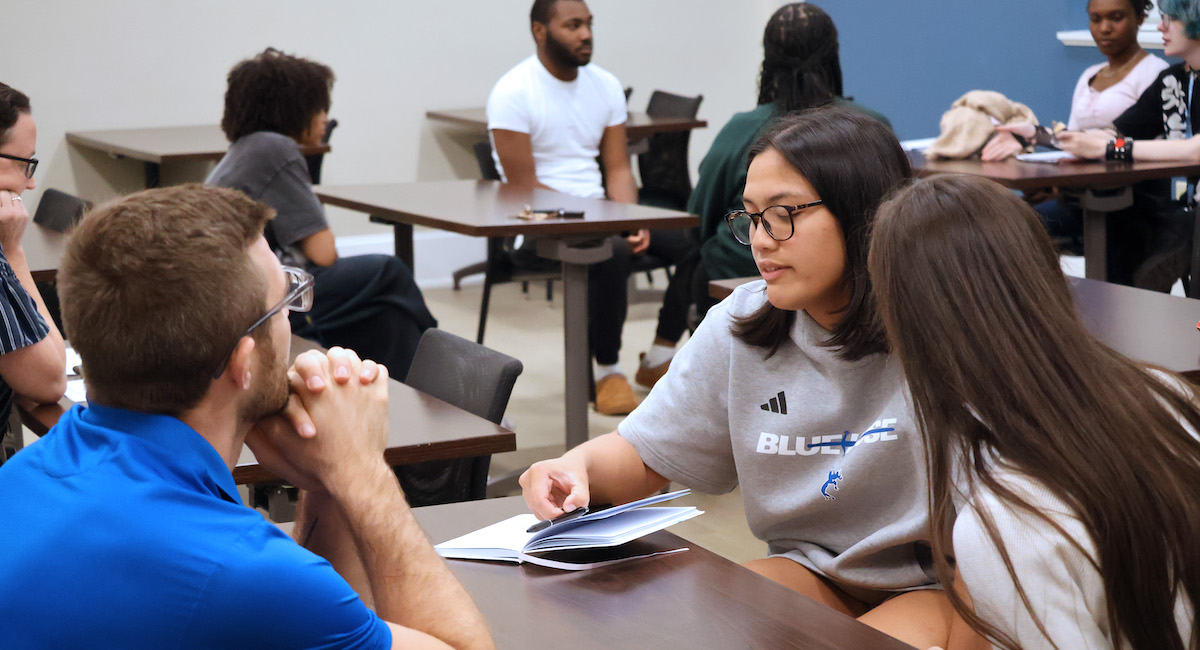
At a time when political disagreements often divide communities and discourage meaningful conversations, Presbyterian College students are working to build bridges instead of barriers.
PC has become the first college in South Carolina to establish a chapter of BridgeUSA, a national, student-led organization dedicated to encouraging constructive dialogue across political and ideological differences.
Known on campus as BridgePC, the new organization brings students with diverse viewpoints together to discuss important issues, challenge assumptions, and develop a better understanding of people whose perspectives may differ from their own.
More than another student organization, BridgePC represents a new chapter in the college’s ongoing commitment to civil discourse, critical thinking and engaged citizenship. It also reflects a growing student-led effort to carry those values beyond the classroom.
The chapter builds on PC’s Civil Conversations Initiative, established by president Dr. Anita Gustafson and led by Dr. Kirk Nolan, professor of religion. The initiative encourages members of the campus community to engage thoughtfully with differing viewpoints and approach challenging conversations with intellectual curiosity and mutual respect.
For student leader Jackson Higgs, bringing BridgeUSA to Presbyterian College was an opportunity to turn those principles into action.
“I wanted to start a constructive dialogue organization on campus because I noticed the heightened political polarization going on in our society, and I wanted to create a safe space for people with ideological differences to discuss topics that interested them,” Higgs said.
Building on a Foundation of Civil Discourse
The idea of establishing a BridgeUSA chapter at Presbyterian College originated with Gustafson, who approached Nolan during the first year of the Civil Conversations Initiative.
Nolan immediately recognized the potential connection between BridgeUSA’s mission and the college’s efforts to cultivate constructive conversations.
“This was actually President Gustafson’s idea,” Nolan said. “She emailed me the first year of the Civil Conversations Initiative and asked me what I thought.”
Although programming for the initiative’s first year was already in place, Nolan revisited the idea as he developed goals for the following year. One of those goals was to establish a student leadership team that could help extend the initiative’s reach across campus.
Higgs, then a freshman, expressed particular interest in bringing BridgeUSA to PC.
Rather than developing the organization through a faculty-led process, Nolan encouraged students to take ownership of the effort.
Higgs began reaching out to interested students, including Brian Coyle and Ladson Porter, who were serving on the Civil Conversations Initiative’s student leadership team. Together, they contacted BridgeUSA and began the process of establishing an official campus chapter.
The students also navigated the requirements for becoming a registered student organization at PC, including securing approval through student government.
“Starting a BridgeUSA chapter requires that students do all of the leg work, and they did,” Nolan said. “All I had to do was sign on as a faculty sponsor.”
Coupled with Presbyterian College’s long-standing commitment to service, this creates an ideal space for gaining perspectives through political conversations that will enable students to listen to others and serve their community.”
Jackson Higgs, BridgePC Founder
Their commitment extended beyond campus. During the summer, Coyle traveled to Philadelphia to attend a national BridgeUSA conference, gaining exposure to the organization’s broader movement and its approach to constructive dialogue.
Nolan said Higgs’ determination was especially important in bringing the chapter to life.
“Jackson was only a freshman when he approached me about BridgeUSA,” Nolan said. “I encouraged him, but didn’t follow up with his interest initially. But he kept coming back to me and sending out emails to students, faculty, and administrators. He’s persistent and passionate. That’s a great combination.”
Learning to Disagree Without Division
BridgeUSA promotes a straightforward but increasingly important idea: People can disagree deeply about politics, public policy and social issues without losing respect for one another.
For Higgs, the organization’s approach stood out when he began researching opportunities to promote constructive dialogue among college students.
“I first learned about Bridge USA by looking at various constructive dialogue organizations online,” he said. “Bridge USA was the only organization I found that really focused on college students.”
The goal, Higgs explained, is not necessarily to change someone’s mind or reach an agreement. It is to understand the experiences and perspectives that shape another person’s beliefs.
“Constructive dialogue means talking to individuals who you disagree with, in order to gain a better understanding of what led them to those beliefs,” he said. “Basically, it means looking past someone’s ideology to see the person beneath and the background that shaped them.”
Nolan believes those conversations are particularly important for students navigating a world in which social media increasingly influences how people receive information and form opinions.
He noted that algorithms often reinforce existing beliefs by exposing users to content that aligns with their established perspectives.
“But college students are at an age where they should be still forming their worldviews, not having them formed for them,” Nolan said. “A part of the process of that formation is speaking to folks in person about their views on world events. It’s really important for this to be in person, not via tech.”
That emphasis on personal interaction aligns closely with the purpose of a liberal arts education.
At PC, students are encouraged to question assumptions, evaluate evidence, communicate effectively, and consider different ways of understanding the world. Constructive disagreement provides an opportunity to put those skills into practice.
“Critical thinking requires being able to step back from your views on things and try to understand why you hold them,” Nolan said. “That’s usually not something that you would naturally do if you are surrounded only by like-minded individuals.”
Engaging with different perspectives, he explained, requires students to examine not only what they believe, but why they believe it.
“Constructive disagreement forces you to do that, because when you listen to understand someone else’s views – not just argue with them – you have to step out of your own perspective for a bit,” Nolan said.
The benefits extend beyond academic discussions. Understanding another person’s perspective strengthens communication skills and prepares students to participate more effectively in civic life.
As Nolan observed, meaningful civic engagement in a pluralistic democracy requires people to interact with others who do not necessarily share their beliefs.
Creating Opportunities
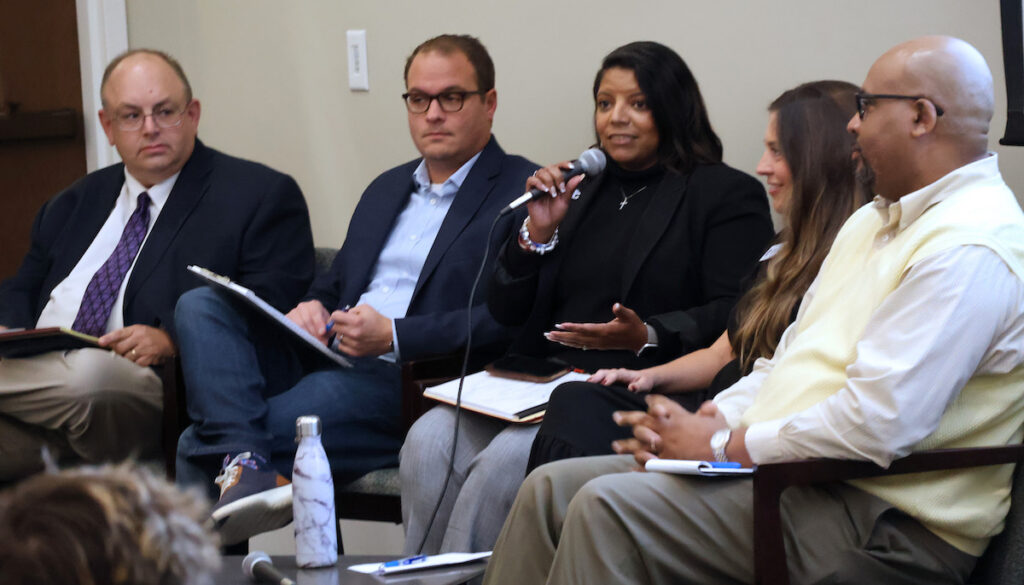
BridgePC is already putting those principles into practice through a variety of campus events designed to make political and social conversations more approachable.
This semester, the chapter has organized Chick-Fil-A & Conversations and a Global Conflicts Peer Discussion, offering students opportunities to connect informally and explore substantive issues.
Additional activities planned for the fall include a Halloween-themed Spooky Social and an Environmental Peer Discussion.
Higgs said the combination of casual gatherings and more focused conversations is intentional.
“BridgePC strives to host events for a variety of student interests, including casual social activities and more serious policy discussions,” he said.
Nolan said he was encouraged by what he witnessed at the chapter’s first meeting.
Students expressed strong opinions about issues that mattered to them, but their disagreements remained thoughtful and respectful.
“I went to the first meeting they had and I was so blown away by how passionate all the students were when they were expressing their views,” Nolan said. “I don’t get to see that very often in the classroom, especially in larger classes.”
Just as impressive, he said, was the willingness of participants to recognize how different life experiences can shape different conclusions.
Rather than dismissing opposing opinions, students demonstrated an ability to acknowledge another person’s perspective while explaining their own.
For Nolan, those interactions illustrate the kind of intellectual openness BridgePC can help cultivate across campus.
Preparing Students to Listen, Lead, and Serve
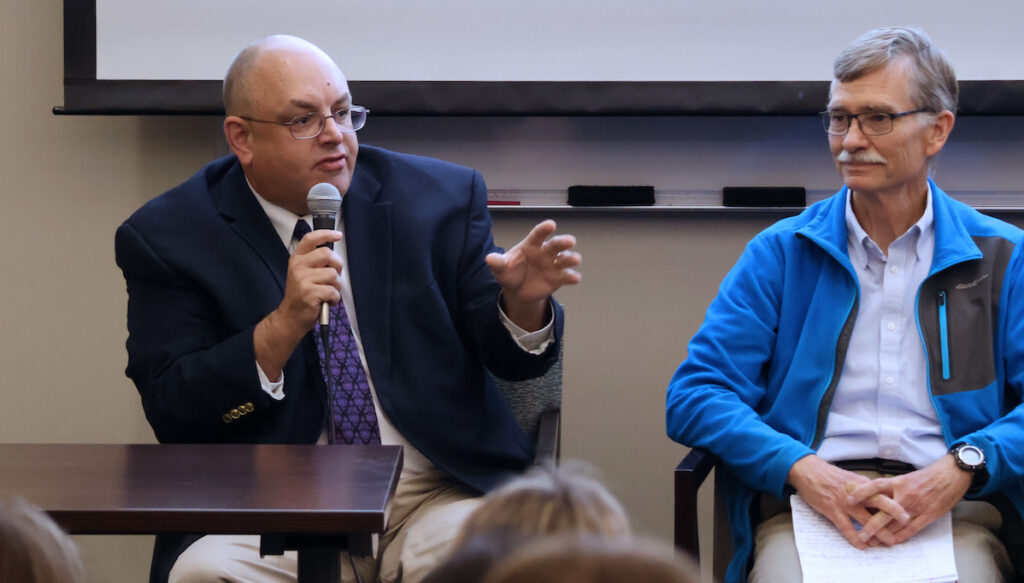
The value of constructive conversation became especially clear to Nolan following the first event organized through PC’s Civil Conversations Initiative.
Afterward, a student approached him and shared that the event had inspired a political conversation with a roommate for the first time.
The two had lived together for months without discussing politics.
Nolan found the experience revealing.
He recalled that such conversations were commonplace during his own college years. Today, however, he believes students are often reluctant to express political opinions because they fear being labeled, judged, or excluded.
“I think we live in such a toxic political environment that students are afraid,” Nolan said. “They don’t want to be labeled and they don’t want to be ostracized.”
That reluctance can change when students see their peers participating in thoughtful, face-to-face discussions.
“They just need to see their peers doing it, and then they jump in fairly quickly,” Nolan said.
Higgs sees the college campus as an especially promising environment for building that confidence.
“College is one of the few times in your life where you are truly exposed to a wide range of people from diverse backgrounds that live within a short distance of you,” he said.
He also sees a direct connection between constructive dialogue and Presbyterian College’s longstanding commitment to service.
Learning to understand others, he believes, can help students become more effective leaders and better serve the communities they will eventually join.
“Coupled with Presbyterian College’s long-standing commitment to service, this creates an ideal space for gaining perspectives through political conversations that will enable students to listen to others and serve their community,” Higgs said.
As BridgePC develops, its student leaders hope to create a welcoming environment for students across the political spectrum, whether they are deeply engaged in public affairs or simply interested in becoming better listeners.
Higgs emphasized that the chapter is nonpartisan and does not seek to advance a particular political agenda.
Instead, it invites students to bring their own perspectives to the conversation, listen with an open mind and recognize the humanity of those with whom they disagree.
“We do not tell you how to think,” Higgs said. “We simply provide you with the tools to listen to others and understand where they are coming from.”