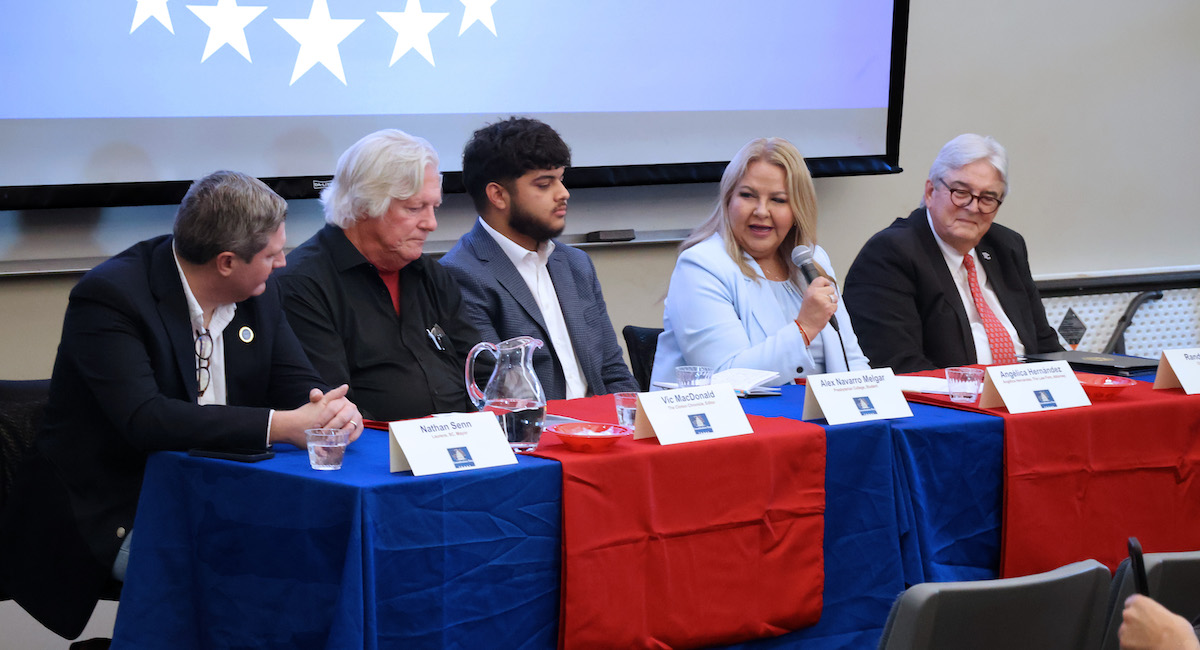
Presbyterian College’s annual Constitution Day program featured a panel of community leaders, legal professionals, journalists, and a student who spoke candidly about how immigration issues intersect with the nation’s founding document.
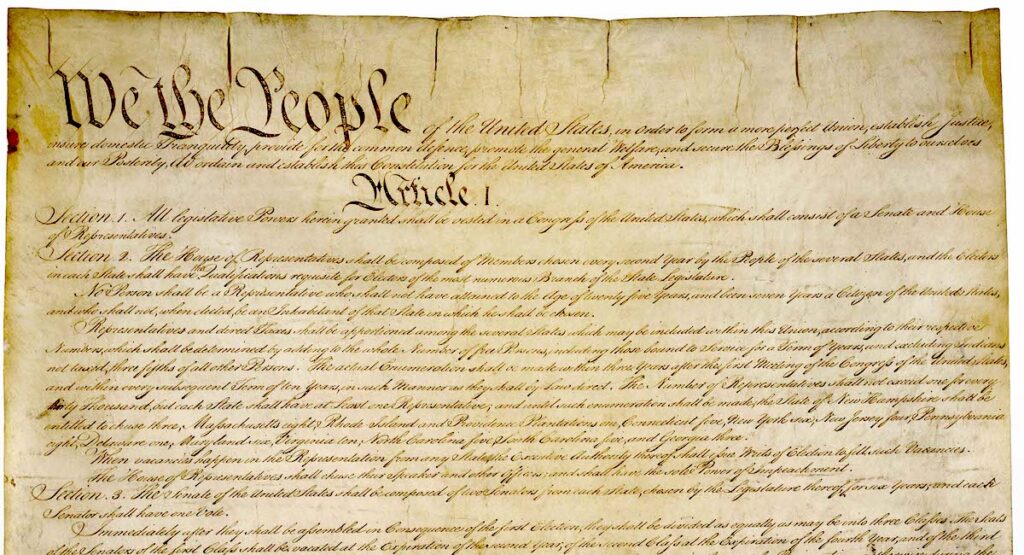
The event, held Sept. 17, commemorated the 238th anniversary of the signing of the Constitution and invited reflection on how the document continues to shape debates over rights, responsibilities, and identity in the United States.
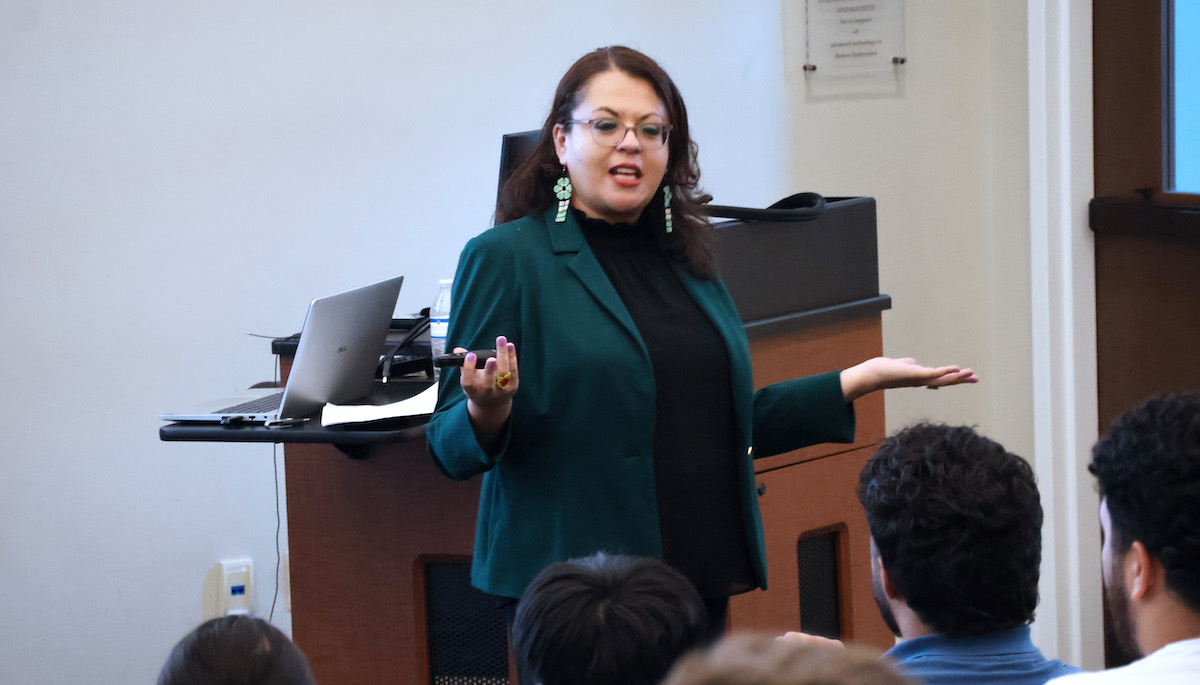
Panelists included PC junior Alex Melgar, local journalist Vic MacDonald, immigration attorney Angelica Hernandez, Laurens mayor and PC trustee Nathan Senn, and Clinton mayor and PC alumnus Randy Randall.
I took an oath to uphold the Constitution when I became both an attorney and a mayor. And I take that very seriously. The Constitution says no person— not no citizen, but no person—shall be deprived of due process. That matters because people come here for those rights. If we sidestep them, what exactly are we protecting?”
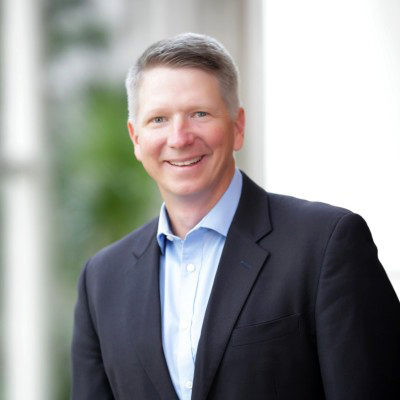
Nathan Senn, Mayor of Laurens
The Framework
Though the panelists represented different professions and personal experiences, each returned to the Constitution as a guidepost for understanding immigration.
“I took an oath to uphold the Constitution when I became both an attorney and a mayor,” said Senn. “And I take that very seriously. The Constitution says no person— not no citizen, but no person—shall be deprived of due process. That matters because people come here for those rights. If we sidestep them, what exactly are we protecting?”
Senn explained that due process and federalism are not abstract principles but daily realities for local governments asked to participate in federal enforcement.
“The Constitution says the federal government does federal things, the state does state things, and local government does local things. If we stick to that framework, we’ll be the country we were meant to be,” he said.
Student Perspective: Balancing Expectations
For Melgar, a political science and history major, the Constitution’s promises resonate personally. His mother immigrated to the United States without documentation before beginning a lengthy journey toward citizenship.
“As the only student on the panel, I wanted to share what it means to grow up as the child of an immigrant and the responsibility I feel to succeed,” he said. “Immigrants are more than just policies and numbers. It’s about real people, real families, and the sacrifices they make.”
Melgar described the tension of honoring his family’s sacrifices while navigating academic and leadership responsibilities. He also linked his story to broader constitutional ideals.
“Fairness, opportunity, and dignity are constitutional values as much as they are human ones,” he said. “Reform can’t just be about politics—it has to reflect the principles we were founded on.”
The Rule of Law and Equal Protection
Hernandez, an immigration attorney based in Greenville, underscored how the Constitution provides rights that immigrants rely upon—even when public perception does not always acknowledge it.
“I was not born in the United States, and when I walk into a courtroom, people often mistake me for an interpreter,” Hernandez said. “But I became an attorney, I passed the bar, and I practice under the same Constitution as anyone else.”
She emphasized that undocumented presence in the U.S. is a civil, not criminal, matter.
“It’s important to understand that not having the right documents is not a felony. People may be deported, but that doesn’t mean they’re criminals,” she said. “The Constitution’s guarantee of equal protection and due process applies to everyone.”
Hernandez shared her own journey of working minimum-wage jobs, raising children, and eventually attending law school at age 45. Her story, she said, reflects both the challenges and opportunities immigrants face in pursuing the American dream.
Journalism and Constitutional Norms
MacDonald, longtime editor of The Clinton Chronicle, reflected on how the Constitution protects both freedom of the press and the rights of those it covers.
“As journalists, we’re taught to see both sides of an issue,” he said. “But the Constitution also reminds us that rights and empathy go hand in hand. We can’t look away from injustices just because someone wasn’t born here.”
MacDonald described covering local court cases involving immigrants and said he often sees individuals bewildered by a legal system that assumes knowledge of rights many take for granted. He cautioned against what he sees as constitutional shortcuts in immigration enforcement.
“The tactics being used in some cases are just not the American way,” he said.
Mayors’ Perspectives: Unity and Diversity
Randall, a 1974 PC graduate who worked at the college for more than three decades said the Constitution provides a foundation for embracing diversity.
“Immigration, to me, is the lifeblood of this country,” Randall said. “We are boring if we are all alike. The Constitution guarantees rights that make it possible for people of different backgrounds to live and thrive together.”
Randall also connected his comments to family. His grandchildren are part Mexican, and he said their heritage reflects the multicultural reality of American life.
“The loudest voices on the Constitution right now don’t always seem to be correct,” he added. “That’s why we have to guard against misinterpretations and remember the values it stands for.”
Senn echoed that theme, noting that constitutional principles of federalism and due process can prevent fear-driven narratives from dominating policy. “I’ve seen firsthand that our immigrant community is no more criminal than anyone else—in fact, often less so,” he said. “When we forget the Constitution’s guarantees, we risk creating fear instead of security.”
A Call for Reform
Panelists agreed that the immigration system is overdue for reform, with Hernandez noting that the last major legislation was passed in the 1980s. But they also emphasized that constitutional norms must guide any changes.
“The problem isn’t just political gridlock—it’s that people forget the Constitution is there to ensure fairness and justice,” Melgar said. “We need to invest not just in enforcement but in naturalization and pathways to citizenship.”
MacDonald added that immigration debates too often reduce to partisan talking points.
“Politicians use immigration to get what they want, but the Constitution should be the lens we use,” he said.
Engaging the Next Generation
As the program concluded, Randall urged students not to be discouraged by the challenges.
“Being a mayor of a little town is worth it when you know you’re trying to do something good,” he said. “It’s the same with civic engagement. The Constitution gives you that power—use it.”
Hernandez echoed the sentiment: “If you don’t get involved, you’re just letting the cars pass by. The Constitution is there for you, but it only works when people stand up for it.”
For Melgar, the discussion was both professional and personal.
“Hearing these perspectives reminds me that the Constitution isn’t just words on a page,” he said. “It’s something that affects my family, my community, and my future.”
Constitution Day at PC
Constitution Day became a federally recognized observance in 2004, requiring institutions that receive federal funding to provide educational programming about the U.S. Constitution each September.
At Presbyterian College, the program has become an annual opportunity to connect national issues with the college’s liberal arts mission.
PC’s Constitution Day was also part of PC’s celebration of Hispanic Heritage Month, Sept. 15-Oct. 17.