Dr. Lacy Feigh ’12 remembers the first time she studied abroad. It was a Maymester in China right after her first year at Presbyterian College.
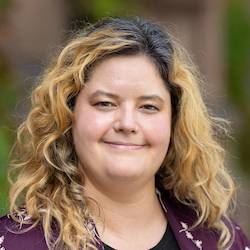
Link-Cotsen Postdoctoral Fellow in the Society Fellows at Princeton University (Photo courtesy of Princeton University)
“It shook me,” she said.
The experience not only shook Feigh but also shaped her in ways that only PC can – from a first-year student taking her first history and political science classes to a Fulbright Scholarship propelling her once again overseas. From an undergraduate degree from a small liberal arts college in South Carolina to a Ph.D. from the University of Pennsylvania. From hearing lectures in Neville Hall to delivering them at Princeton University.
History professor Dr. Roy Campbell, a member of the PC faculty, was an early inspiration for Feigh to continue her studies abroad.
“When I came back my sophomore year, I was really excited about diving into all sorts of history classes,” Feigh said. “I remember Dr. Campbell encouraging me to study abroad, particularly in Egypt, which was crucial for setting me on the path to where I am now.”
Where Feigh is now and how she got there is impressive. After she graduated from PC, Feigh served for two years in Yirgalem, Ethiopia, as an English education volunteer for the Peace Corps along with fellow PC alumna Amanda Sutker Habib ‘12. She also earned a Fulbright Scholarship to teach English in Amman, Jordan. Now, she is a lecturer in the Council of the Humanities and History and a Link-Cotsen Postdoctoral Fellow in the Society Fellows at Princeton University, where she specializes in the history of modern Ethiopia and the legacies of slavery, empire, and race in the greater Nile Valley.
But PC clearly nurtured her love of modern history. In addition to Campbell, Feigh received encouragement from history professor Dr. Rick Heiser to go to Egypt, which she did during the semester prior to the Arab Spring, which began in 2010.
“I remember sitting in Dr. Campbell’s modern Middle East class and being struck by how what I was learning was so vastly different from the narratives of the Middle East that came out of 9-11,” Feigh said. “As someone who grew up largely post 9-11 world, it was really striking to see the Middle East humanized in a way that it wasn’t on the news or in other forms of media. It was at a time when I was applying for other study abroad programs, and Dr. Campbell and Dr. Heiser led a Maymester to Egypt. When I returned from my study abroad semester I was struck by the media narratives of the Revolution and how they differed from my experiences on the ground in Egypt.”
Feigh’s Peace Corps experience in Ethiopia and her work in the Fulbright program laid the groundwork for her graduate studies and her postdoctoral work in academia. Her experiences with dedicated faculty at PC laid the foundation of her own teaching.
“I think a lot about those experiences for me – especially engaging with professors on a daily basis,” she said. “I enjoyed the teaching aspect of PC, just being able to go and visit their offices and knowing they would take the time to talk to me not only about classes but what I wanted to do in life. As a teacher, I try to emulate that in my work and think my students really appreciate it.”
Hearing Feigh describe the historical topics she explores with her students – from a class on modern Ethiopia to a class that explores the cultural history of music and film in the Middle East and a class she is developing on the history of coffee – it is plain that this Southern woman from the South Carolina Midlands has found her element teaching in New Jersey. A passionate teacher has emerged as she plans a trip to Ethiopia with students this fall.
“It’s funny because even though I valued my time at PC, I never understood how important it was to have professors who guided me like they did,” she said. “I was a first-generation college student. My parents had no idea how to navigate things like scholarships and grad school applications. My PC professors were so essential in helping me figure out those processes way beyond just the things we would cover in the classroom.
“So, as an instructor, that aspect of academia is crucial for me. I make part of class participation for my class a visit with me during office hours so I can get to know them better, and so we can discuss not only what happens in class but also discuss professional goals.”
Feigh said it is essential that students recognize that faculty, though experienced and knowledgeable, are human just like them – no matter where they teach.
“I never imagined myself being in this position,” she said. “As an academic, you can end up in lots of places, and a lot of it is just chance. On the other side, students are students everywhere. When I think about my students at Princeton and those I taught in graduate school at Penn, they are going through many of the same things I faced as a student. We often think students in an Ivy League school are all really privileged, but a lot of them are navigating being first-gen students or coming from immigrant experiences.”
Feigh said PC students should be confident that the education they are getting from their professors can transform their lives as it has hers.
“You’ve been given a wonderful education and pressed to think in many new ways,” she said. “I think many of the skills I learned at PC have helped me become a better academic. I want PC students to know that they are being prepared to take the next step, whether it’s graduate school or any career.”
As Feigh’s academic career is taking off – she is currently working on her first book which expands on her dissertation – her personal life is also flourishing. She is getting married this spring to her fiancé, Brendan Rome, who is a graduate candidate in philosophy at Villanova University. One of her roommates and lifelong friends from PC, Alice Parish ’12, will be standing beside her as a bridesmaid.