Poster session highlights projects aimed at solving problems close to home
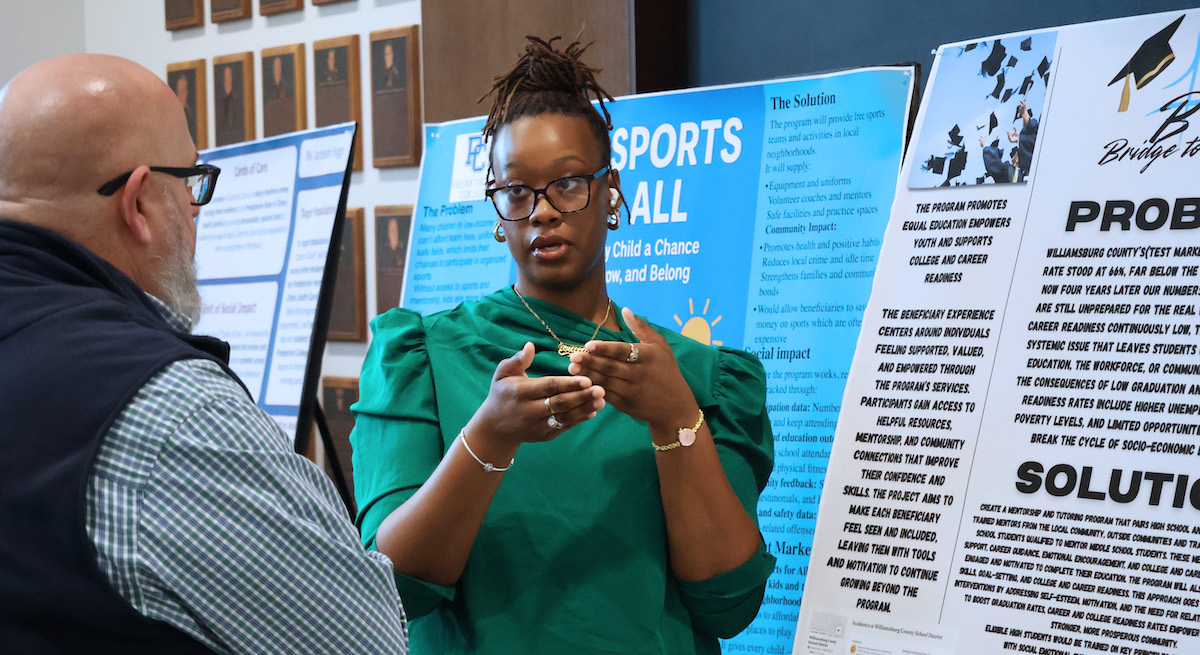
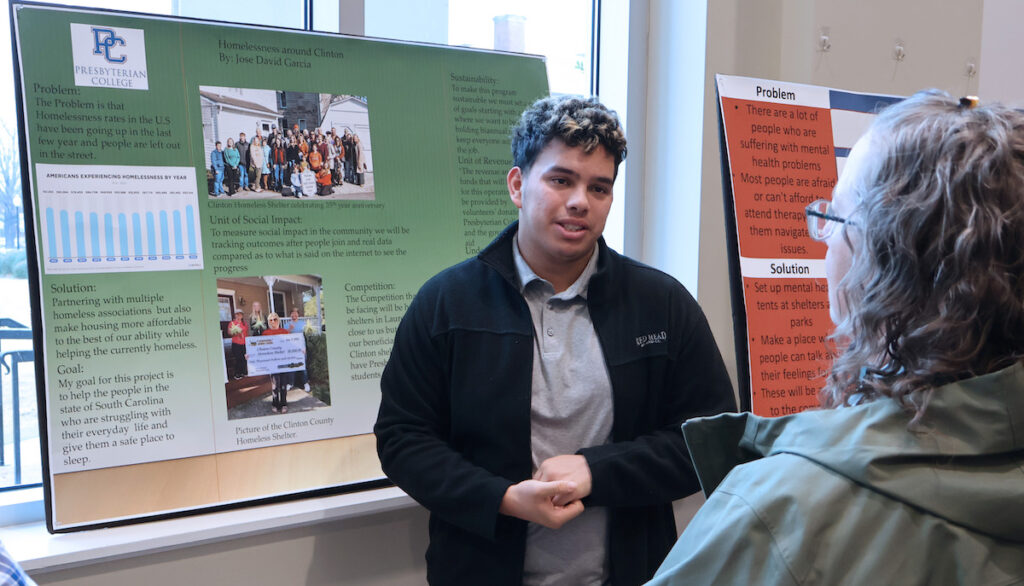
First-year students at Presbyterian College unveiled a wide range of creative, community-centered business ideas during a poster presentation in the Cornelson Center as part of associate professor of economics and business administration Karen Mattison’s Service Entrepreneurship First-Year Experience course.
Now in its fourth year, the course invites freshmen to identify an issue affecting their hometowns and develop a sustainable solution—one that measures social impact, projects revenue, and reflects PC’s motto, Dum Vivimus Servimus (“While We Live, We Serve”).
Course built on PC’s commitment to service
Mattison said she enjoys teaching the course because it empowers students to channel their concerns into action.
“They all can name problems in the places where they live,” she said. “But this gives them a chance to be part of a solution. And that’s what I really like.”
Students are free to choose any problem that is meaningful to them, but each must “stress test” their concept to ensure it is financially viable and socially impactful. Many projects,
Mattison noted, explored issues related to homelessness, education, and youth mental health—areas that resonate deeply with new college students.
“Some societal issues pop up every year,” Mattison said. “But every year we also get some brand-new ones that come with new ideas to explore solutions.
This year’s class brought “really neat things I’ve never even thought of,” she added, including a recycling incentive machine designed for litter-heavy beaches and a series of projects addressing rural poverty, nutrition, and infrastructure gaps.
The poster session showcased students from across the United States and around the world, each leveraging local insight to craft a project that could make a meaningful difference in their communities.
Fighting low graduation rates in rural South Carolina
Freshman Anya Mack, this year’s runner-up in PC’s Service Entrepreneurship Competition, grew up in Kingstree in Williamsburg County—one of South Carolina’s largest counties by land area, but one facing persistent poverty and low graduation rates. Her project, Bridge to Graduation, aims to pair middle and high school students with mentors, community leaders, and older peers.
The program blends tutoring, leadership development, and confidence-building activities to support students academically and personally.
“My community struggles with career and college readiness,” Mack said. “This class helped bring focus to what I want to do in life. It made everything feel real.”
Mack hopes her program will not only raise test scores and graduation rates but also help break cycles of poverty that limit economic mobility.
“If you don’t have a diploma or a degree, you can’t get a job,” she said. “So, let’s get you to a stable way of living. If you want to keep going, then you can keep going.”
Entrepreneurial thinking meets environmental action
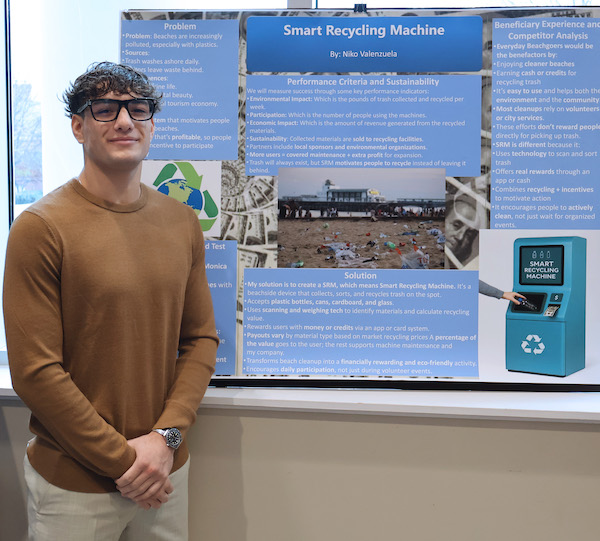
Freshman Niko Valenzuela, a member of the men’s wrestling team tackled a problem he knows well from growing up in Southern California—trash accumulating on public beaches.
His proposed invention, a smart recycling machine, would accept plastic, aluminum, cardboard, and glass; sort it automatically; and return cash or credits to users based on the value of the recycled materials.
“A lot of people don’t really want to volunteer to clean up, so there needs to be an incentive,” Valenzuela said. “Money is the perfect incentive for that.”
He believes the machine could fill a gap in existing cleanup efforts and spark more consistent, motivated participation.
“I’ve never seen anything like it,” he said. “And I think it’s doable.”
Addressing basic infrastructure needs abroad
Freshman men’s basketball player Augustine Ayelyine, from Sunyani, Ghana, proposed building a sustainable public toilet system for his home community of Navongo—an area facing significant sanitation challenges due to a lack of facilities.
His design includes gender-separated bathrooms, solar lighting, rainwater collection, and a modest user fee to support maintenance and long-term operation.
“People have to go outside to ease themselves, and it causes sickness, pollution, and safety problems,” Ayelyine said. “I just came up with a plan to build a sustainable public toilet for them.”
He said the course opened his eyes to how structured planning can turn personal observations into functional social enterprises.
Promoting healthy habits for children in Kentucky
Freshman lacrosse player Cali Cox focused her project on combating childhood obesity in her hometown of Louisville, Ky. Her solution is a school-based wellness and nutrition program that teaches elementary school students healthy habits early in life.
“I was looking at childhood obesity and kids not getting enough exercise,” Cox said. “Since I’m into sports and nutrition, I wanted to build something that would help.”
As a business major with an interest in marketing, Cox took the course to push herself academically and creatively.
“I want to help people in whatever I do after college,” she said. “So, I thought this was a good place to start.”
A launching point for future service
Mattison hopes many of her students will continue developing their ideas through PC’s service entrepreneurship minor or inspires high school students for future competitions. But even for those who don’t, she believes the course gives them something equally valuable: the realization that their ideas matter.
“They’re all really good ideas,” she said. “At least we’ve made them think about it.”
For first-year students at PC, that may be the first step toward a lifetime of service.