Ceremony celebrates students’ transition from the classroom to clinical care
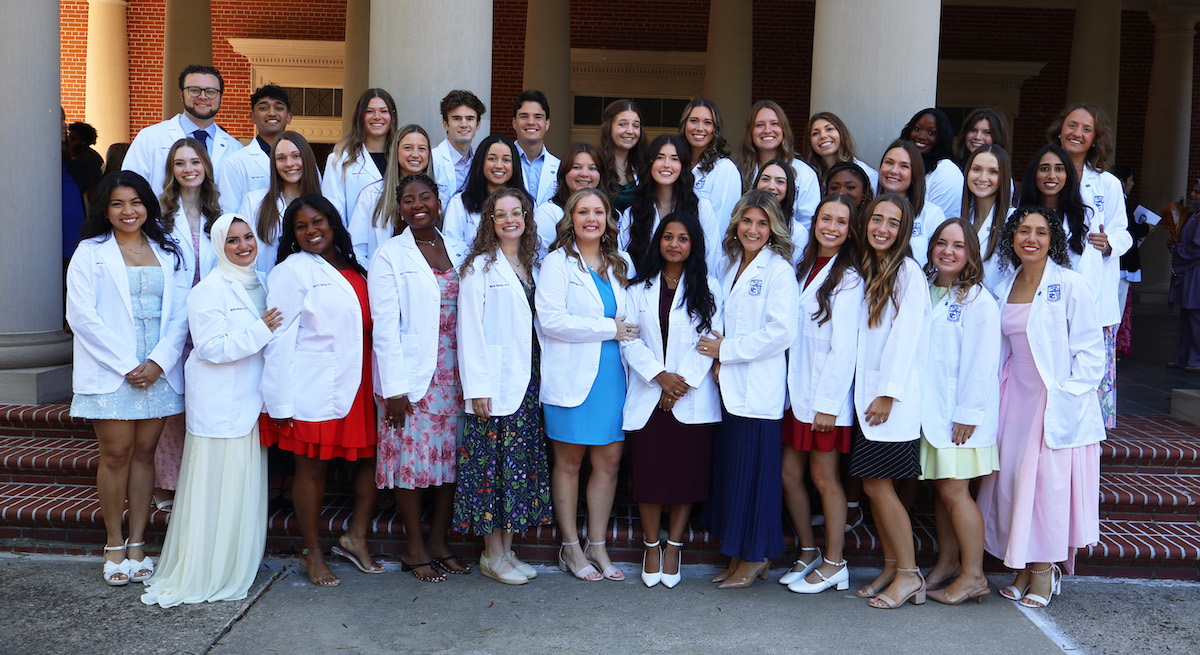
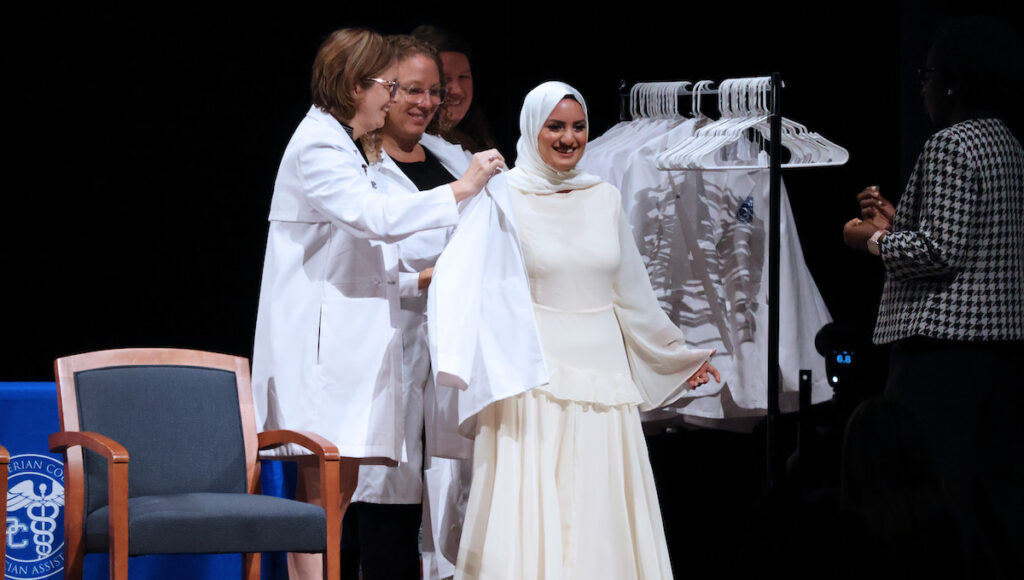
For the members of Presbyterian College’s Physician Assistant Program Class of 2027, slipping into a white coat represented much more than a change in wardrobe.
It marked the moment when a year of intensive study began giving way to the responsibility of caring for patients.
PC celebrated that transition Sept. 26 during the Class of 2027 White Coat Ceremony in Belk Auditorium. The ceremony recognized students as they completed the didactic phase of their physician assistant education and prepared to begin their clinical year.
Amanda Stevenson-Cali, director of the Physician Assistant Program, told the class that the ceremony represented both an accomplishment and the beginning of a new challenge.
“Today is not just about putting on a coat,” she said. “It’s about stepping into a new chapter of your journey, one that will challenge you in ways you cannot yet imagine, but also will reward you in ways that will stay with you for the rest of your life.”
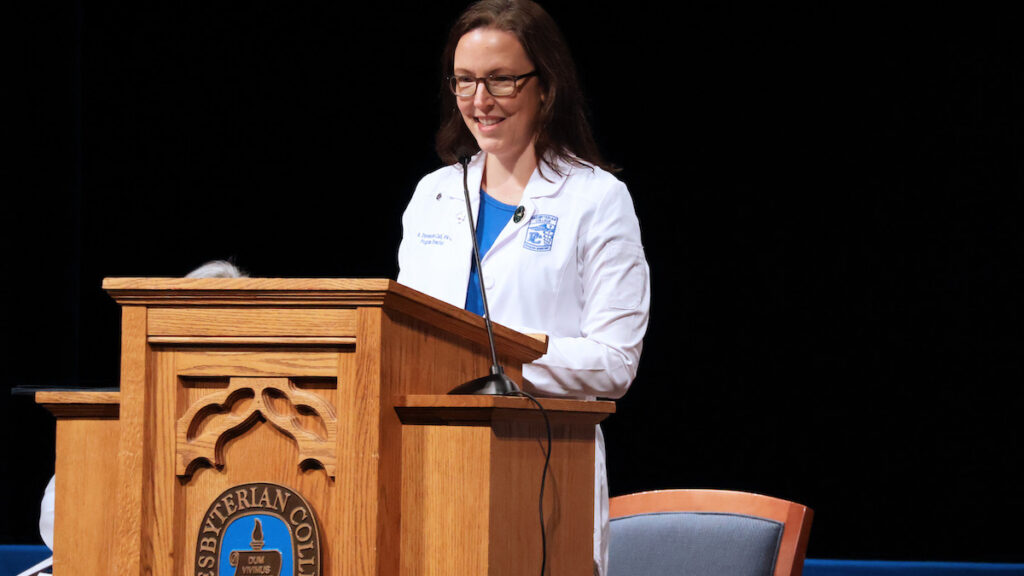
The white coat represents the trust that patients place in you, the ethical standards you are expected to uphold, and the dedication to providing care to diverse patients that is not only effective, but also empathetic and humane.”
Amanda Stevenson-Cali, Director, Presbyterian College Physician Assistant Program
From Knowledge to Patient Care
During the previous 12 months, Stevenson-Cali said, students had been pushed intellectually, emotionally and physically as they learned the foundations of medicine.
They studied anatomy and physiology, approximately 1,000 diseases and 500 medications. They learned physical examination techniques, basic procedures, diagnostic testing and imaging while demonstrating their knowledge through examinations and practical assessments.
The next phase of their education will require them to bring that knowledge into examination rooms, clinics and hospitals.
“In just a few days, you get to start caring for actual patients,” Stevenson-Cali said. “You’ll walk into rooms where textbooks fall short.”
Patients, she reminded the students, will not always present problems that fit neatly into lessons or algorithms. Their stories may be complicated, their needs may extend beyond a diagnosis, and there will be times when students do not immediately know the answer.
Those moments, she said, should be met with “humility, curiosity and willingness to learn.”
That movement from classroom preparation to human interaction is at the heart of the White Coat Ceremony.
Stevenson-Cali told the class that wearing the coat carries expectations that extend well beyond clinical knowledge.
“The white coat represents the trust that patients place in you, the ethical standards you are expected to uphold, and the dedication to providing care to diverse patients that is not only effective, but also empathetic and humane,” she said.
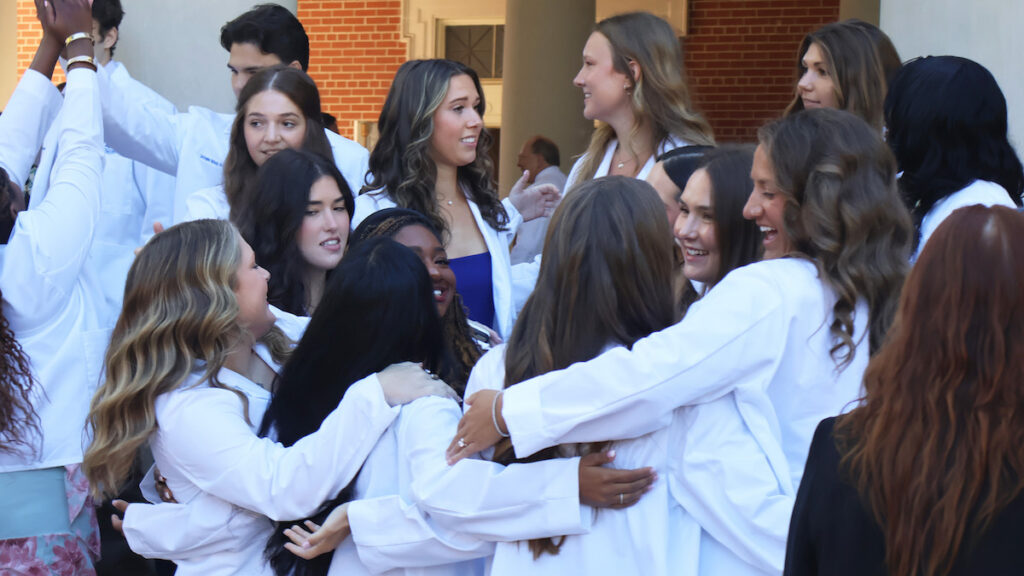
Excellence and Scottie Spirit
The ceremony also provided an opportunity to recognize students for academic achievement and for the qualities they brought to their class community.
The Scottie Spirit Award, which recognizes teamwork, compassion, generosity and a commitment to helping others, was presented to Haleigh Elayne Looney and Mary-Anne Faith Cagle.
Stevenson-Cali said the two students consistently supported classmates, offered help when it was needed and contributed to a culture in which their peers felt encouraged and supported.
Mary Katherine Edmondson was recognized as the top-performing student during the didactic year, earning the highest examination average in the class and a perfect grade-point average.
Four additional students — Josephine Magdalena Brazovan, Breyanna Nicole Collins, Sarah Nicole Shehan and Nicole Elizabeth Smith — also were recognized for earning perfect GPAs during the didactic year.
Stevenson-Cali said that level of achievement reflects more than academic ability. It requires discipline, perseverance and a commitment to mastering the knowledge and skills necessary to become an outstanding physician assistant.
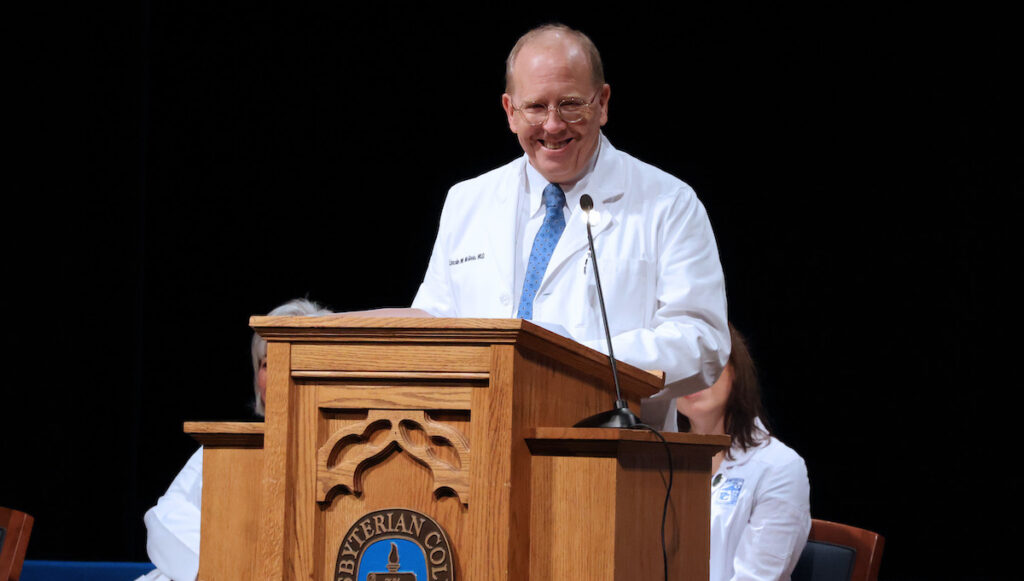
More Than a Symbol
In his closing remarks, Dr. Lincoln McGinnis, medical director of the PA program, placed the white coat in the broader history of medicine.
He explained that physicians in the 19th century commonly wore black formal clothing, projecting authority at a time when medical science was far less developed. As germ theory gained acceptance and medicine became increasingly grounded in research and scientific practice, white clothing became associated with laboratories, cleanliness and antiseptic practice.
By the early 20th century, the white coat had become standard attire in hospitals. The modern White Coat Ceremony began in 1993 at Columbia University College of Physicians and Surgeons as a way to emphasize humanism and ethics alongside scientific training.
For PC’s students, McGinnis said, receiving the coat also represented everything they had already accomplished.
“You didn’t pass,” he told them. “You excelled.”
Successfully completing the demanding didactic year, he said, demonstrated that the students had achieved something few people could do.
“You should be very proud,” McGinnis said. “I hope also that you are very grateful because you did not get here alone.”
He encouraged students to remember the family members, classmates, faculty and staff members who had supported them along the way.
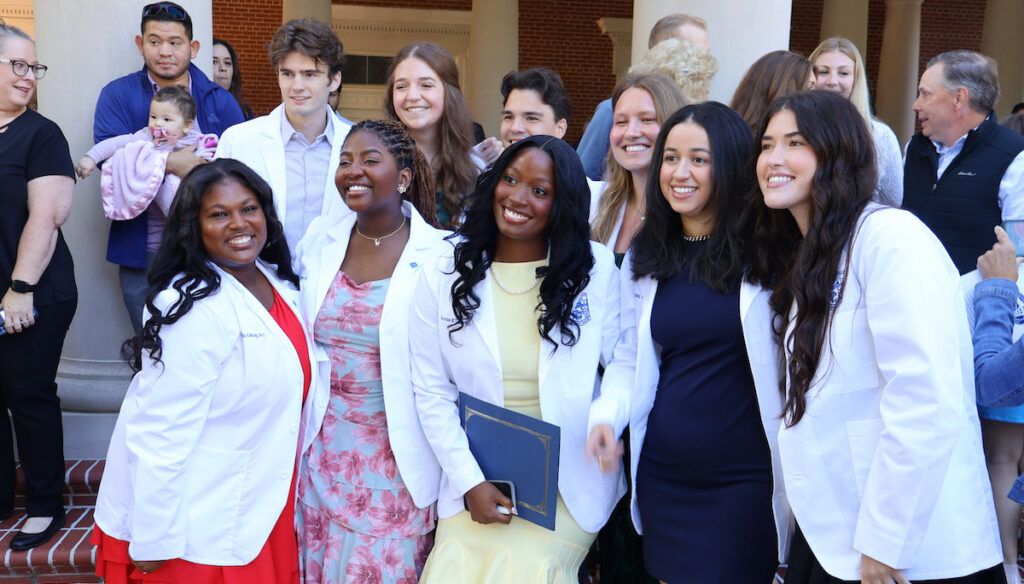
The Relationship at the Center of Medicine
Even as medicine continues to change through technology, new processes and evolving standards of care, McGinnis said one element remains constant: the relationship between a medical professional and a patient.
That relationship, he said, must be grounded in care and respect.
“Love your patients,” McGinnis told the class. “Care about your patients.”
He challenged students to put the needs of patients before their own and to remember that illness affects more than the physical body. Providing meaningful care also requires attention to patients’ emotional and spiritual needs on their own terms.
“If you love and care about your patients, you will be an outstanding medical professional,” he said.
It was a message closely aligned with the Physician Assistant Pledge recited during the ceremony. Led by clinical director Janet Wilson, the pledge calls on physician assistants to make the health, safety, welfare and dignity of patients their primary responsibility while practicing with compassion, respecting diversity, continuing to learn and contributing to their communities.
McGinnis closed by urging the students to approach their careers in that same spirit of giving.
“Leave here today ready to give yourself to your patients, to your family, to your friends and to your community,” he said.
For the Class of 2027, the ceremony marked both how far its members have come and how much remains ahead.
As the students prepared to begin clinical rotations and put their education into practice with real patients, Stevenson-Cali left them with a charge suited to both occasions.
“Wear your white coat with pride and purpose,” she said. “You certainly deserve it.”
The PC Physician Assistant Program Class of 2027
- Josephine Magdalena Brazovan
- Mary-Anne Faith Cagle
- Breyanna Nicole Collins
- Kamryn Nicole Dixon
- Kayla Ayanna Easington
- Mary Katherine Edmondson
- Safaâ Ghalmi
- Julia Colette Griffith
- Melissa Graciela Guillén
- Kristin Brooke Heider
- Julia Marie Hopkins
- Hannah Victoria Hritz
- Veronika Victoria Ivanov
- Brenda Janneth Joaquin
- Reagan Belle Kargo
- Haleigh Elayne Looney
- Jenna Emily Maitin
- Mahek Hasan Momin
- Lauren Marie Nicholson
- Avery Jackson Overholt
- Caroline Randall Paine
- Abhi Ashish Patel
- Diya Parth Patel
- Isha Vinay Patel
- Lauren Rachel Privette
- Jacob Carmelo Provenzano
- Mary Cain Rue
- Mattie Elizabeth Rumfelt
- Christopher David Rutoski
- Eva Elizabeth Shearer-Hay
- Sarah Nicole Shehan
- Nicole Elizabeth Smith
- Christopher Layne Tennyson
- Reagan Baleigh Turner
- Alexis Briana Waring