Decorated veteran credits PC academics, athletics and the Highlander Battalion with building a foundation for a lifetime of leadership, service and achievement
Retired U.S. Army Col. Robert W. “Bob” Byard ’69 spent 28 years serving his country, from infantry and intelligence assignments during the Vietnam War to Special Forces operations and leadership positions in the Army Reserve.
But when Byard returned to Presbyterian College on Oct. 30 to be inducted into the college’s ROTC Hall of Fame, he traced the foundation of his military and civilian accomplishments to the same place where his journey began nearly six decades earlier.
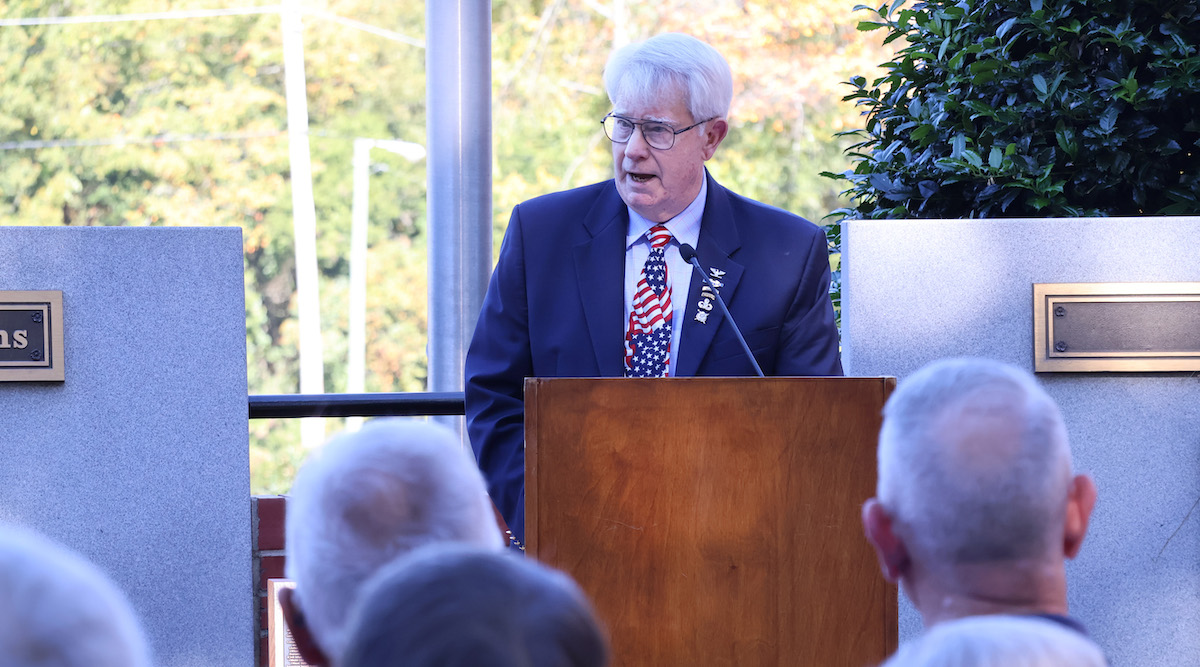
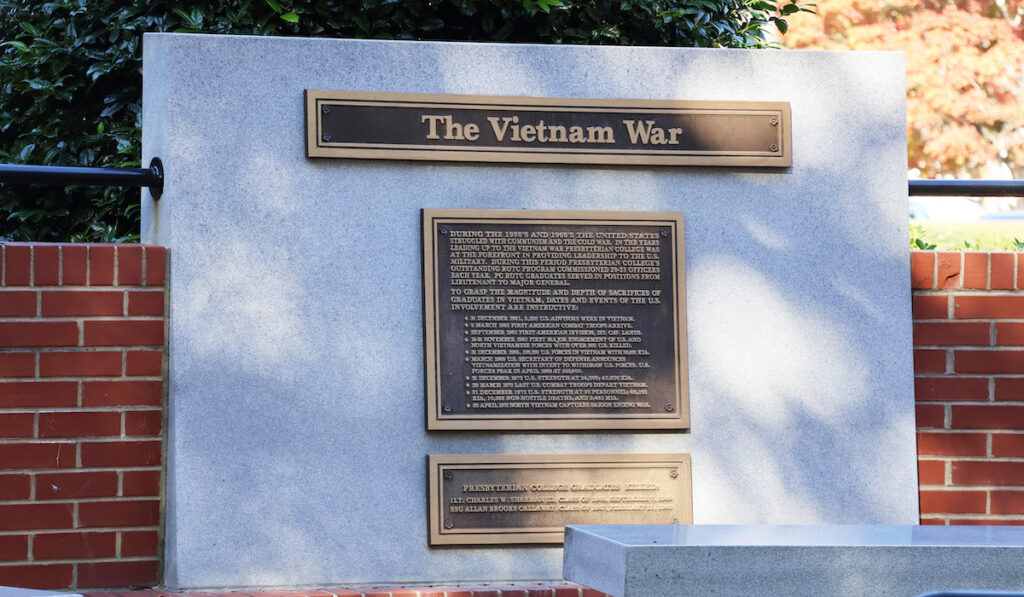
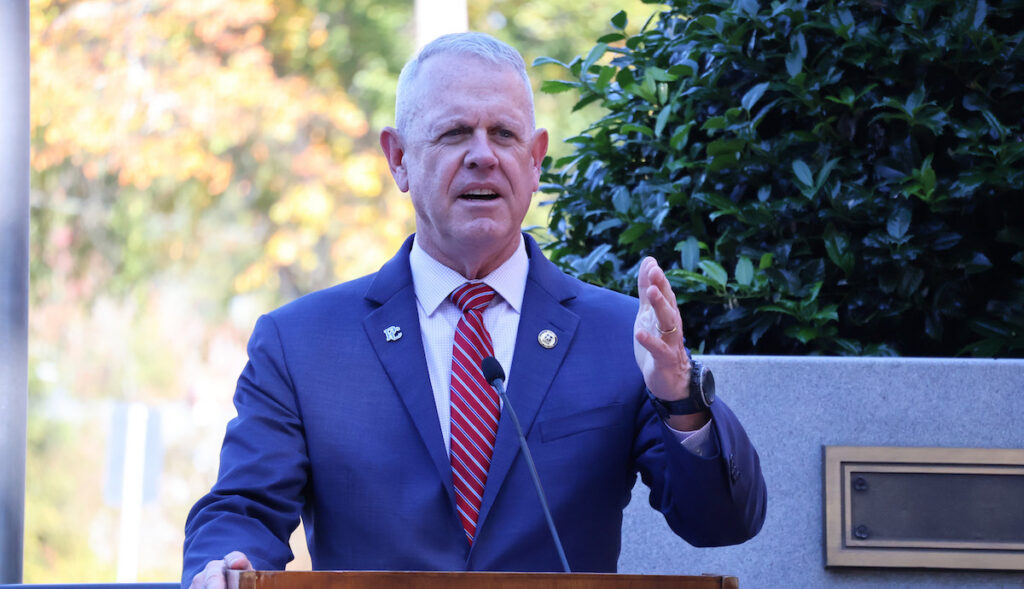
Standing before fellow veterans, alumni, family members, and current ROTC cadets at the college’s War Memorial, Byard opened his acceptance remarks with a passage from Matthew 7 about the wise man who built his house upon a rock.
“For me, PC was that solid rock foundation on which to build my military and civilian careers,” he said.
Byard was introduced by his former classmate, retired Brig. Gen. Butch Kirven ’69, who recounted a distinguished military career shaped by discipline, education, and an enduring commitment to service.
Retired Brig. Gen. John Gentry ’91, president of the PC ROTC Alumni Council, presided over the ceremony, recognizing Byard’s achievements while reminding today’s Highlander Battalion cadets that they are following in the footsteps of generations of PC graduates who answered the call to serve.
A Foundation of Academics, Athletics, and ROTC
Byard arrived at Presbyterian College in 1965, reporting early to begin football practice after a successful high school athletic career in the Charleston area.
A history major, he played football and baseball while participating in the Army ROTC program for all four years. He earned an ROTC scholarship for his final two years and was presented the Wysor Saber as the outstanding cadet company commander.
Those experiences, he told the audience, provided three essential foundations for his future: education, athletics, and military leadership.
His liberal arts education encouraged him to continue learning long after graduation. During his military career, he earned a Master of Business Administration in finance from American University. He later pursued a successful civilian career in mortgage banking, working for major financial institutions including Fannie Mae and GMAC and earning the professional designation of certified mortgage banker.
“It would not have been possible to complete these advanced degrees without the solid rock educational foundation that PC gave me,” Byard said.
His athletic experiences proved equally valuable.
Playing under coaches Cally Gault, Billy Tiller and Joe Nixon, Byard learned the importance of preparation, teamwork, and perseverance. He recalled the long hours of football practice, repetition and film study that helped the Blue Hose win the 1968 Carolinas Conference championship.
Only later did he fully appreciate how closely those experiences resembled military training.
“Little did I know that this was preparing me for the military,” he said.
The physical and mental demands of college athletics, Byard explained, gave him the confidence to complete some of the Army’s toughest training programs, including Airborne, Ranger and Special Forces schools.
He illustrated that preparation with vivid memories of parachuting from military aircraft, rappelling down a mountainside and navigating underwater at night during combat diver training.
“The solid foundation of sports at PC gave me the confidence and determination to graduate from these programs,” he said.
I want to thank Presbyterian College for being the solid rock foundation on which to build both my military and civilian careers.”
Col. (Ret.) Bob Byard ’69
A Distinguished Career of Military Service
Commissioned as an infantry second lieutenant following his graduation in 1969, Byard began a military career that would take him across the United States, Europe and Southeast Asia.
After completing the Infantry Officer Basic Course, Airborne School and Ranger School at Fort Benning, Georgia, he joined the 509th Airborne Infantry in Mainz, Germany, as a platoon leader.
He subsequently served in training operations with the 8th Infantry Division, gaining experience in planning, evaluating military exercises and working alongside allied forces.
Byard later deployed to Vietnam, where he served as an intelligence officer with the 101st Airborne Division, providing classified intelligence briefings to senior commanders. He subsequently commanded an infantry company conducting combat operations during the withdrawal of U.S. forces.
After returning to the United States in 1972, Byard joined the 5th Special Forces Group at Fort Bragg, North Carolina. There, he completed advanced Special Forces training, including underwater operations and combat diver instruction, earning honor graduate recognition in the latter course.
He also earned his Master Parachutist wings.
Following additional assignments and command responsibilities, Byard transitioned to the Army Reserve, where he continued serving for 18 years while developing his civilian career.
His Reserve service included assignments with the 11th Special Forces Group and responsibilities involving operational planning, training, logistics and command oversight. He later served in inspector general positions, including an assignment with the 97th Army Reserve Command in Pennsylvania during Operations Desert Shield and Desert Storm.
His military qualifications and decorations include the Combat Infantryman Badge, Special Forces Tab, Ranger Tab, Master Parachutist Badge, Special Forces Combat Diver Badge and foreign parachutist qualifications.
Kirven said Byard’s service exemplified the college’s longstanding tradition of graduates who have distinguished themselves in the armed forces.
Remembering Those Who Served
Although Byard’s military career encompassed numerous assignments and responsibilities, his reflections on Vietnam revealed a deeply personal understanding of the sacrifices associated with military service.
He recalled the difficult reception many Vietnam veterans encountered when they returned home and the lasting impact those experiences had on their lives.
One particularly meaningful memory came in 1982, when Byard’s Special Forces unit participated in the parade associated with the dedication of the Vietnam Veterans Memorial in Washington, D.C.
As the soldiers marched down Pennsylvania Avenue, he recalled, Vietnam veterans began stepping out of the crowd to join their formation.
Some wore uniforms. Others were dressed in civilian clothes. One joined in a wheelchair.
For Byard, the moment underscored the importance of honoring those who served and remembering those who never returned.
“We must never forget our fallen service members, our prisoners of war, or those who are still missing in action,” he said.
He also reflected on the significance of holding the Hall of Fame ceremony at PC’s War Memorial, where the college honors graduates and classmates who made the ultimate sacrifice.
The setting, he said, was a fitting reminder that military service carries responsibilities extending far beyond individual recognition.
A Family Tradition of Service
For Byard, the commitment to military service has also become a family legacy.
His youngest son, Mac, graduated from the U.S. Air Force Academy in 2005 and went on to serve six tours supporting military operations in the Middle East, flying EC-130 aircraft.
On July 1, 2026, Byard experienced another proud milestone when Mac was promoted to colonel.
During the promotion ceremony, Byard presented his son with a set of his own silver eagle insignia, symbolically passing a military legacy from one generation to the next.
He described the promotion and his own Hall of Fame induction as deeply emotional moments for his family.
Throughout his remarks, Byard also emphasized the indispensable support of his wife, Barbara, whose contributions helped sustain their family through military assignments, relocations and professional transitions.
“She’s been the super glue that’s held the family together,” he said.
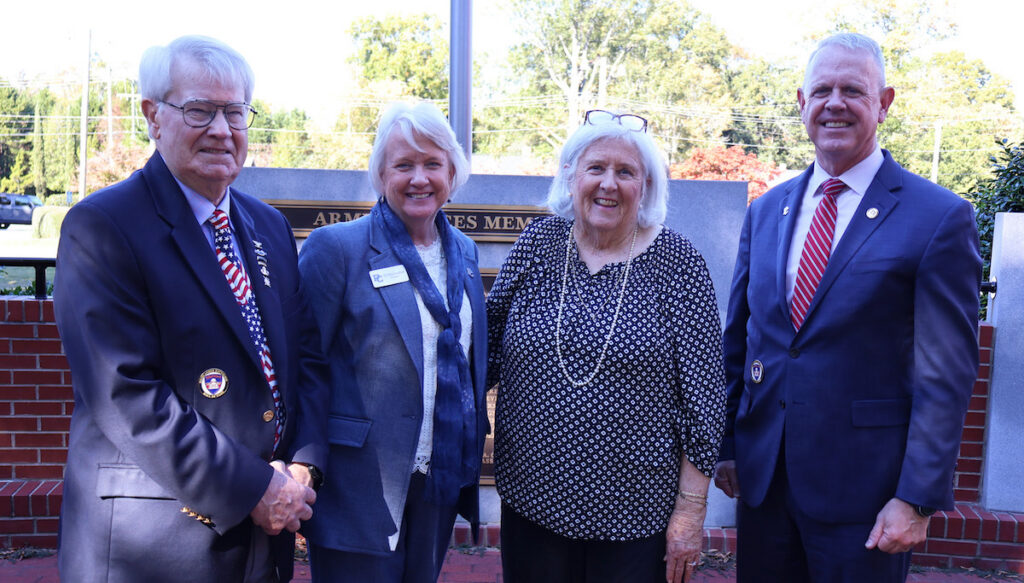
The ceremony included a special tribute to Barbara, who received yellow roses presented by retired Col. Wayne Harris in recognition of the support and sacrifices military spouses make throughout their families’ service.
Inspiring the Next Generation of Highlander Leaders
As part of the induction ceremony, Kirven presented Byard with a commemorative Hall of Fame plaque. A second plaque is displayed in the Cornelson Center.
Gentry said the ROTC Hall of Fame, administered through the PC ROTC Alumni Council, recognizes distinguished graduates while strengthening connections between military alumni and the Highlander Battalion.
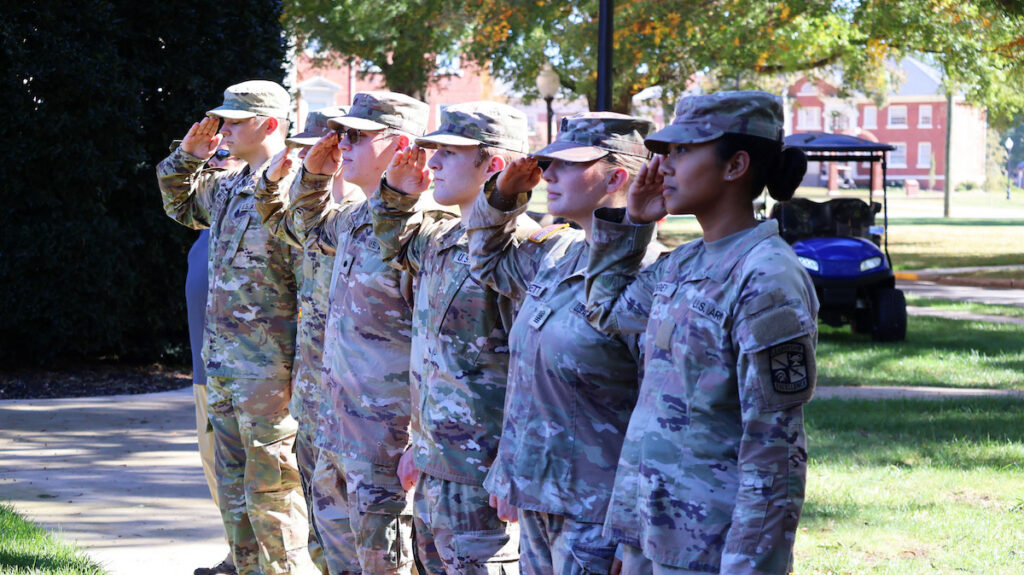
He emphasized the significance of conducting the ceremony in the presence of current ROTC cadets, many of whom will eventually receive their commissions on the same campus where Byard and generations of other PC officers began their military journeys.
Byard expressed appreciation that Presbyterian College continues to prepare future military leaders through its ROTC program.
For Gentry, the induction was more than a celebration of one alumnus’s achievements. It was an opportunity for the next generation of officers to reflect on the example set by those who came before them.
Addressing the cadets directly, he reminded them that Byard once walked the same halls and participated in the same ROTC traditions they experience today.
“His leadership story is written, and he continues to refine it,” Gentry said. “I ask you, what will be your leadership story today?”
It was a fitting conclusion to a ceremony honoring a graduate whose career demonstrated the lasting influence of a Presbyterian College education.
Nearly six decades after his arrival on campus, Byard returned to the institution that helped prepare him for a lifetime of service with a message of gratitude.
“I want to thank Presbyterian College for being the solid rock foundation on which to build both my military and civilian careers,” he said.