Presbyterian College graduate explores medieval Andalusian poetry, cultural fusion, and the enduring influence of language on identity and human understanding
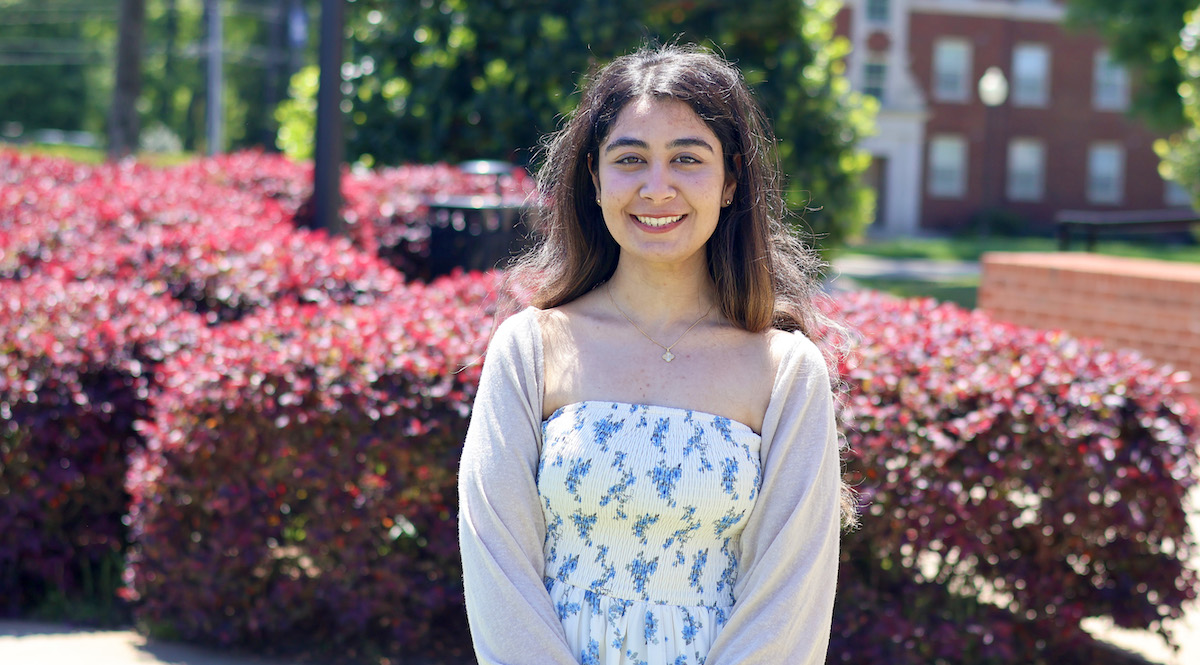
For Lydia Awadalla, a research project on medieval poetry became something much more personal: a journey into language, identity, culture, and the enduring power of human connection.
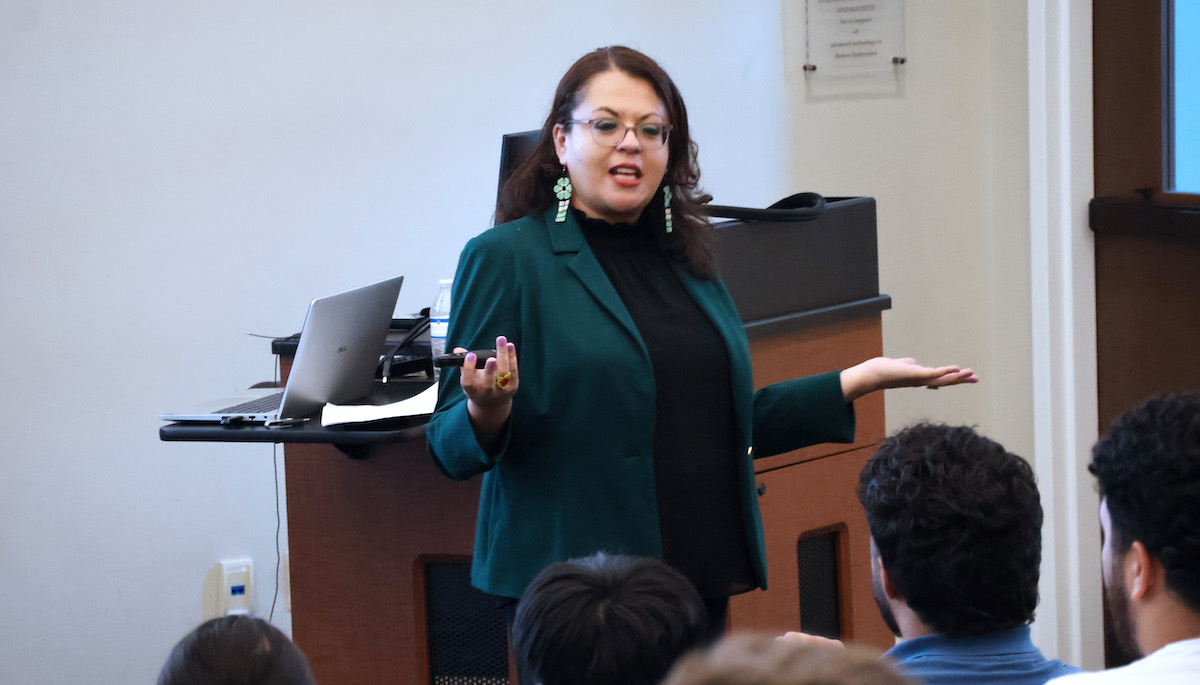
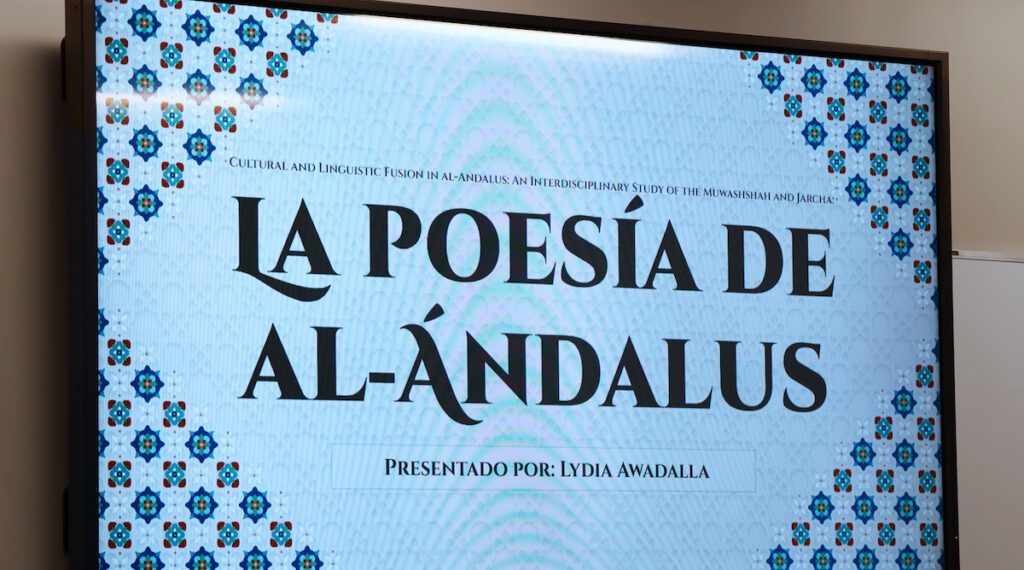
During Presbyterian College’s 2026 Honors Day Symposium, the Greenville resident presented her interdisciplinary research project, “Cultural and Linguistic Fusion in al-Andalus: An Interdisciplinary Study of the Muwashshah and Jarcha,” entirely in Spanish. Drawing from literature, linguistics, history, and musicology, Awadalla explored how Muslims, Christians, and Jews in medieval Spain created new poetic and musical traditions through cultural coexistence.
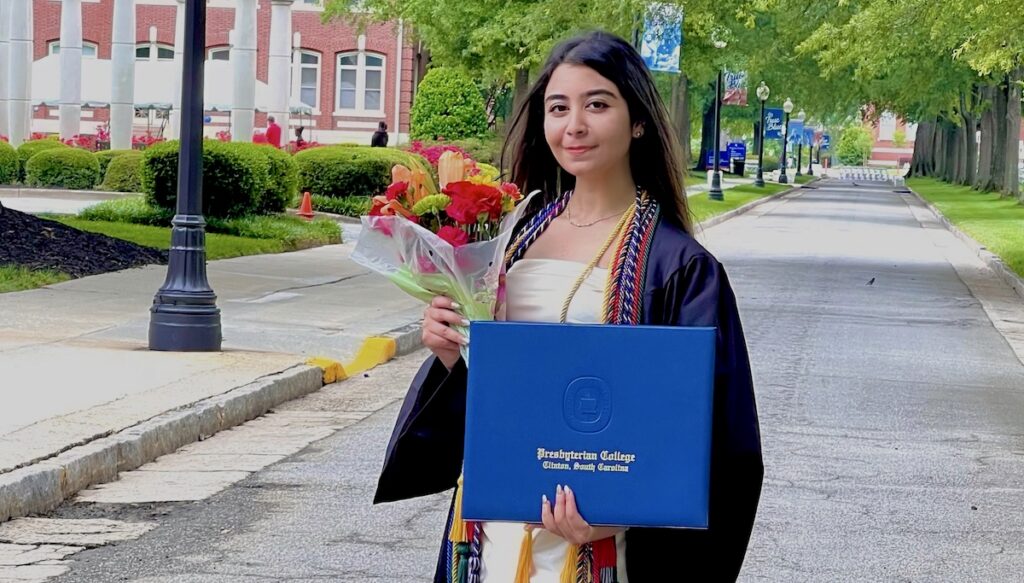
The presentation came roughly a month before Awadalla graduated magna cum laude with degrees in biology and Spanish with honors in Spanish during Presbyterian College’s 143rd Commencement on May 9.
For Awadalla, the project represented a natural intersection of her academic passions and personal background.
“I have always had a strong interest in language, culture, and linguistics,” she said. “Arabic is my native language, and studying Spanish at Presbyterian College made me especially interested in the historical connections between Arabic and the development of early Spanish literature.”
Awadalla said she became fascinated by the poetry of al-Andalus — the Muslim-ruled regions of medieval Spain — because of the way Arabic, Hebrew, and Romance languages blended together in forms such as the muwashshah and jarcha.
“I was fascinated by how Arabic, Hebrew, and Romance languages blended together in the poetry of al-Andalus and how this cultural and linguistic fusion created unique literary forms that still influence poetry today,” she said. “The topic felt both academically interesting and personally meaningful to me.”
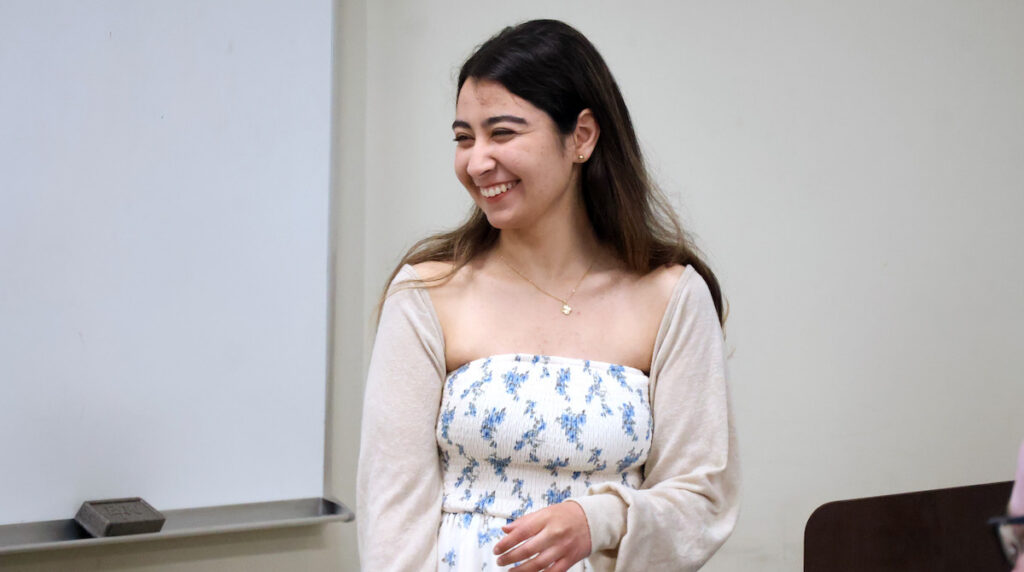
As someone planning a future in healthcare, especially with an interest in working with diverse populations, this experience has been valuable. It has improved my cultural awareness and reinforced the importance of communication across language and cultural barriers — skills that are essential in patient care.”
Lydia Awadalla, Class of 2026
A Medieval World of Cultural Exchange
Awadalla’s presentation examined how the poetry and music of al-Andalus reflected a society shaped by interaction among multiple faiths, languages, and traditions. Her research focused especially on the muwashshah, a sophisticated strophic poem often written in Arabic or Hebrew, and the jarcha, a brief lyrical refrain frequently written in an early Romance vernacular and often spoken in the voice of a woman.
The project traced how those literary forms emerged in cities such as Córdoba during the height of Andalusian cultural life following the Islamic conquest of the Iberian Peninsula in 711 and the rise of the Caliphate of Córdoba.
Awadalla argued that the literary innovations of al-Andalus were inseparable from the region’s cultural diversity.
“The poetry of al-Andalus shows that when different cultures interact, they don’t lose their identity,” she said. “Instead, they create something entirely new and influential.”
One of the discoveries that surprised Awadalla most during her research was the prominence of female voices within the jarchas.
“Even though much of medieval literature was dominated by male perspectives, these short lyrical endings captured intimate emotions, love, longing, and vulnerability from a female point of view,” she said.
That realization became one of the emotional centers of her project.
In her symposium presentation, Awadalla explained how the jarchas frequently conveyed themes of love, desire, absence, longing, and emotional intimacy through simple but powerful language. Many scholars consider them among the earliest surviving examples of lyric poetry in what would eventually become Spanish.
Where Poetry and Music Meet
Awadalla’s research also explored the relationship between poetry and music in al-Andalus, emphasizing that the muwashshah was never intended to exist only as silent text on a page.
In medieval Andalusian courts, music was regarded as an intellectual art form alongside poetry, astronomy, and philosophy. Poets composed muwashshahat with rhythmic and musical structures designed for vocal performance.
Her presentation highlighted the influence of Ziryab, the famed ninth-century musician who arrived in Córdoba from Baghdad and transformed Andalusian musical culture through innovations in melody, instrumentation, and music education.
Awadalla also discussed the instruments that shaped Andalusian music, including the oud, rabab, flutes, and percussion traditions that later influenced medieval European music.
“The music confirms the same central idea of my research,” Awadalla said during her presentation. “That al-Andalus was a space of coexistence where languages, cultures, and sounds intertwined to create a unique poetic tradition.”
That tradition, she argued, remains alive today in the music and poetry of North Africa and the Mediterranean world.
Research With Personal Meaning
While the project demanded extensive historical and literary analysis, Awadalla said its themes also resonated deeply with her own life experiences.
At the conclusion of her presentation, she reflected on stories shared by her grandfather about growing up among Jewish neighbors in Morocco, where hearing Arabic and Hebrew together was simply part of everyday life.
Those memories reinforced one of the project’s central ideas: that cultural exchange is not something abstract or theoretical, but something deeply human.
“Cultural and linguistic diversity is not just something that exists,” Awadalla said. “It actively shapes creativity and innovation.”
The research experience also strengthened her understanding of how the humanities connect to her future professional goals.
After graduation, Awadalla plans to pursue medical school and hopes to work with patients from a wide range of cultural and linguistic backgrounds.
“As someone planning a future in healthcare, especially with an interest in working with diverse populations, this experience has been valuable,” she said. “It has improved my cultural awareness and reinforced the importance of communication across language and cultural barriers — skills that are essential in patient care.”
A Liberal Arts Experience
Awadalla said Presbyterian College’s liberal arts environment helped make the project possible by encouraging interdisciplinary thinking and close collaboration with faculty mentors.
“Student research at Presbyterian College has helped me grow both academically and personally,” she said. “It has strengthened my ability to analyze complex material, connect ideas across disciplines, and communicate them clearly.”
She said the college’s small class sizes and supportive academic environment gave her confidence to pursue ambitious projects and engage deeply with her studies.
“My experience at Presbyterian College has been very meaningful,” Awadalla said. “PC has given me the opportunity to build strong relationships with professors, get involved in research, and grow academically in a supportive environment.”
For students considering Presbyterian College, Awadalla described the campus as a place where students are genuinely known and supported.
“It’s a place where you’re not just another number,” she said. “You’re part of a community that genuinely supports your goals.”
Long term, Awadalla hopes to combine her interests in science, language, and service to help others.
“I hope to work with and serve people from all backgrounds and from anywhere in the world,” she said, “because I strongly believe in acceptance, compassion, and treating others with goodwill and respect.”