Physics students explore projects with applications ranging from planetary exploration to advanced energy storage while working one-on-one with faculty mentors.
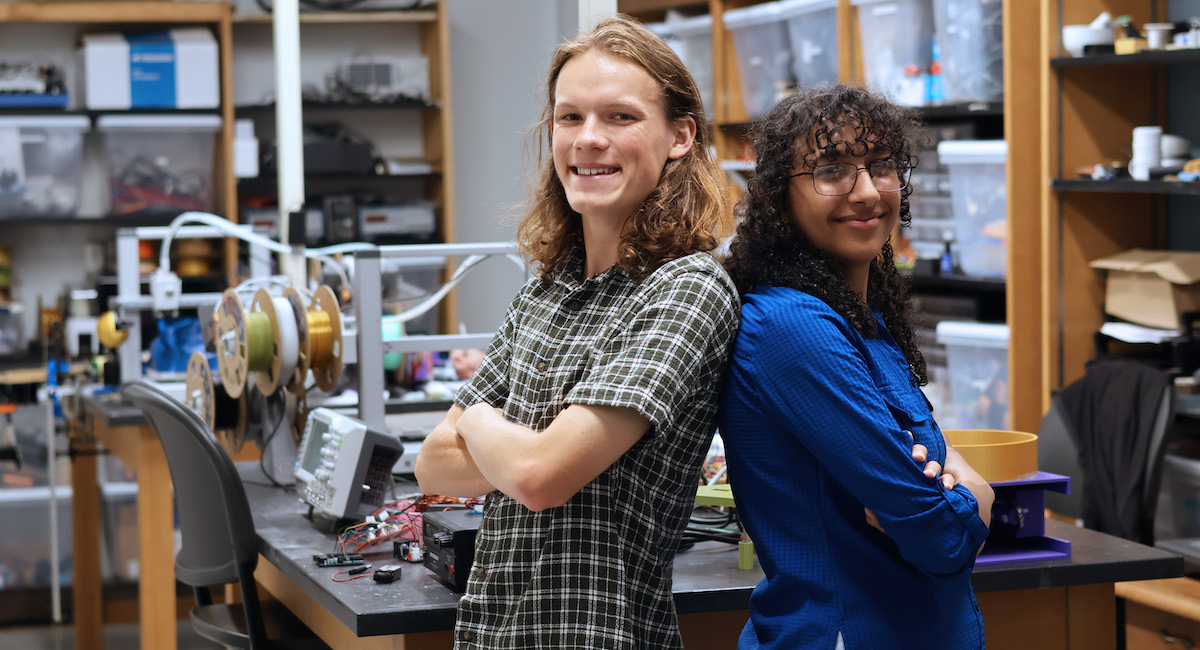
From studying how sand-like materials behave under magnetic forces to exploring new ways to build next-generation batteries, two Presbyterian College students are spending the summer investigating scientific questions with implications that reach from Earth’s laboratories to future space exploration.
Thanks to grants from the NASA South Carolina Space Grant Consortium, Veby Youssef and Sam Gearheart are conducting undergraduate research alongside physics faculty mentors, gaining hands-on experience while contributing to research with potential applications in fields ranging from robotics and planetary science to microelectronics and renewable energy.
Their projects differ, but they share something that has become a hallmark of the Presbyterian College experience: close faculty mentorship that places undergraduate students—not graduate students—at the center of scientific discovery.
“Undergraduate research at PC is the perfect opportunity to gain one-on-one experience with experts in the field that is difficult to get elsewhere,” said Dr. Clay Wright, assistant professor of physics. “For students, research reinforces the concepts they learn in their classes. It also ensures they are prepared for graduate school and have experiences they can discuss when applying for future research opportunities.”
Turning Curiosity into Discovery
Research at Presbyterian College begins with curiosity, and both students followed different paths to arrive in the laboratory.
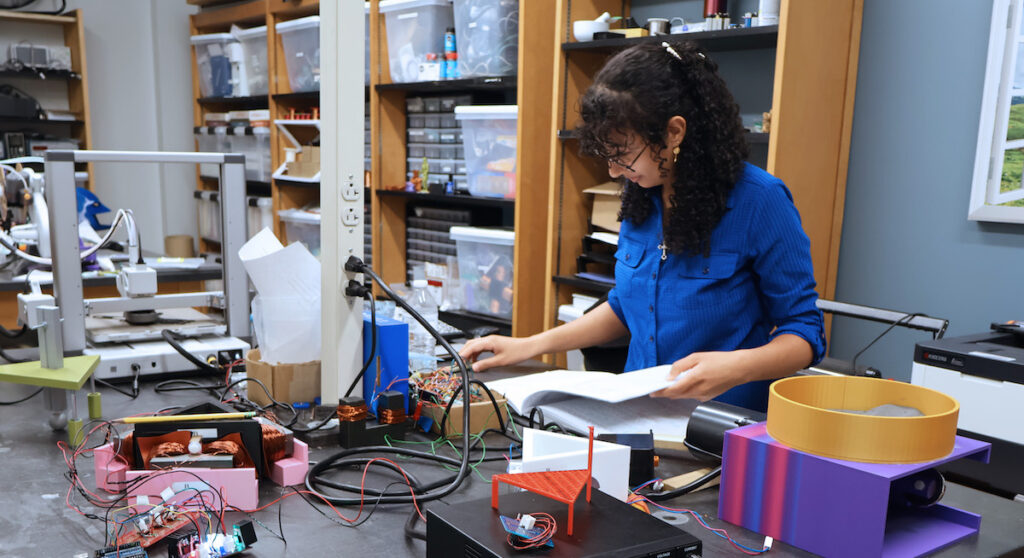
Youssef, a biochemistry major with a physics minor from Greenville, is building on research she began earlier this year by investigating the behavior of granular materials—substances such as sand that can behave as either solids or liquids depending on their environment.
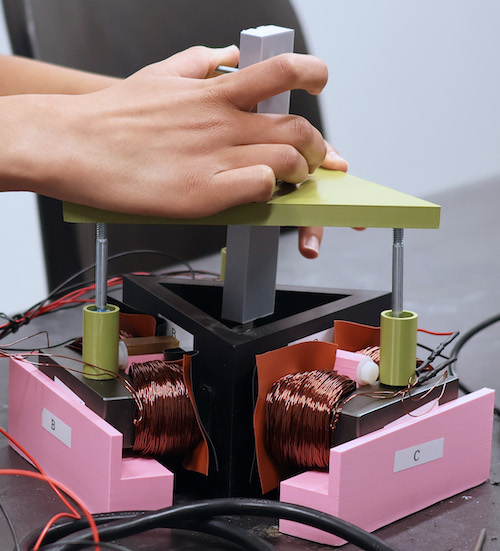
Working with Dr. Eli Owens, associate professor of physics, Youssef is designing a model system that uses magnetic fields to better understand and control the “jamming transition,” the process that causes granular materials to shift between flowing freely and locking together into a solid state.
Although rooted in fundamental physics, the research could ultimately improve technologies ranging from robotic prosthetics and physical chemistry models to planetary regolith studies and future space rover design.
The project represents the most independent research of Youssef’s academic career.
“Compared to my previous research experiences, the research I pursue at PC is the most independent work I have undertaken,” Youssef said. “I have the autonomy to pursue objectives independently while benefiting from the guidance and support of an exceptional mentor throughout the process.”
She said the experience has confirmed her plans to pursue a doctorate and a career in research.
“Conducting research at PC reinforced my choice to pursue research as a long-term career and motivated me to obtain a Ph.D.,” she said.
Gearheart’s research journey, meanwhile, is just beginning.
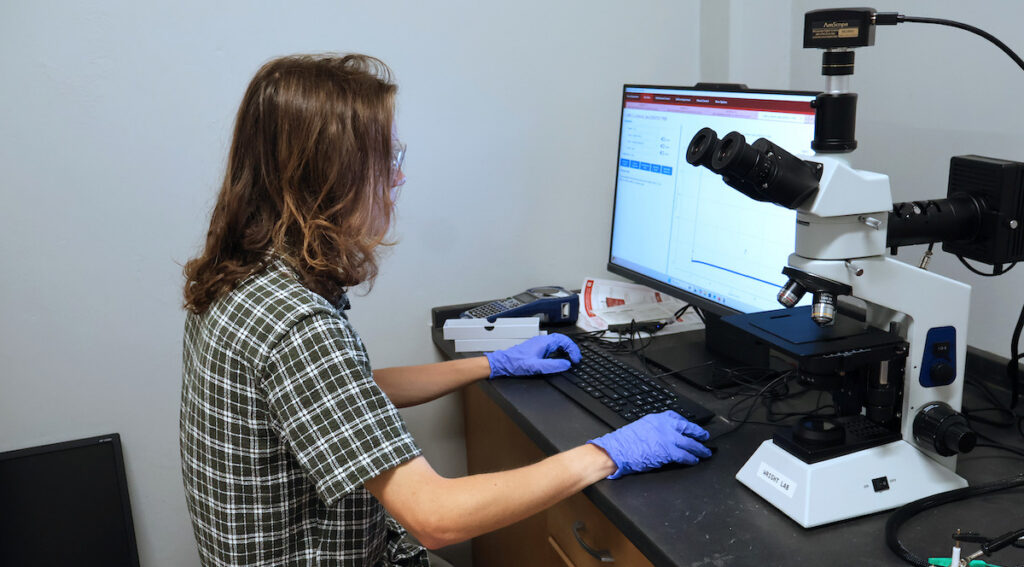
The Clinton native, who recently completed his first year at Presbyterian College, is working with Wright to study how metals such as copper and zinc can be grown on atomically thin materials including graphene and hexagonal boron nitride. The project examines electrochemical deposition, a process used in technologies ranging from semiconductor manufacturing to advanced batteries.
By better understanding how these two-dimensional materials influence metal growth, the research could help improve future energy-storage systems and electronic devices.
“I am very interested in research because it allows me to apply what I have learned in school to the real world,” Gearheart said. “I believe research is vital for progress in all levels of society.”
Undergraduate research at PC is the perfect opportunity to gain one-on-one experience with experts in the field that is difficult to get elsewhere. For students, research reinforces the concepts they learn in their classes. It also ensures they are prepared for graduate school and have experiences they can discuss when applying for future research opportunities.”
Dr. Clay Wright, Assistant Professor of Physics
Learning by Doing
While the students’ research projects explore different scientific questions, both illustrate the value of undergraduate research conducted in close partnership with faculty mentors.
For Gearheart, entering an unfamiliar field has meant learning not only new scientific concepts but also how professional research is conducted.

“The research is fairly complex for me because I just completed my first year in college,” Gearheart said. “Dr. Wright guided me through my completion of the research proposal, which gave me a greater understanding of the subject matter and how to write a research proposal.”
Youssef also credits the close mentorship she has received from Owens with helping her grow as both a scientist and a scholar.
“Working with Dr. Owens has been outstanding,” she said. “I feel really encouraged to explore new things. His support has fostered both my personal development and my academic and professional progress.”
That emphasis on mentorship is intentional, Wright said.
“My goal as an advisor is to develop my students’ ability to understand how formal research is conducted while fostering their creativity,” he said. “I hope to serve as a mentor that allows my students to follow their curiosity and live up to their potential, like the many excellent mentors I had as a student at PC.”
Wright knows firsthand the impact a faculty mentor can have. As an undergraduate at Presbyterian College, he conducted research under faculty members including Owens, an experience that continues to shape the way he mentors students today.
Preparing Tomorrow’s Scientists
Wright said students earn research opportunities not simply through academic performance but by demonstrating genuine curiosity and initiative.
“The physics department makes a point of sharing our research interests with our students and inviting them to discuss joining a project if they are interested,” he said. “Sam approached me about this work, and that enthusiasm makes a difference when deciding to work on a project together. His innate curiosity makes him a great undergraduate researcher.”
Rather than directing every aspect of a project, Wright encourages students to become independent thinkers.
“I make a point of giving him the opportunity to learn and develop his skills independently,” he said. “I want him to take ownership of the project so he can have genuine pride in his accomplishments.”
That philosophy benefits faculty as well as students.
“As a research advisor, I gain a deeper understanding of my field every time I mentor students,” Wright said. “Strong research students ask thoughtful questions, and I feel obligated to give them the best answers we have.”
For Youssef and Gearheart, the NASA-funded projects are providing much more than a summer research experience. They are helping transform classroom knowledge into scientific discovery while preparing the next generation of researchers—one question, one experiment and one breakthrough at a time.